In the world of watches, there are countless brands. As a result, it is not only difficult to keep up with all the new releases, but also hard to choose personal favorites.
Sometimes the choice depends on design, sometimes on the brand's name and heritage, and at times on technical innovations. As a young brand, Traska brings an important element to this environment - transparency and a personal approach. Founded by Jon Mack, the company has gained many fans thanks to its open style of communication and constant improvement of its collection. Traska has managed to create some of the best value-for-money watches on the market. However, with the release of the new Traska Chronograph, Mack openly discusses the decisions that led to the first completely new model in several years. This is a step in a new direction. Let me explain why.
The Development History of Traska and the Introduction of the Chronograph
Watching Traska's development in recent years has been interesting. For me, it all started with the Traska Venturer model. How could it not? Being a fan of GMT watches, I always pay attention to new models, and the Venturer immediately caught my eye - it is not a standard travel watch. The Venturer's feature is an internal rotating 24-hour bezel, which sets it apart from others. In my review, I noted that the Venturer version I tested belongs to the sixth generation of the brand's GMT models. This demonstrates Mack and his team's commitment to continuous product improvement. Amusingly, the Venturer was not the first Traska model I reviewed - it was the Commuter, which I called the best affordable everyday watch in recent times. This model has also gone through several iterations since its release in 2021.
Expanding the Line: Two New Directions
As I noted in both reviews, I appreciate Traska's methodical and gradual approach. It's the same strategy that made Rolex an icon of the watch world. One of the main advantages of the Genevan brand is the constant evolutionary development of design, rather than revolutionary changes. Traska has chosen a similar long-term path, and I am confident that this will create a solid fan base. But it's not just about consistent progress. If you have followed the brand's communication, you know that it is always open and personal. Mack explains in detail why certain decisions were made and what their results are.
While this may not seem unusual in updates, it is important when launching new products. Against this backdrop, the new Traska Chronograph emerges. If you follow the brand, you may have heard of the two new models that Traska is adding to its collection. It all started with the announcement of jumping hour watches, which Mack is now finalizing. Simultaneously, the brand introduced the new Traska Chronograph. These two models mark a new stage, as they are fundamentally different from existing ones and required a rethinking of the watchmaking approach.
The Story Behind the Creation of the Traska Chronograph
Mack detailed the chronograph's creation story on the brand's official website. It's an interesting tale that not only reveals the reasons behind certain decisions but also serves as an example of involving enthusiasts in the development process. Such an approach is not unique; many small brands engage their fans in creating new models. However, after reading Mack's explanations, it becomes clear why Traska stands out among many young companies. It is the attention to detail and openness that made the brand popular.
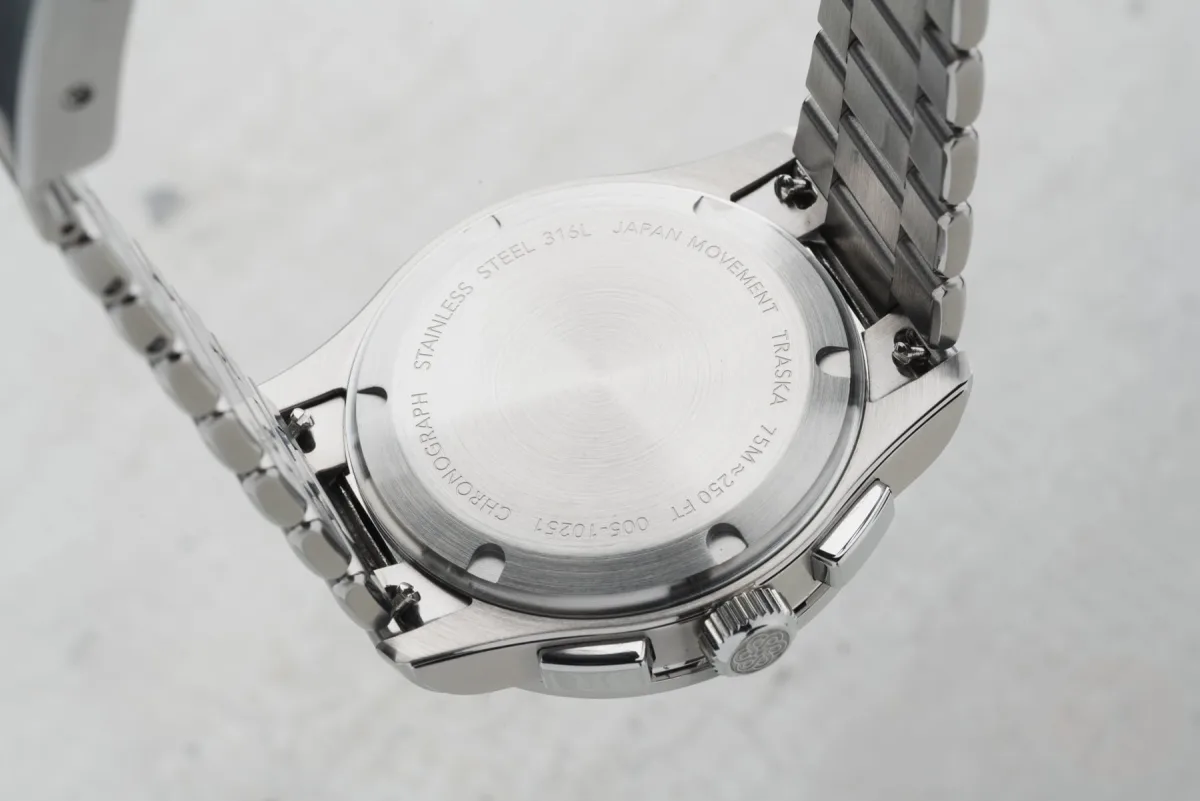
So, where did the Traska Chronograph story begin? As with any chronograph, it all starts with the movement. Despite the temptation to use a Swiss caliber, Mack chose a different path - the Japanese Seiko NE86 movement, to maintain minimal watch thickness. It is 0.3 mm thinner than most available counterparts and features a column wheel and vertical clutch for smoother and more accurate operation. Since Traska has already successfully used Japanese movements in other models, this choice was obvious and justified.
Seiko NE86 Movement - The Foundation of the Chronograph
If it all started with the caliber, let's move on to the technical specifications. This automatic chronograph operates at a frequency of 28,800 vibrations per hour, contains 34 jewels, and provides a power reserve of 45 hours. As mentioned, it features a column wheel and vertical clutch, and the standard accuracy is stated within -15/+25 seconds per day. It is known that official figures are usually conservative, so the actual accuracy is likely higher. Moreover, Traska regulates each movement to improve performance. The caliber has a diameter of 28.6 mm and a thickness of 7.62 mm - these dimensions became the starting point for the watch's design development.

For the creation of the model, Mack collaborated with Max Resnick. He worked on the creation of the VPC Type 37HW and Type 39VM models. Mack and Resnick started with the jumping hour watch project, then proceeded to the chronograph. Interestingly, the chronograph was completed first. The design choice demonstrates a thoughtful visual approach that makes the watch significantly thinner than many competitors. Additionally, they are much more comfortable than many available but bulky chronographs.
Design Details of the Traska Chronograph
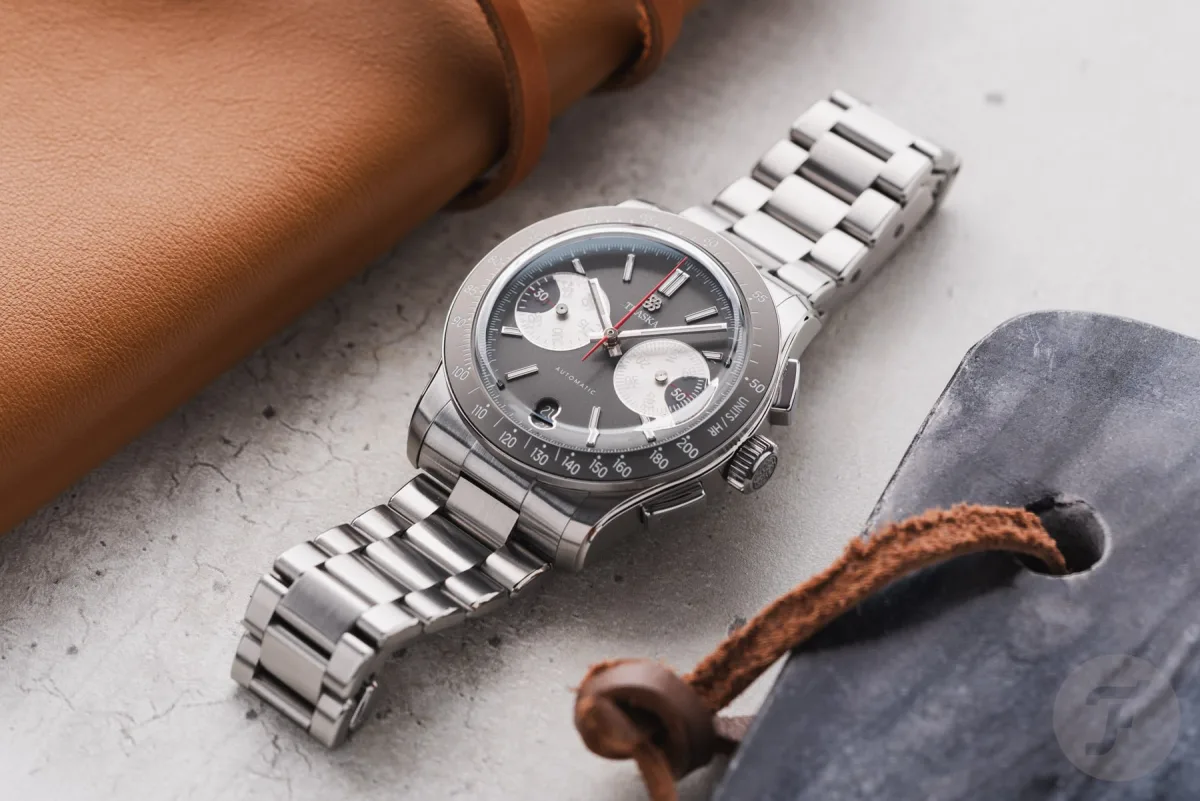
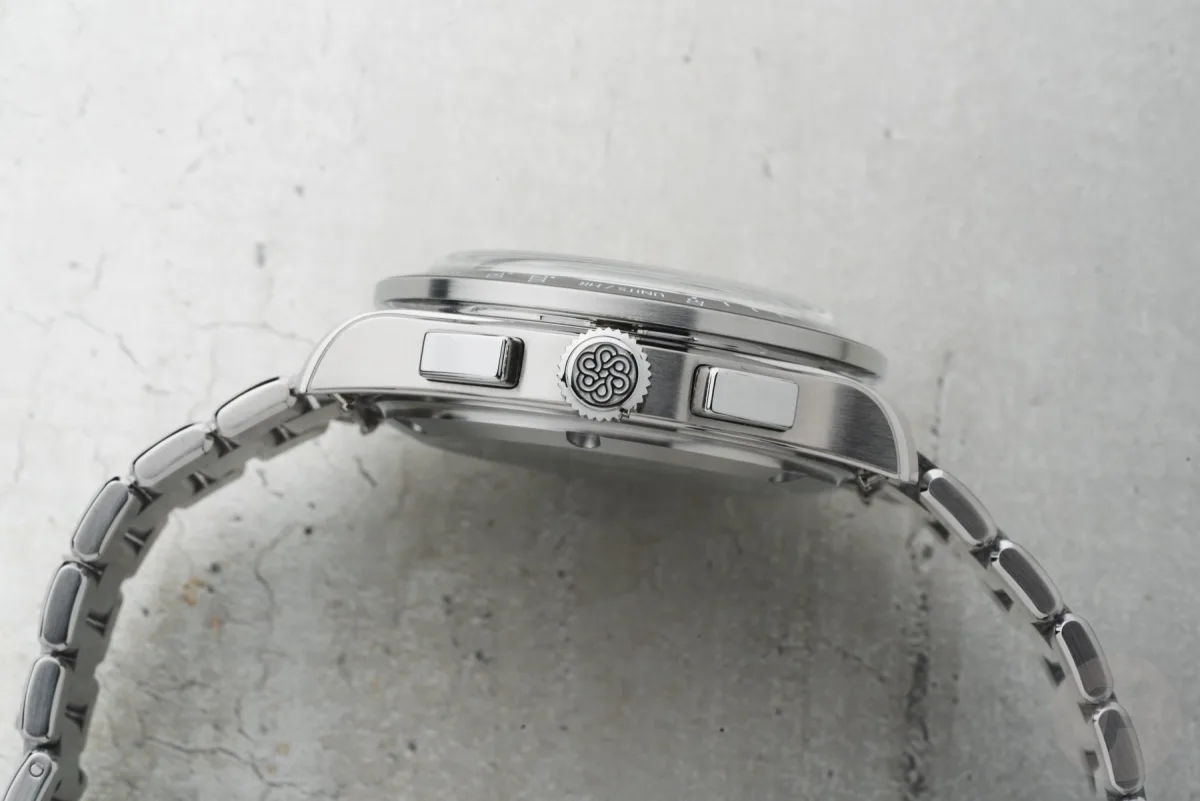
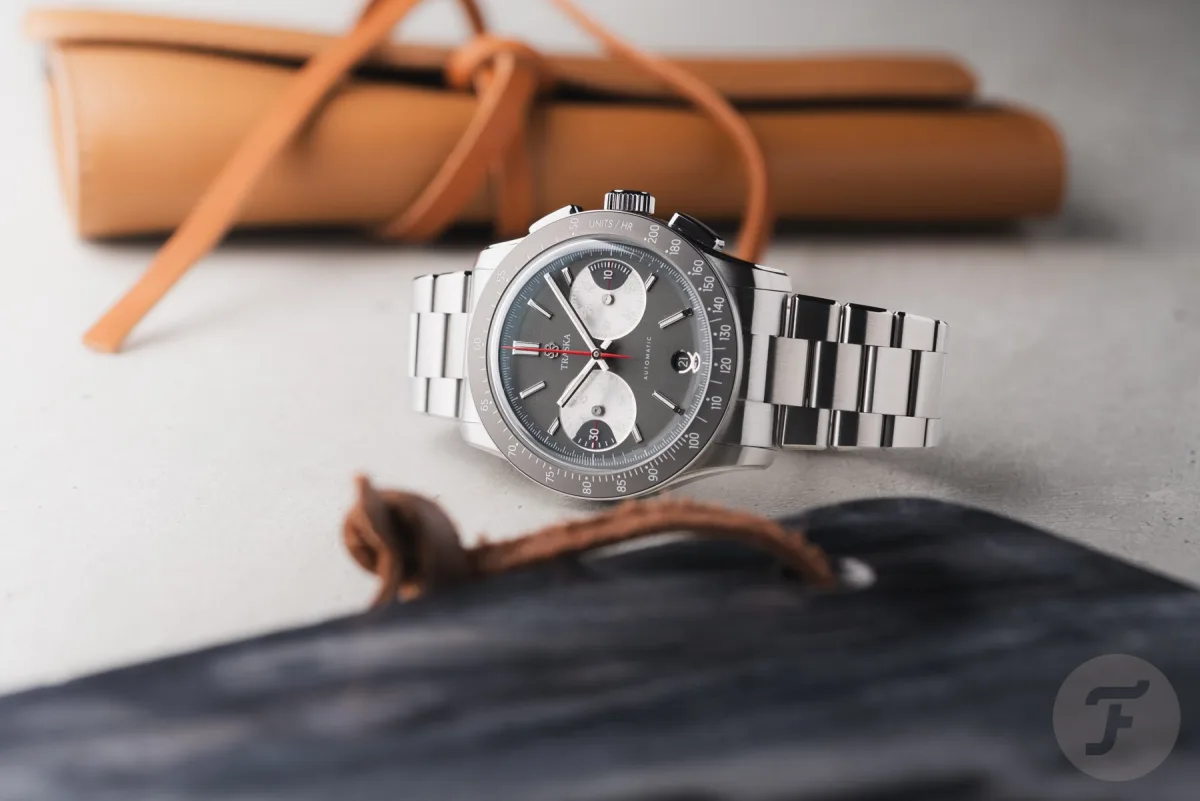
Let's look at the details. The case diameter is 39 mm, lug-to-lug distance is 46.5 mm, and thickness is 13.75 mm. While the thickness seems significant, it's worth looking into further. The steel case itself is 11.8 mm high, and the domed sapphire crystal adds 1.95 mm. Thus, the case is actually quite thin. Moreover, considering the concave cutouts on the bezel and the thickness of the case back, Mack and Resnick managed to visually limit the case thickness, including the bezel, to 8 mm. The visual height of the case's midsection is only 4.75 mm.

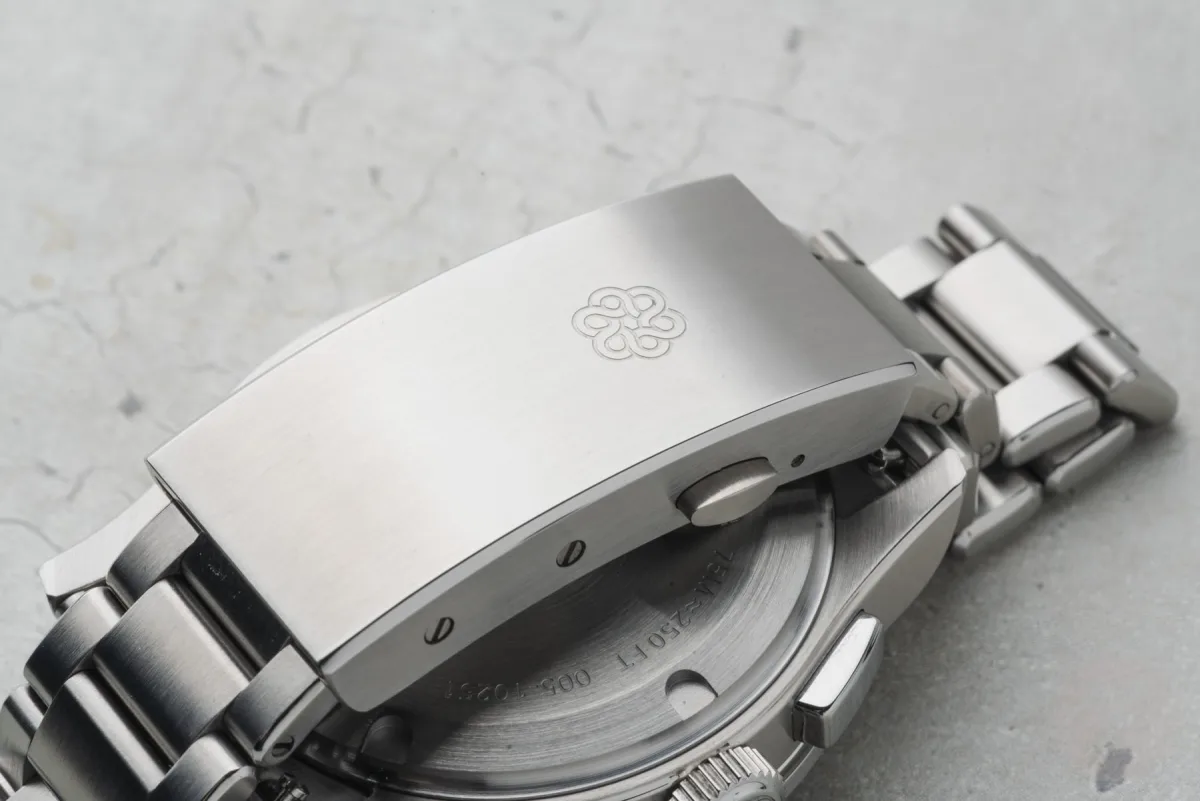
This analysis shows that every detail was carefully considered. It also highlights the significant difference between perceived and actual thickness. As a result, the Traska Chronograph feels quite elegant compared to competitors. An added bonus is the new flat-link bracelet that tapers smoothly from 21 mm at the lugs to 16 mm at the clasp. The lug width of the bracelet may seem unusual, but it is intentional - the extra millimeter adds visual mass and creates balanced proportions.
Improved Finishing Level
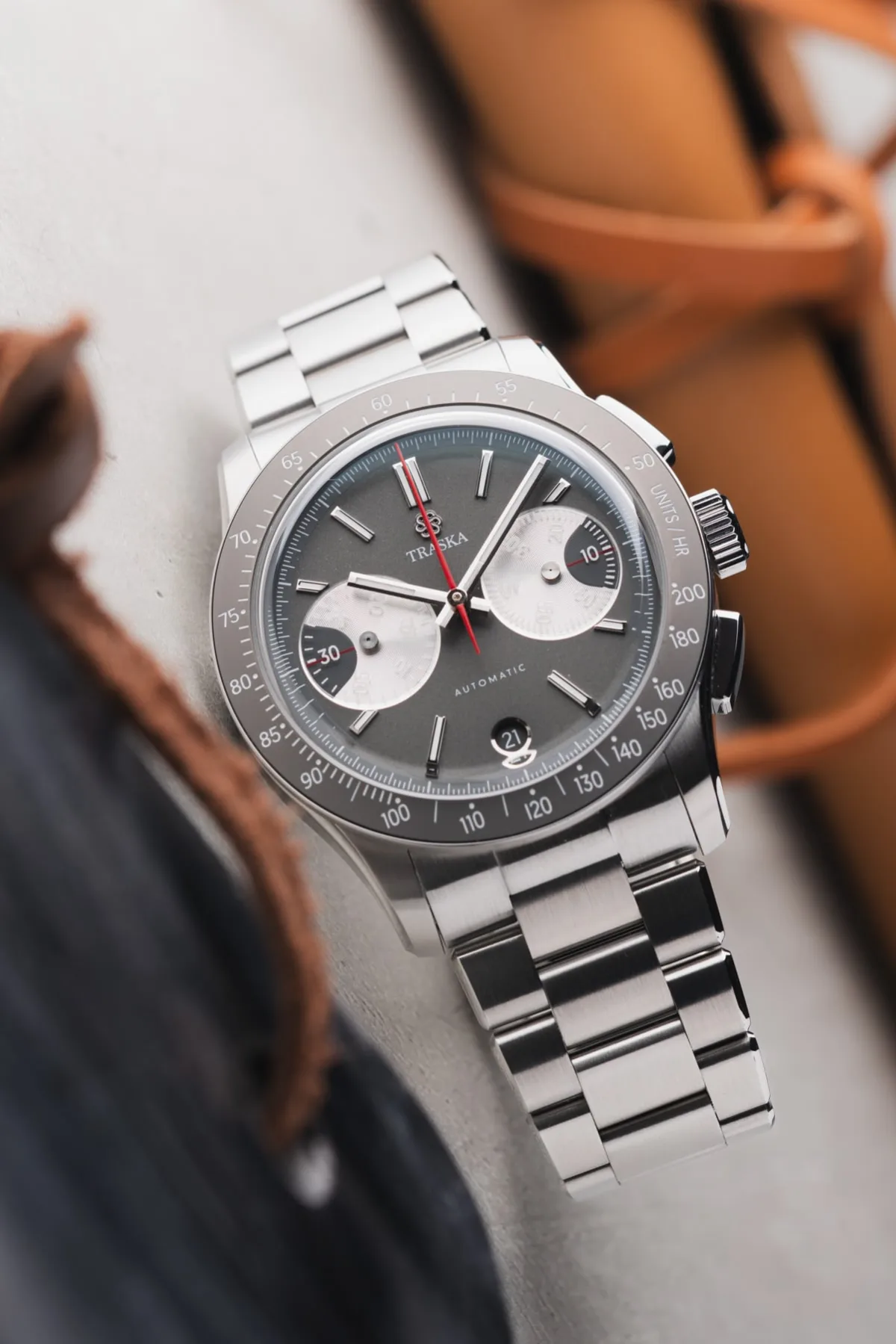
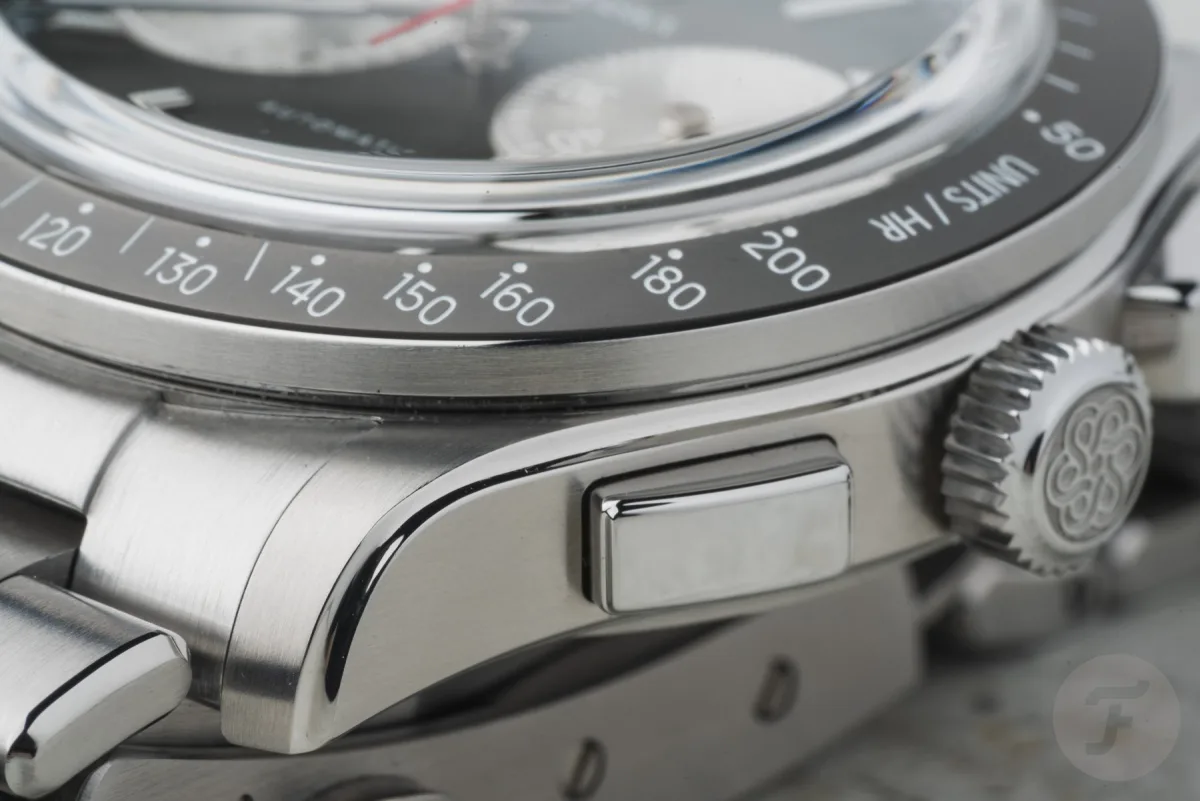
A close inspection of the case and bracelet reveals a noticeable improvement in finishing. If the finishing of the Commuter and Venturer models was already impressive for their price category, the new chronograph takes it to a higher level. The combination of polished and matte surfaces adds visual details, making the watch resemble a luxury model competing with products priced significantly higher at $1,695. One such element is the rectangular pushers, which give the watch a modern look compared to classic round pushers.
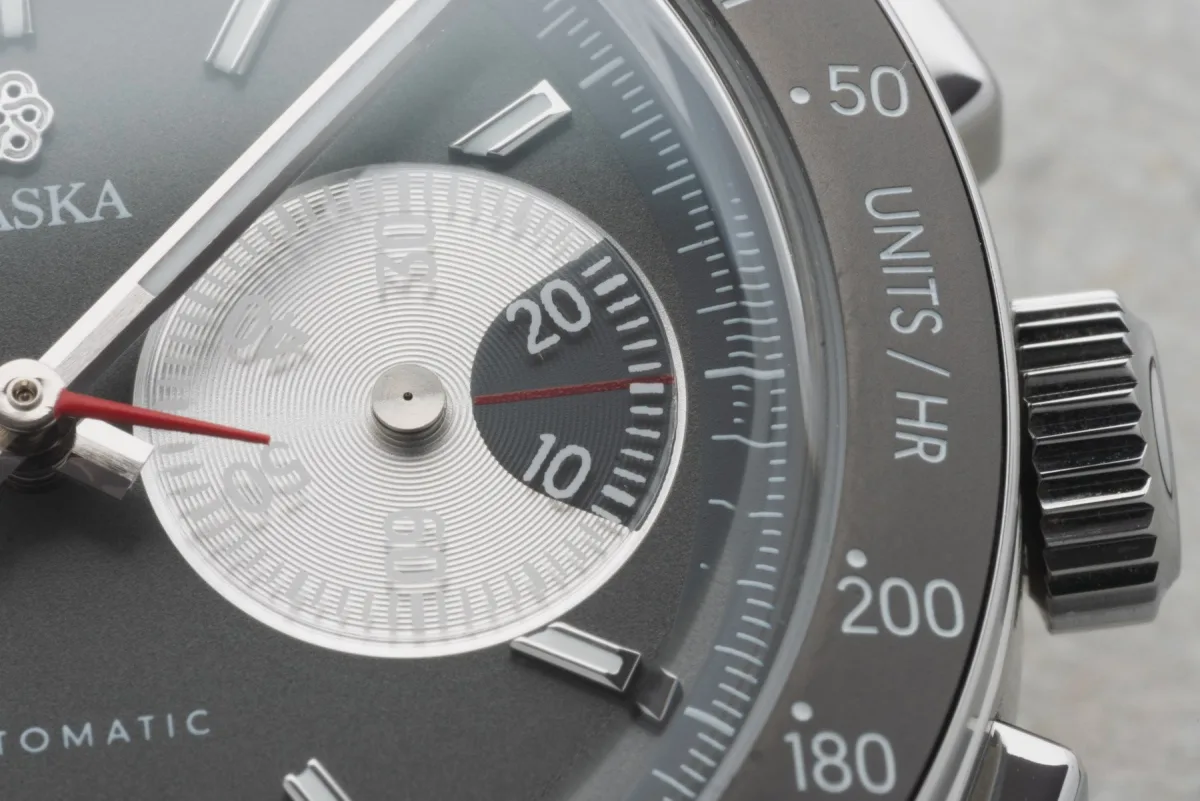
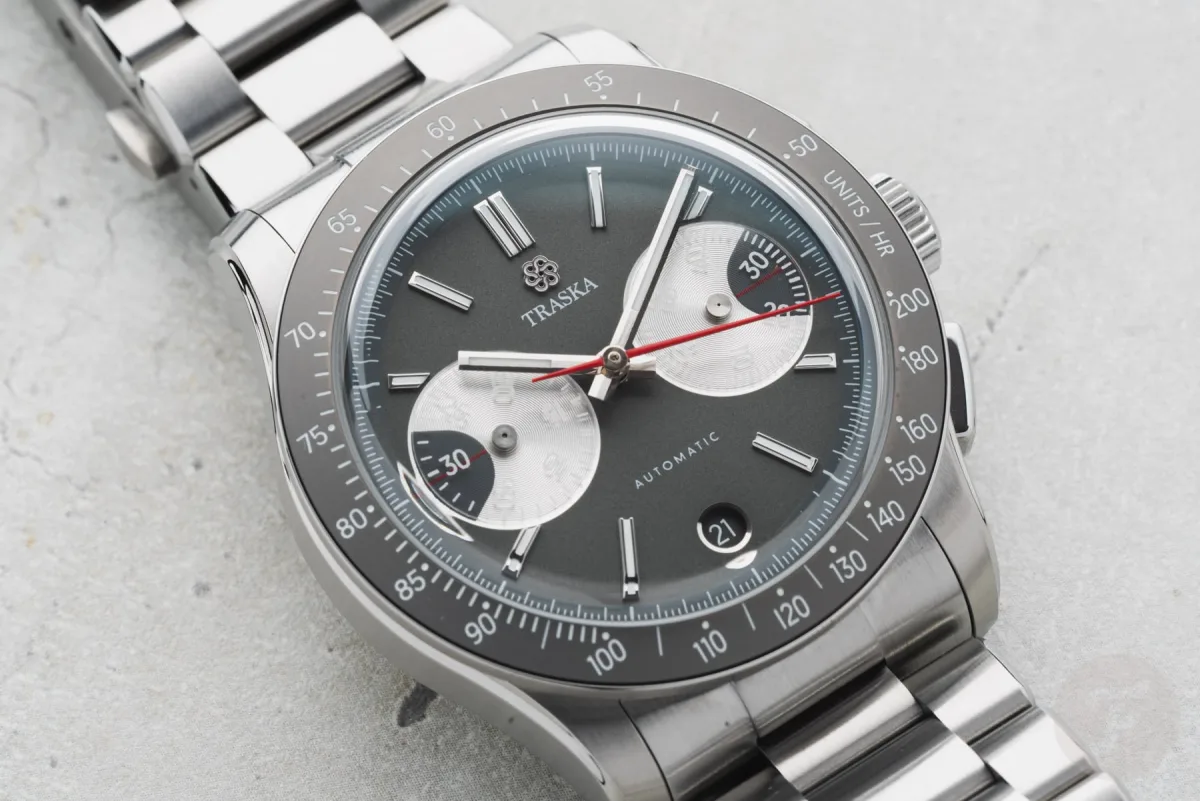
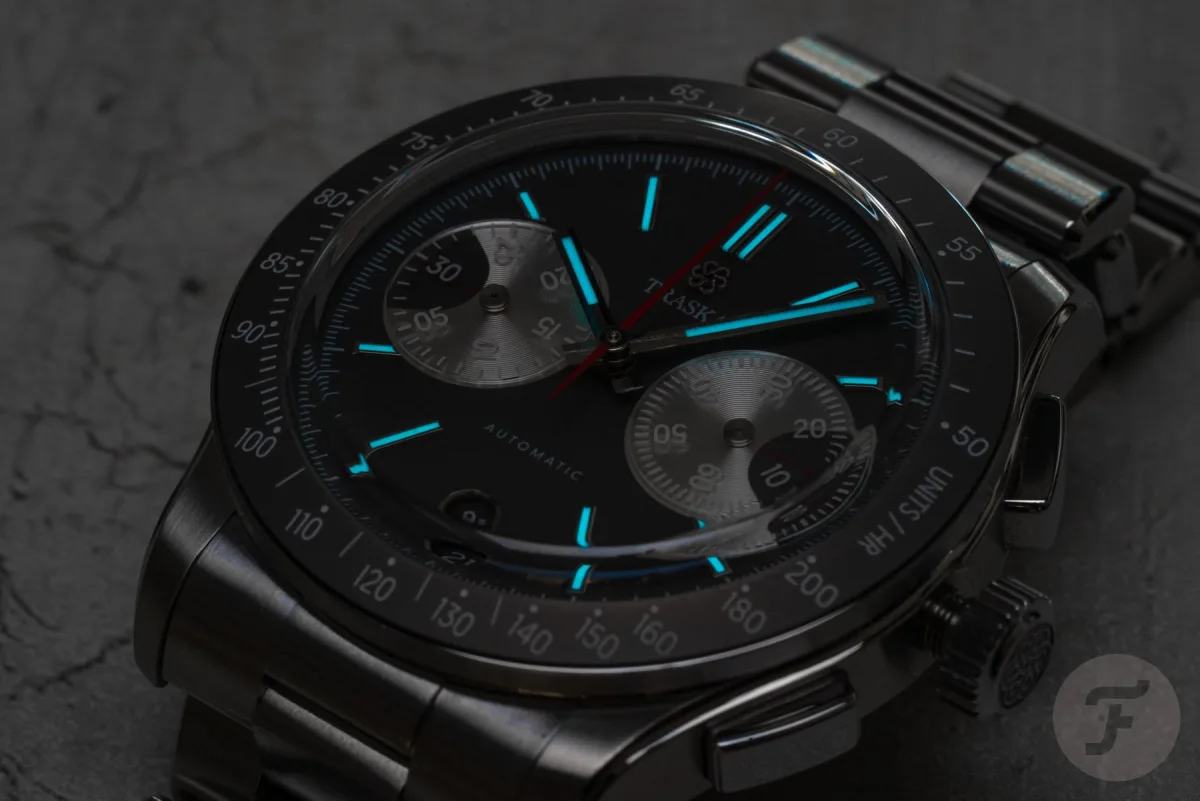
The bezel is fitted with a tungsten insert that perfectly matches the gray hue of the dial. Tungsten was chosen for its high scratch resistance and adds extra charm to the watch. The insert does not feature the usual tachymetric scale. The white tachymeter scale is compressed in the range from 200 to 50 units per hour - a less extreme range than usual, making it more suitable for everyday measurements rather than motorsports.
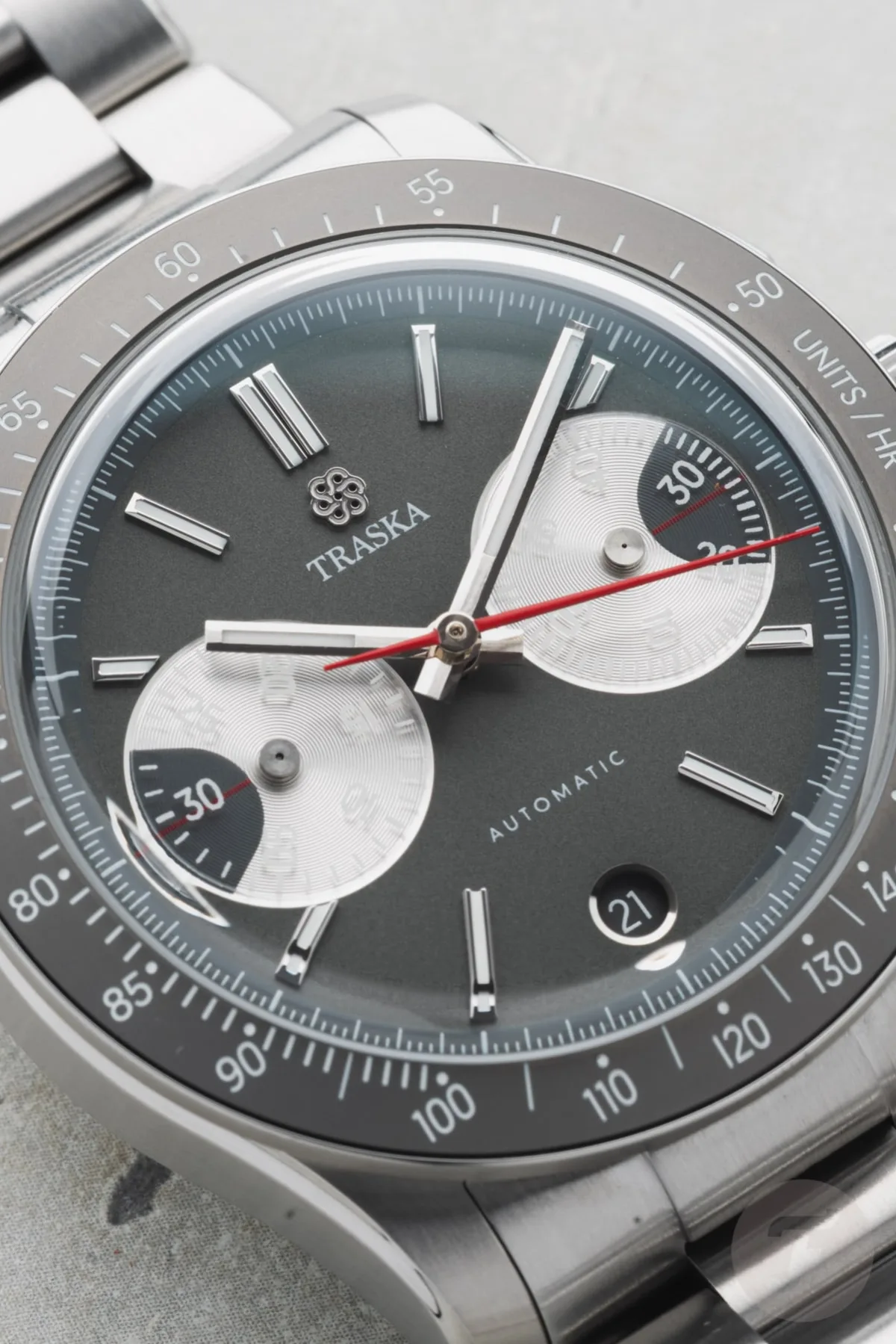
Chronograph with Rotating Disks Instead of Hands
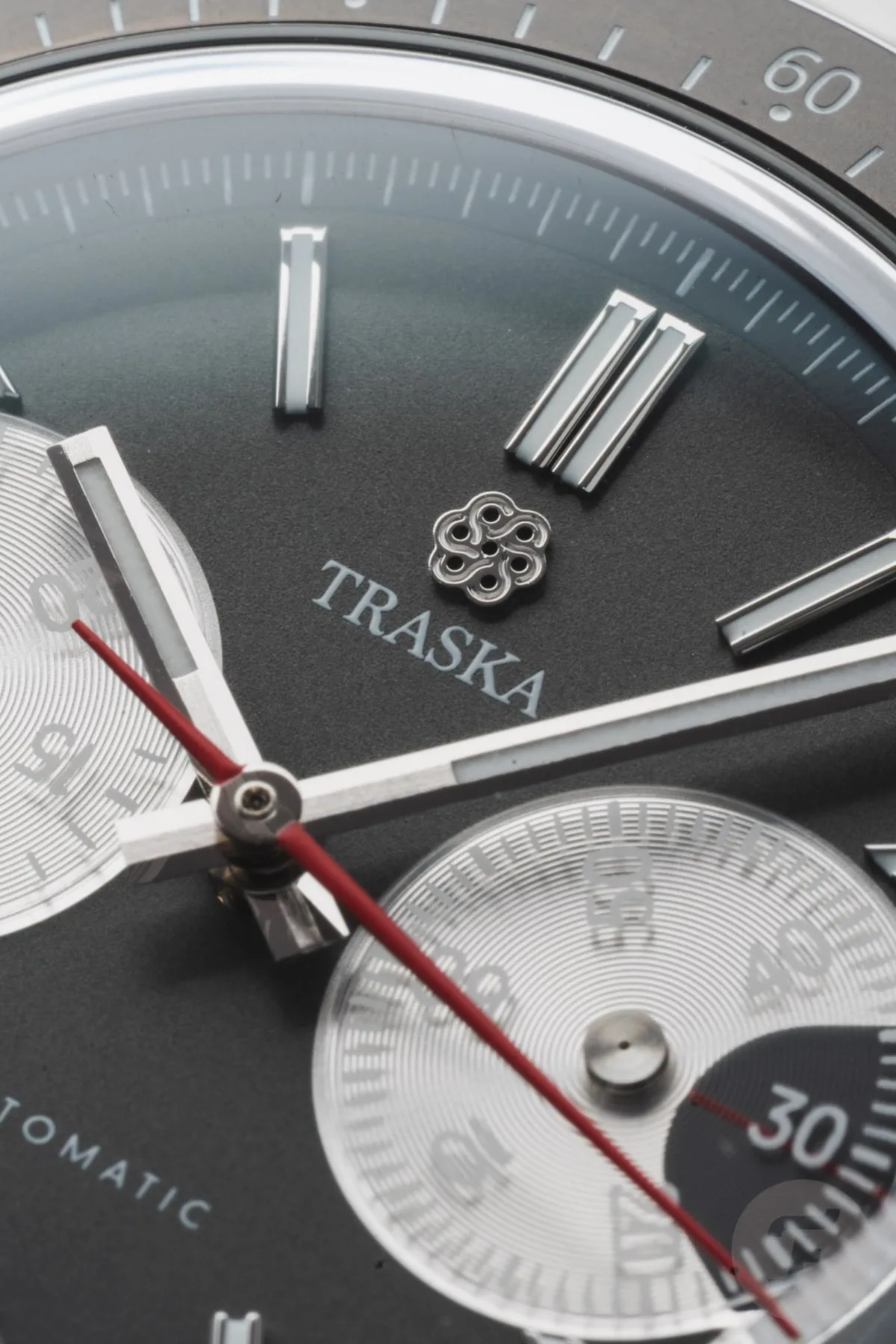
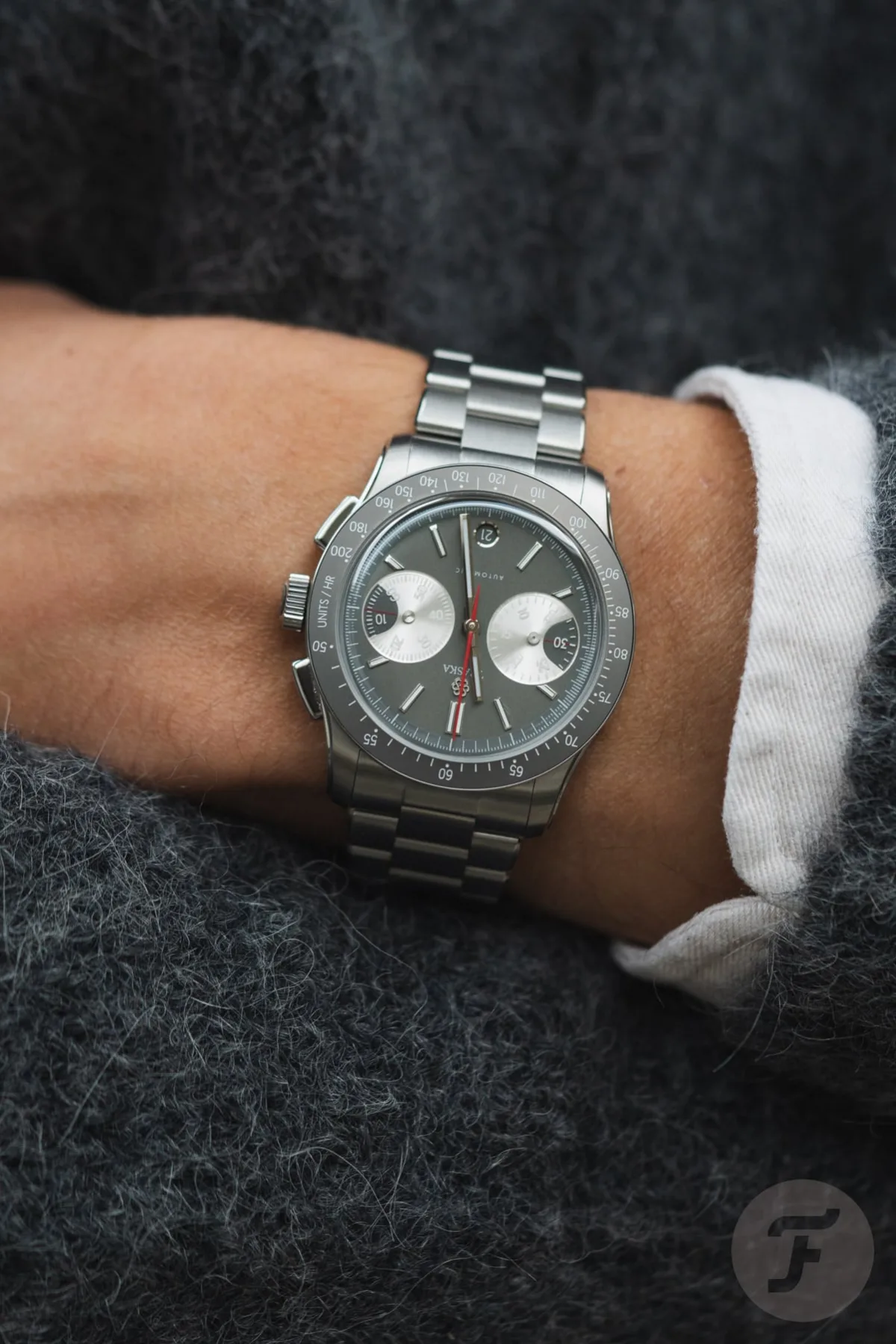
If we look at the dial, it is also unusual. On a gray background, there are two transparent disks with white numbers and markers. The disks rotate over a red line indicating elapsed minutes (at 9 o'clock) and running seconds (at 3 o'clock). Thus, traditional hands on the sub-dials are absent. The two large registers are designed with an emphasis on aesthetics and legibility.
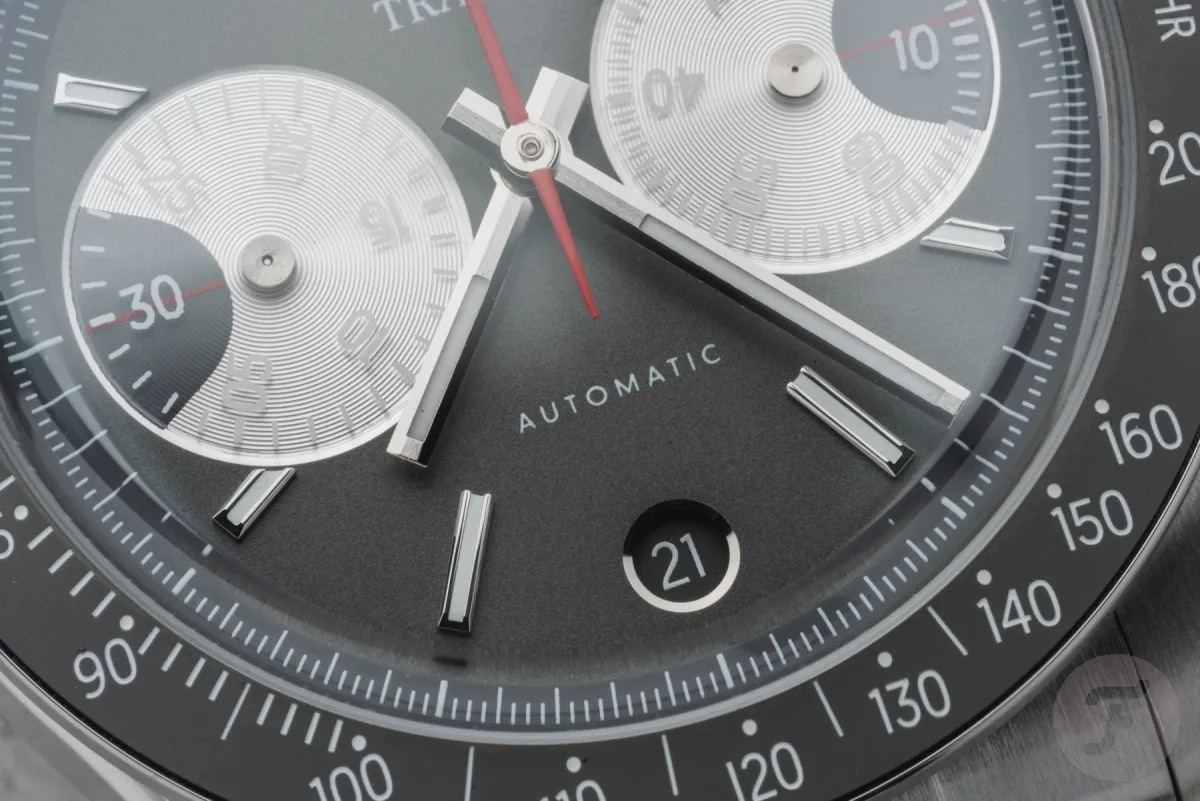
For better perception, each disk has a predominantly silver surface that neutralizes the white markers and a smaller dark gray area to quickly determine elapsed minutes or current seconds. The finishing touch is a red central chronograph hand with a simple shape to avoid interfering with the dial's information.
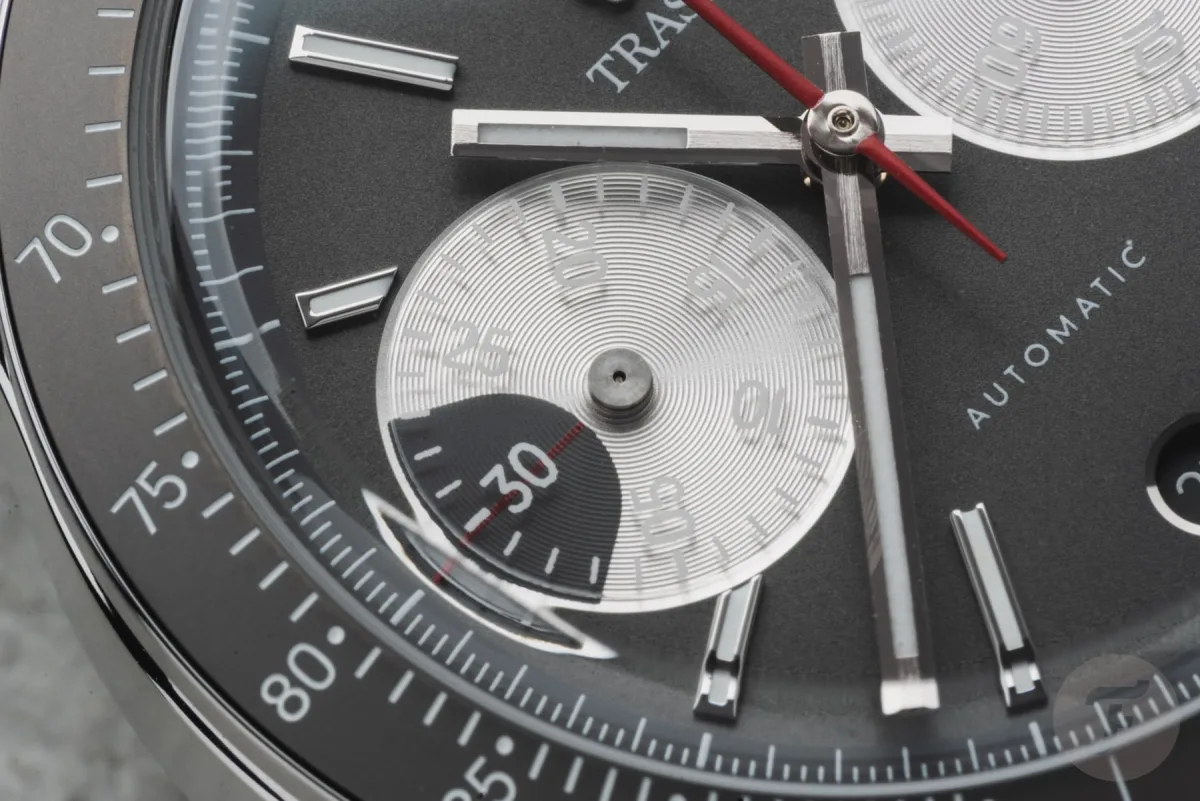
Besides the registers, a date indicator is neatly integrated at the 6 o'clock position. The result is a chronograph with unexpected details, yet a natural and harmonious appearance. The monochrome color scheme with red accents gives the watch a contemporary style. It reminded me of the Zenith Chronomaster Sport Titanium with a similar color palette - one of my favorite chronographs of recent years.
Wearing Experience of the Traska Chronograph
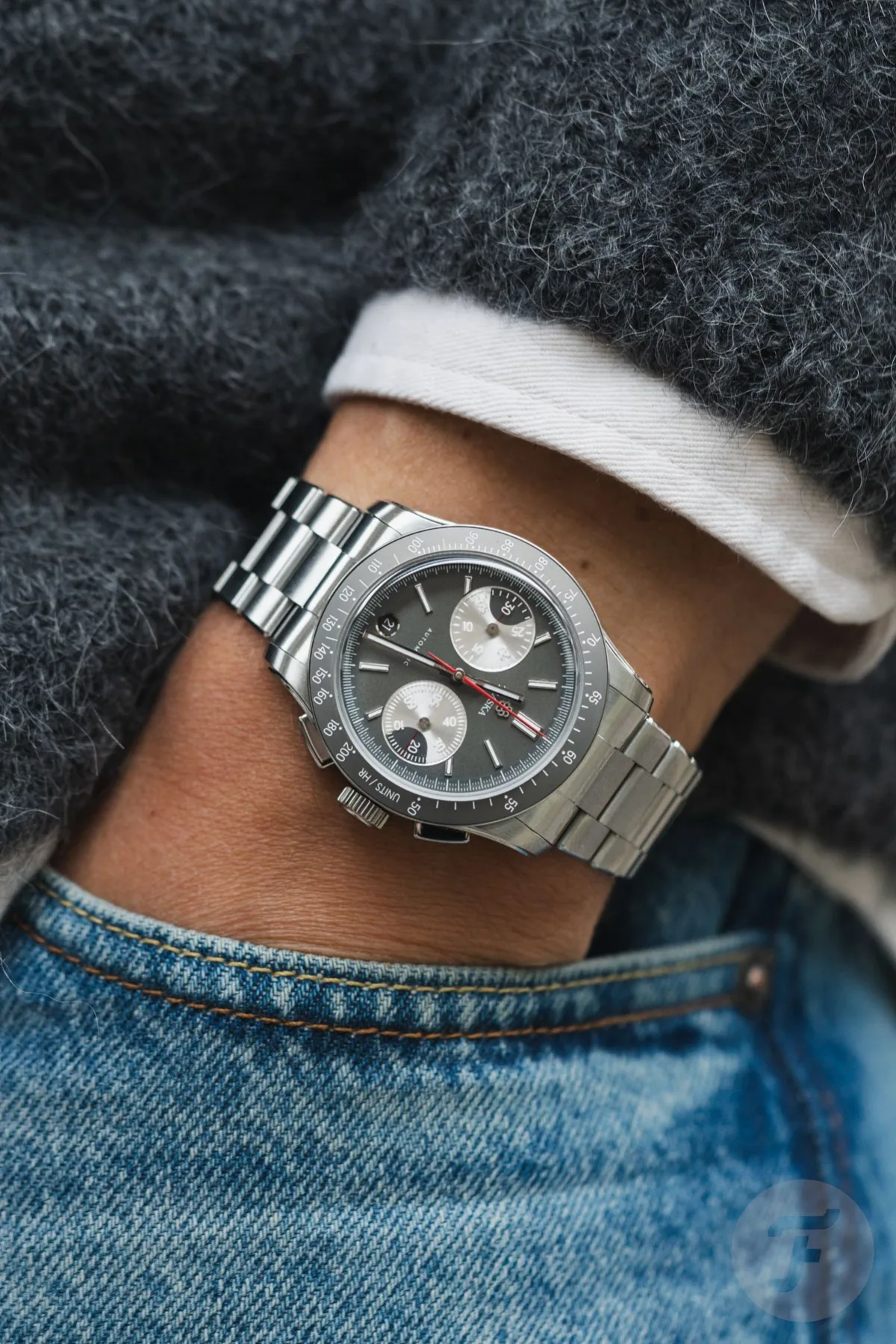
This is a long story with many details, but as most would agree, the real test is when the watch is on the wrist. This is where the details matter. The flat-link bracelet is easily adjustable thanks to screws in the links and a tool-free micro-adjustment clasp. Like the case, the bracelet received a signature finish to enhance scratch resistance.
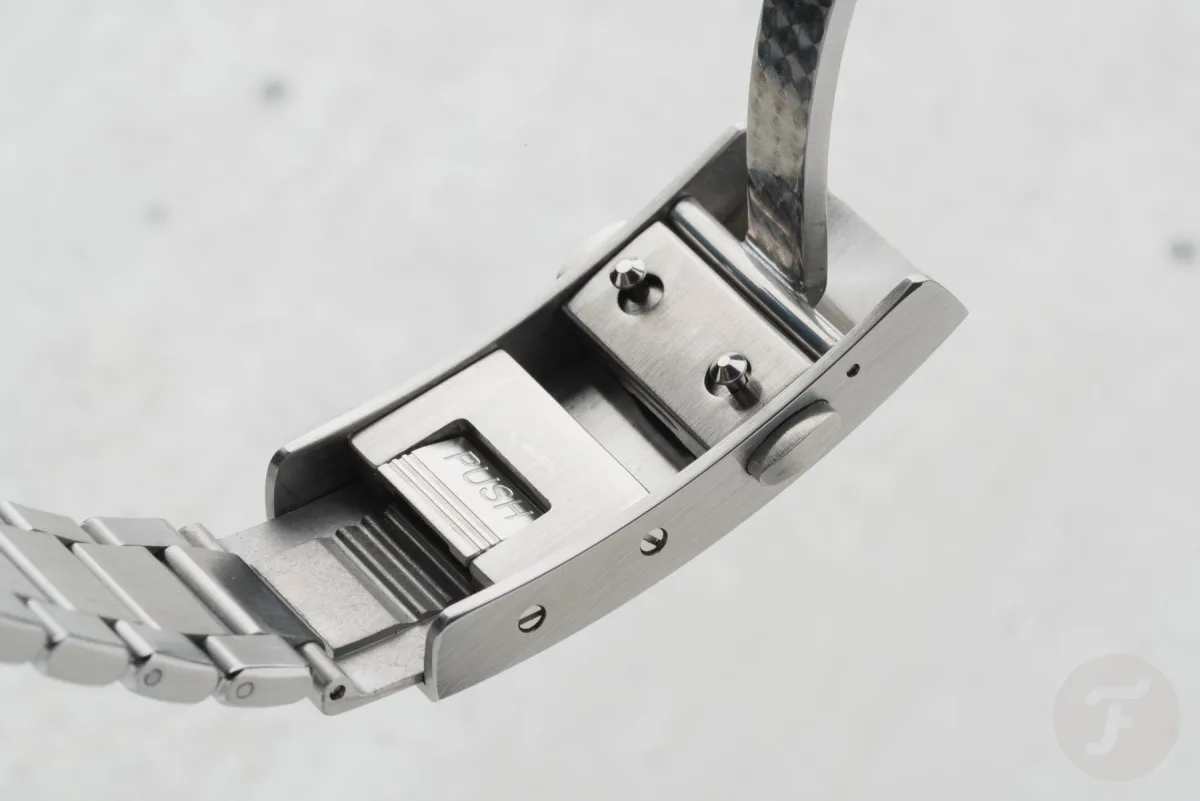
After adjusting the bracelet, the watch is ready to wear. Honestly, I had doubts about the rotating disks. While the idea is unconventional and neatly executed, would they distract from the chronograph's usual practicality? The answer is a resounding "no." Thanks to the clean design and monochrome palette, Traska achieved a natural perception.
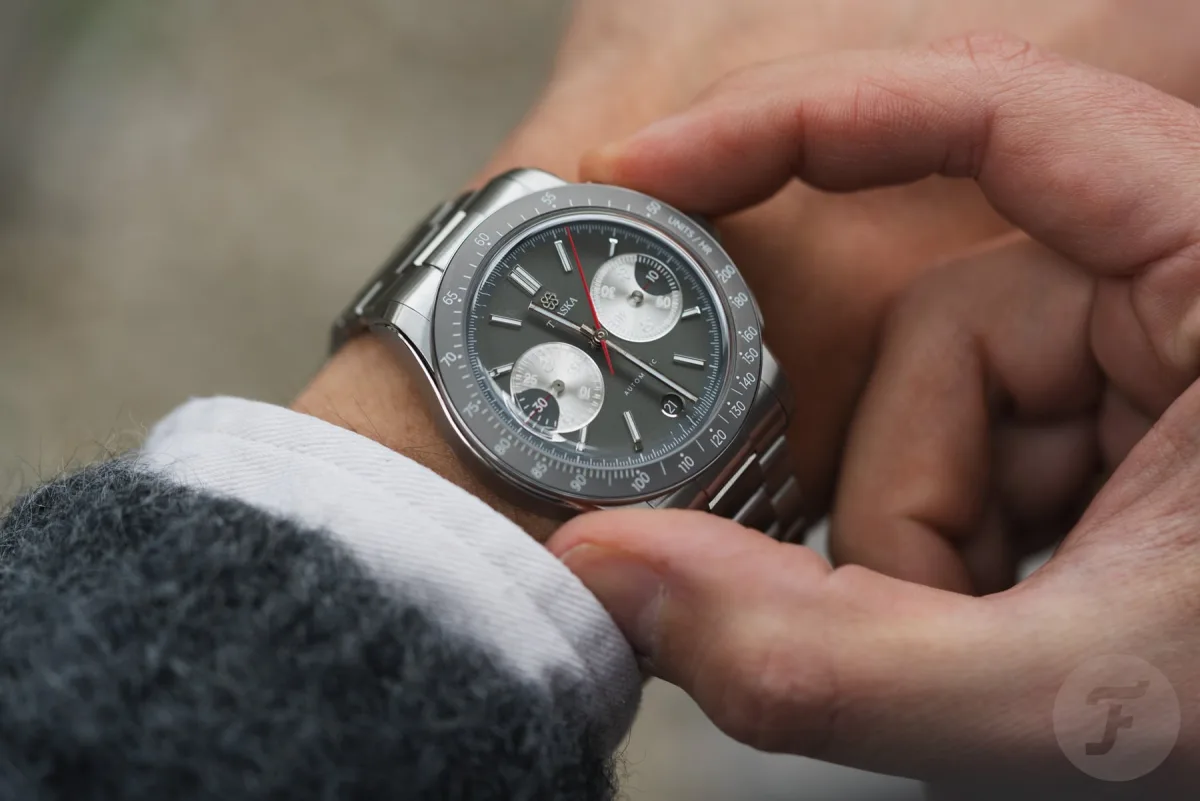
Moreover, the watch has successful proportions, sits comfortably on the wrist, and gives the impression of a quality product. This is not surprising after the reviews of the Commuter and Venturer, but I would say the chronograph even surpasses them. There is attention to detail without compromising practicality and quality.
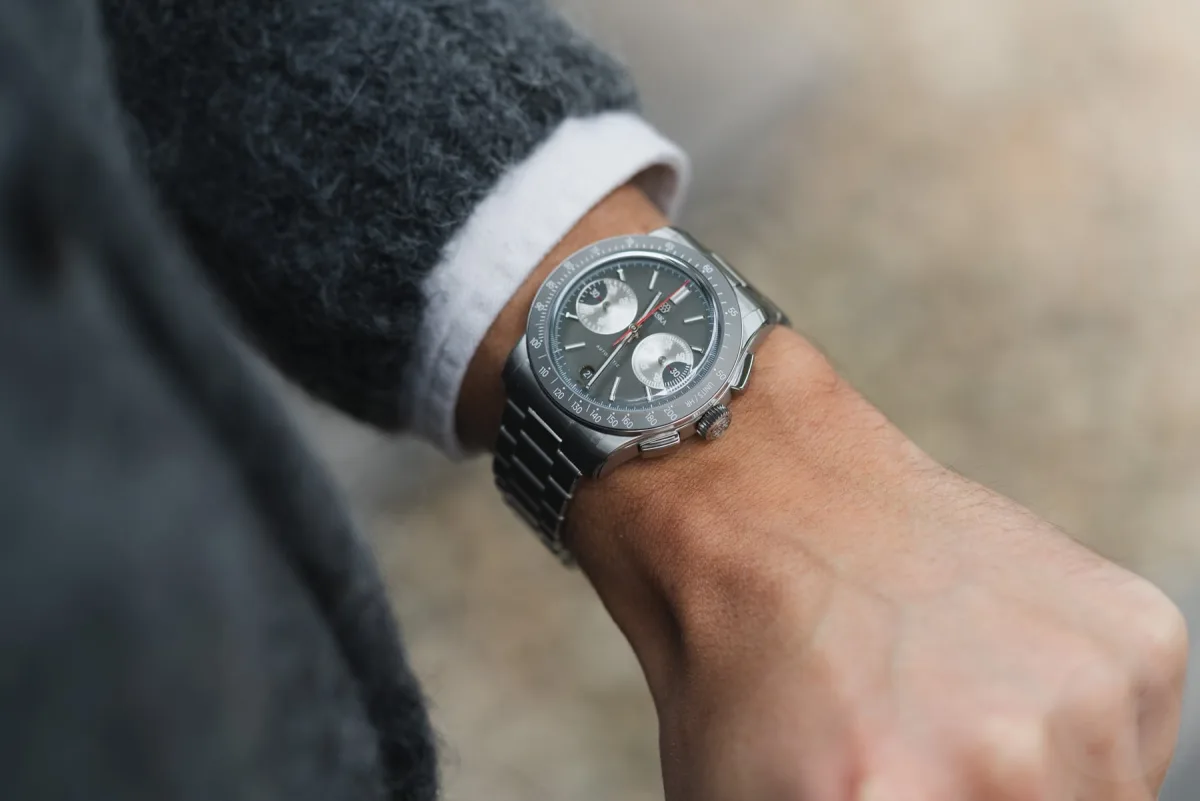
The watch looks and feels much more luxurious than its price suggests. The same goes for the chronograph operation - start, stop, and reset are smooth, with clear clicks. While operating, both disks rotate, but the movement is not too noticeable, which is more soothing than distracting.
Final Impressions of the Traska Chronograph
After several days of wearing, I have a clear understanding of the work put into the new Traska Chronograph. I want to express great gratitude to Jon Mack and Max Resnick for creating a watch that feels like a classic chronograph, albeit with an unusual approach. Do I believe that a model with traditional hands on the registers would have the same effect?
Honestly, yes. The watch is too good in all respects to need such an unconventional solution. The overall aesthetics, dimensions, movement, and build quality make this chronograph an excellent choice in the under €2,000 price category. These achievements make it stand out among competitors regardless of design. To be frank, I may be old-fashioned and prefer a classic approach to chronographs.
However, after reading Jon Mack's thoughts on options, it becomes clear that Traska consciously chose this design. It makes the watch unique, slightly different, and unusual, yet retaining the classic chronograph aesthetics. The result is an impressive first new model from the brand in three years, which will surely appeal to fans worldwide. Traska will offer the chronograph at a price of $1,695, starting March 1, 2026, at 11:00 EST / 17:00 CET on the brand's official website.
For this money, finding a better chronograph is almost impossible. Most competitors are larger, bulkier, use less impressive movements, and fall short in design and build quality. These watches are not just a new benchmark for Traska, but the best chronograph in their price category. It really is just that.