
It's ironic that despite spending most of the day around wristwatches, we rarely check the time on our wrists.
Personally, I check the time on my phone more often than on my watch. However, when working at a desk, the object that quietly governs your day isn't the watch you put on in the morning. It's the desk clock, which never moves. They're always in sight, require no attention, marking time in a way that feels more stable and constant. Wristwatches are put on and taken off, while desk clocks become part of the furniture, part of the rhythm of the space.
Over time, you stop consciously looking at them, yet you rely on them completely. This subtle shift is what makes desk clocks intriguing. They aren't changed, turned around, or altered based on mood. Collecting wristwatches often feels like a fast and transactional process, while desk clocks demand a different kind of relationship. Modern mechanical desk clocks that are truly thought out are few, but some stand out for various reasons. They're not an alternative to wristwatches, but companions. They speak not only to how we measure time but also how we experience it. Below are my favorite desk clocks, which I believe add something special to any workspace.
MB&F × L’Epée Sherman - Pure Mechanical Joy
If there is one modern desk clock that fully embodies emotions, it is the Sherman by MB&F, created in collaboration with L’Epée. This friendly little robot doesn't try to blend into the interior or quietly disappear into the background. Instead, it treats the desk clock as a real field for mechanical play. I love the open balance wheel - the 'brain' of Sherman, which allows you to observe how this little hero 'thinks', living its animated yet motionless life. This sensation is oddly calming and joyful, something most clocks lack.
This sense of imagination is very deliberate. As Max Büsser says:
"A long time ago in a galaxy far, far away, a man's best friend was his robot. As a ten-year-old Star Wars fan, I knew Luke Skywalker couldn't triumph without droids like R2-D2 - a loyal, resourceful, and brave robot. I was an only child and dreamed of having my own robot companion, and Sherman brings this childhood fantasy to life."
Knowing this, Sherman becomes even more understandable. It seems Büsser created something he truly wanted to have.

The cost of the Sherman desk clock is 15,530 Swiss francs excluding taxes. Production is limited, though the clocks aren't officially numbered, and availability depends on L’Epée's production. Like many MB&F creations, they aren't encountered by chance - they usually need to be sought out, which seems quite fitting. It seems Sherman's main task is to make you smile, with time-telling being just a pleasant bonus. More about Sherman can be found on the MB&F website.
Kubernet and the Secular Perpetual Calendar
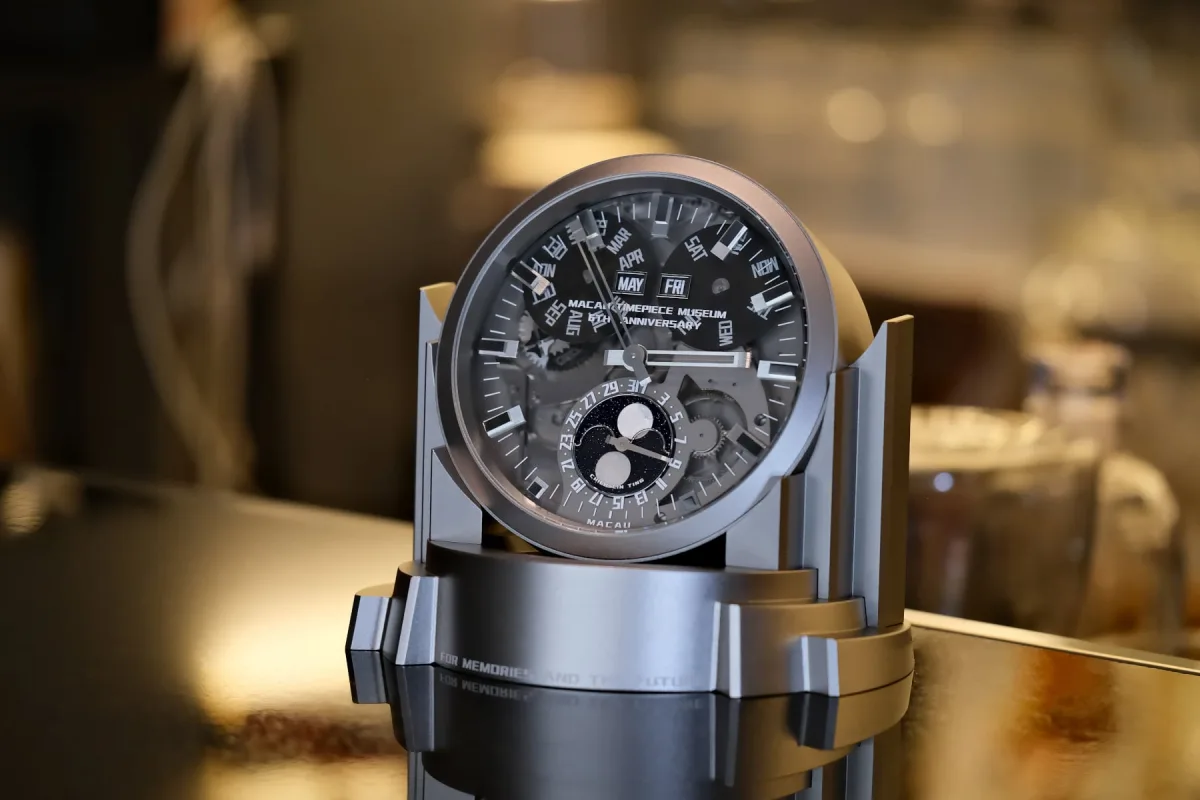
On the opposite end is the Secular Perpetual Calendar desk clock from Kubernet. I have already written about the technical details of these clocks, so I won't repeat myself. I recommend reading the description of this impressive piece. In the context of this article, it's more interesting to understand why this idea is better suited for desk clocks than wristwatches.
The secular perpetual calendar is, by definition, a long-term concept. It is designed for accuracy over centuries, accounting for calendar features that most perpetual calendars ignore. For wristwatches, such ambition seems abstract: very few watches are worn continuously for decades, let alone centuries. They are serviced, changed, passed on. Desk clocks live a completely different life.

For desk clocks, the logic is immediately clear. It's an object meant to stay in place, becoming part of the interior rather than part of a rotation. They are lived with for years, perhaps even passed down, rather than replaced. In such a context, the complication ceases to be a show-off and becomes the point. It speaks of patience, continuity, and the quiet pleasure of a clock simply doing its job in the background.
I was particularly impressed by how accessibly Kubernet approached this idea. The Eternal Day version with a closed dial costs $6,800, while the Eternal Night version (my favorite) with an open sapphire dial costs $8,480. Both are produced in small series and sold directly, placing them in a rather unusual middle category. It's a serious approach to timekeeping but not closed off by an exorbitant price or complicated ordering process.
Jaeger-LeCoultre Atmos - The Quiet Benchmark
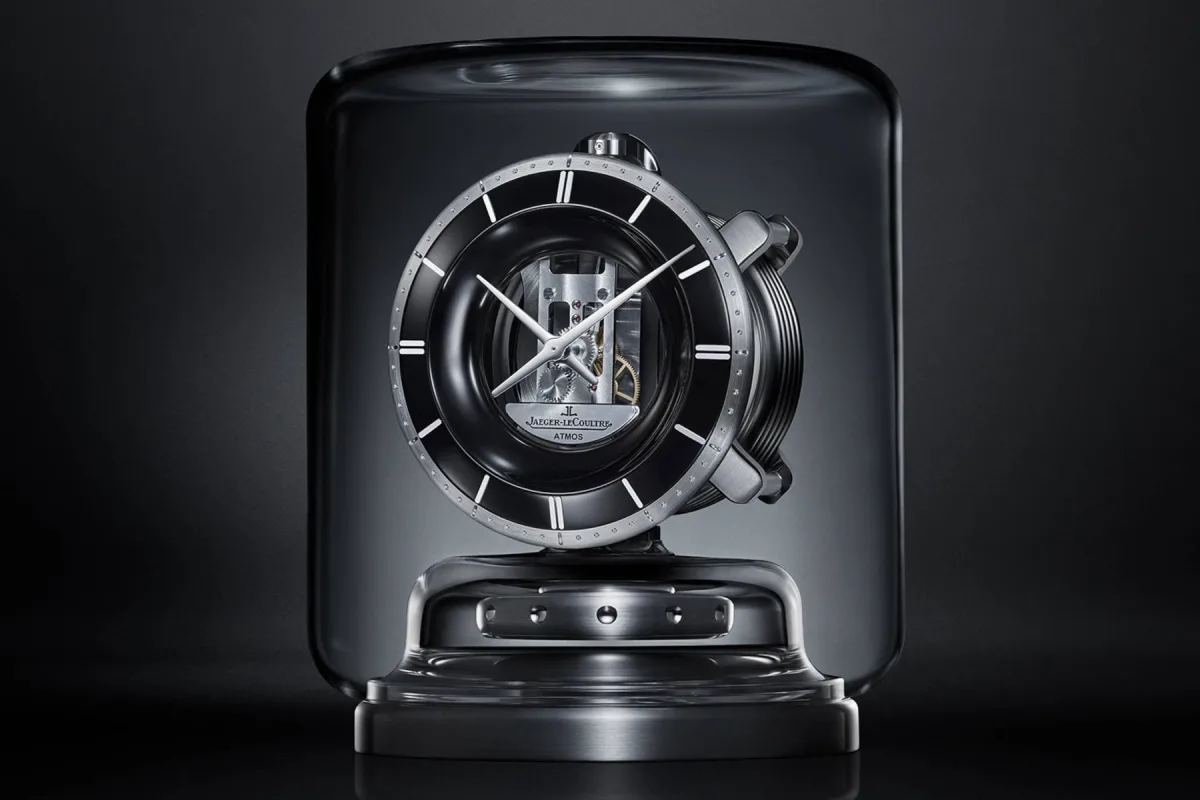
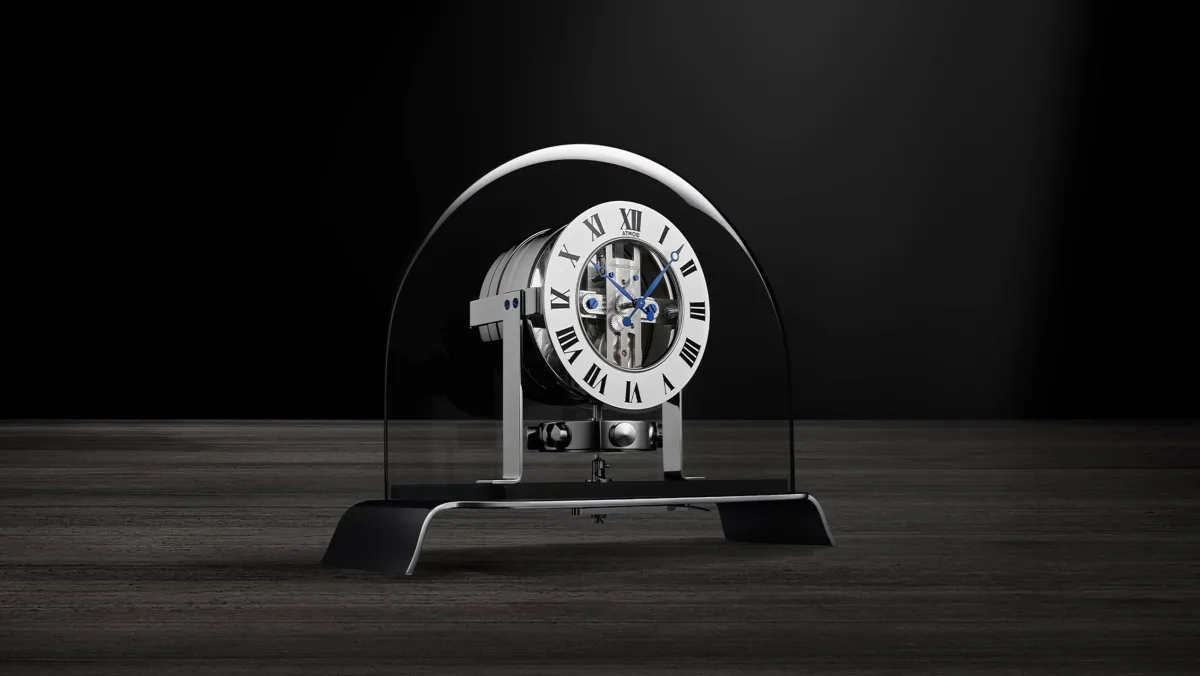
No discussion of desk clocks would be complete without mentioning the Atmos from Jaeger-LeCoultre. These clocks have occupied a unique niche for decades. While some clocks attract with personality or conceptual depth, Atmos earns respect with its quiet confidence. It doesn't aim to impress you instantly but slowly proves its value. It is perhaps the most genuine desk clock.
Part of this is in the principle of operation. Working from tiny changes in air temperature, the Atmos seems detached from the typical rituals of mechanical ownership. Set it - and the clock runs. They don't need winding, they are barely interacted with. You just glance, trust, and continue working. Over time, the lack of drama becomes part of the appeal. These are clocks that demand very little from you and in return offer stability.
Atmos Classic perfectly embodies this idea. Prices start at approximately €12,100, offering a basic experience without frills. In a price segment where desk clocks can quickly go to extremes, the Classic feels calm and grounded. This is serious watchmaking applied to desk clocks, but without the feeling that they need to be treated as museum pieces.
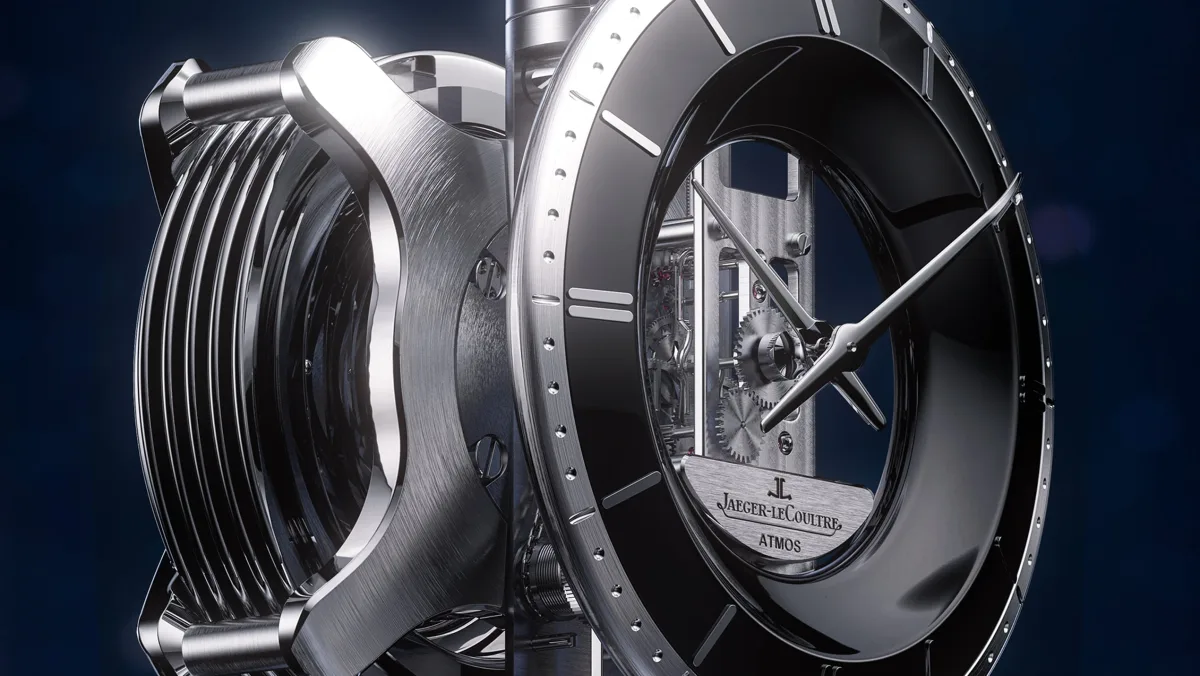
However, the version I keep returning to is the Atmos Infinite. It takes the same principle and gives it more visual and architectural presence. The design looks cleaner and more modern, like a clock that would fit perfectly into a contemporary living space rather than a traditional office. The price of €21,800 isn't low, but it seems carefully considered. You're paying not for complications in the usual sense, but for refinement, stability, and mechanical tranquility, which few manage to convey, be it wristwatches or desk clocks.

Rolex Does It Its Own Way
It's hard not to smile seeing one of the most recognizable dive watches in the world transformed into a desk clock. The Rolex Submariner Date Desk Clock ref. 909010LN scales the design of the modern Submariner to almost theatrical proportions. The dial, bezel, hands, even the 'cyclops' over the date - everything is in place but enlarged.
Unlike other clocks in this article, there is no attempt here to rethink timekeeping or explore new mechanical horizons. It's about familiarity. If you've spent years looking at a Submariner on your wrist, seeing the same layout on a desk feels oddly comforting. It's no longer just a clock, but an object that blurs the lines between merchandise and horological art.

However, it's still unclear how widely these clocks are available. I haven't seen them in boutique displays, even in a demonstration format, adding to the mystery. It seems like one of those Rolex objects that officially exist in the catalog but haven't yet gained wide distribution.
The price of the Rolex desk clock is €10,320 - almost as much as the Submariner Date ref. 126610LN. This places them closer to serious collectors than everyday accessories. They're not for everyone and don't try to be. But for those who already wear a Submariner, it's an extension of identity into the personal workspace. And in a world of collecting where brand connection matters, that sounds logical.
Why Desk Clocks Still Have Their Place
Desk clocks may never dominate discussions like wristwatches, but perhaps that's why they're appealing. They're not about personal style or daily change. They're about presence, consistency, and how time is perceived in a fixed space.
Whether it's the expressive mechanics of MB&F, the long-term accuracy of Kubernet, or the quiet confidence of Jaeger-LeCoultre Atmos, each of these clocks compellingly demonstrates why this category is still important. In a world of collecting where everything moves too fast, desk clocks offer something rare. They stay in place, quietly doing their job and inviting you to slow down with them. Life already feels too fast. Slowing down a little isn't unwelcome.
Do you have a desk clock on your work or home desk? Share in the comments if you do, and tell us which ones!