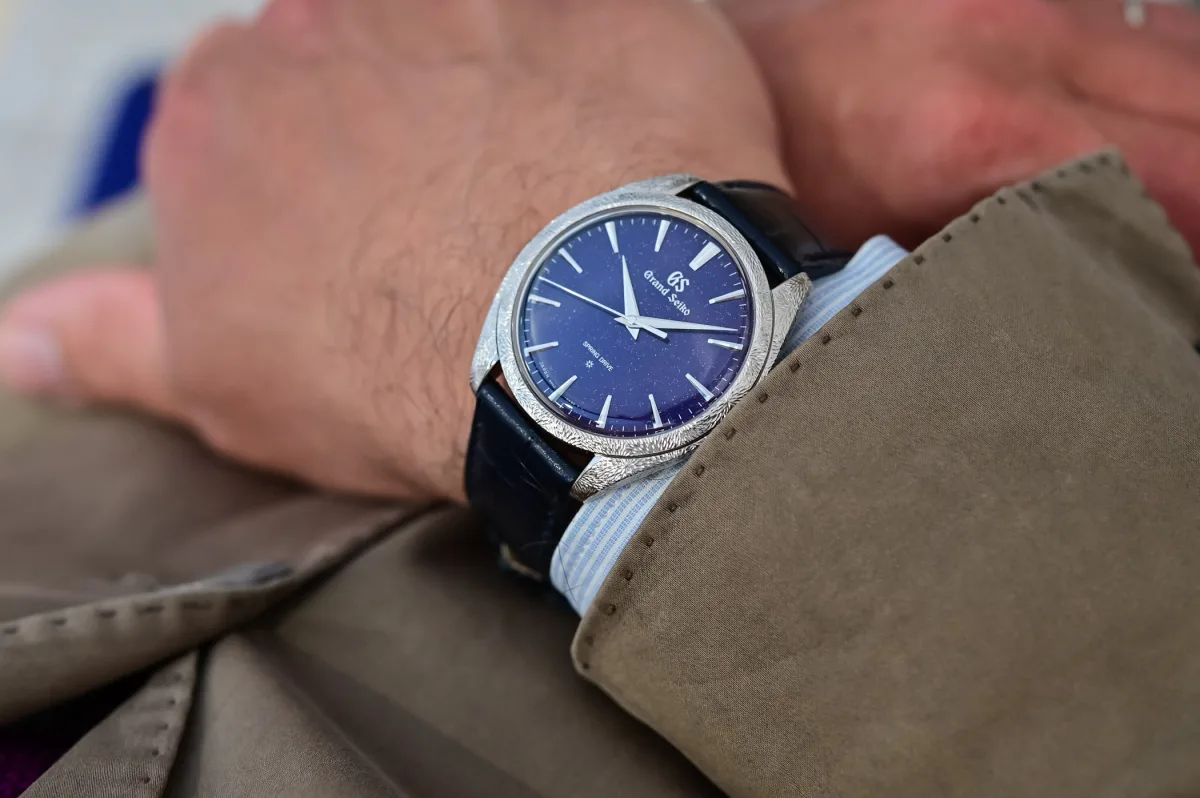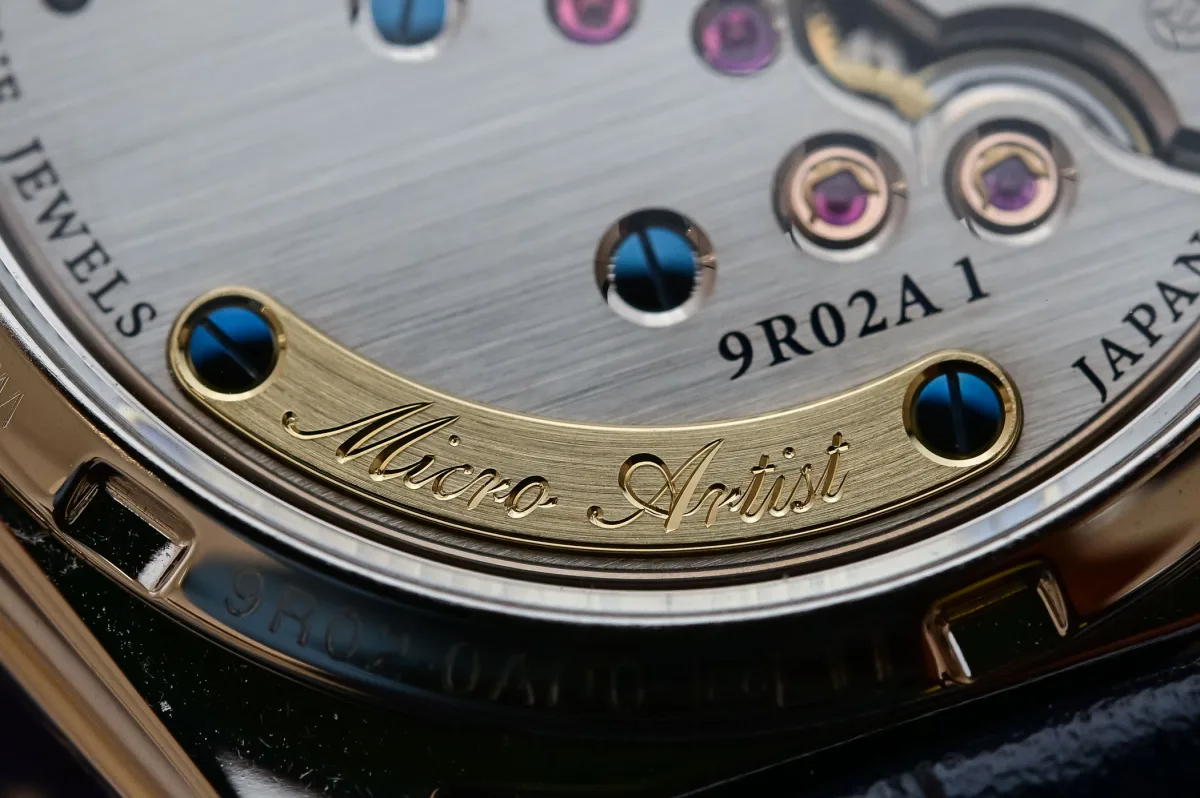
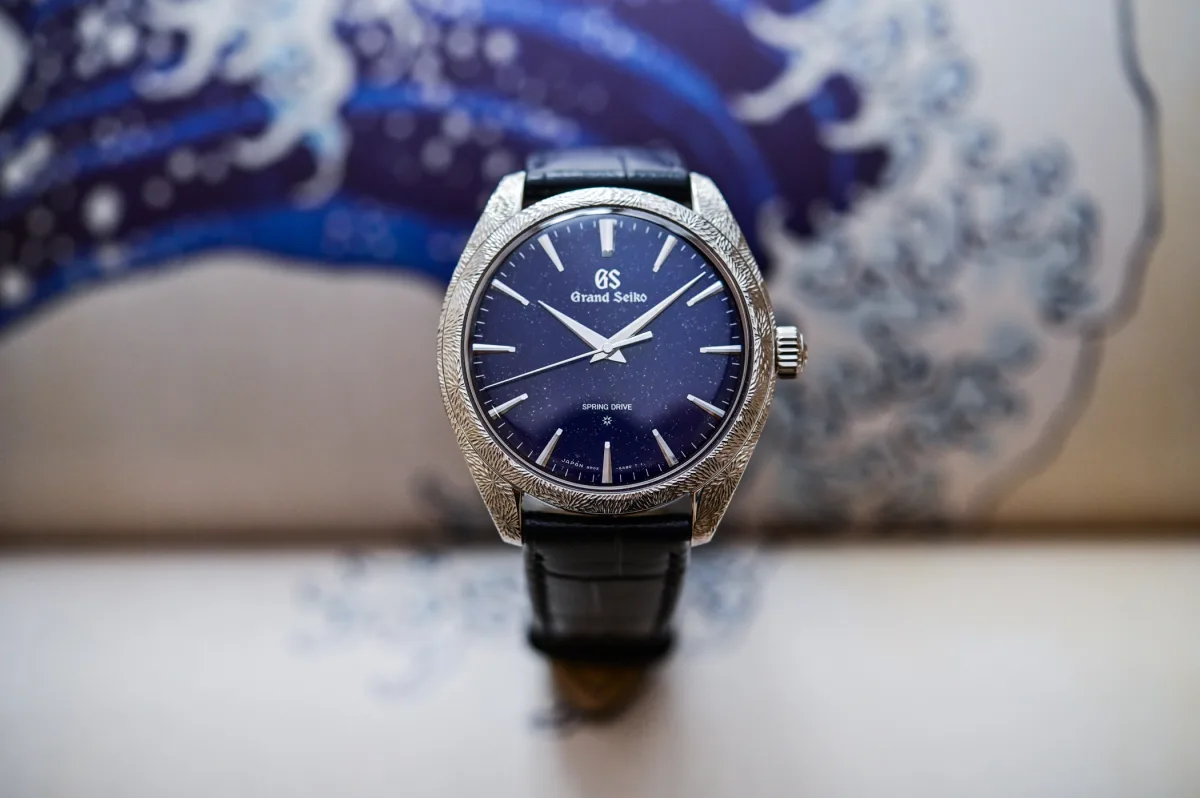
About a month ago, we had the opportunity to get acquainted with a watch that I can easily call impressive, not only because of its technical solutions but also due to the amount of decorative skills involved in its creation. This watch, the SBGZ007 from Grand Seiko's Masterpiece Collection, emerged from the Micro Artist Studio. If Grand Seiko already represents the luxurious side of the Japanese conglomerate, then the Studio is its most exclusive embodiment of high watchmaking art. Coinciding with the presentation of the latest Masterpiece watches, we also had the opportunity to visit the Micro Artist Studio. Of course, due to sanitary restrictions, this was done via video. But we still had the chance to speak with Masatoshi Moteki, responsible for movement design, research and development, and Kazunori Hoshino, responsible for planning, development, and design. Here's what we learned from this discussion.
Let us remind you that the Seiko Corporation consists of several brands positioned in various price segments and with different interpretations of watchmaking art. Of course, there is Seiko itself, which includes sub-brands such as Prospex, Presage, or Seiko 5 Sports. Then there is Grand Seiko, a high-end watch company that has everything to compete with the best Swiss brands. And finally, there's Credor, where some of the most complex and advanced watches of the group are created. Naturally, all these watches are not produced under one roof or by the same watchmakers. Grand Seiko watches require much more attention to detail and, accordingly, highly skilled watchmakers. The same applies to Credor. But even within these two companies, there are watches managed by another atelier - the Micro Artist Studio, where Japanese magic happens.
The studio was founded in 2000 with the aim of "identifying, studying, and mastering technologies and skills passed down by our predecessors for the production of luxury watches," and it can be considered the high watchmaking atelier of the group. If the Studio is where the most complex watches of the group are created - for example, the Credor Sonnerie or Minute Repeater - it is also a place for something even more exclusive, related to traditional hand-executed decorative skills. In this rather restricted zone, where about 10 employees work - they are considered some of the best Japanese watchmakers. It is located on the same premises in Nagano Prefecture as the Shinshu Watch Studio, where all Grand Seiko Spring Drive spring and quartz watches are produced.
The Micro Artist Studio consists of a team of movement designers and watchmakers who are engaged in creating the company's most complex and exclusive watches. For example, the studio is responsible for the most complex Spring Drive watches under the names Grand Seiko Masterpieces or Credor - such as the Grand Seiko Spring Drive 8-Day, Credor Eichi II, Credor Spring Drive Sonnerie 2006 (the studio's first creation), or the Credor Spring Drive Minute Repeater 2011. Recently, the brand introduced a series of Spring Drive for fine dress, including fully engraved platinum watches SBGZ001, equipped with the caliber 9R02 developed by the studio.
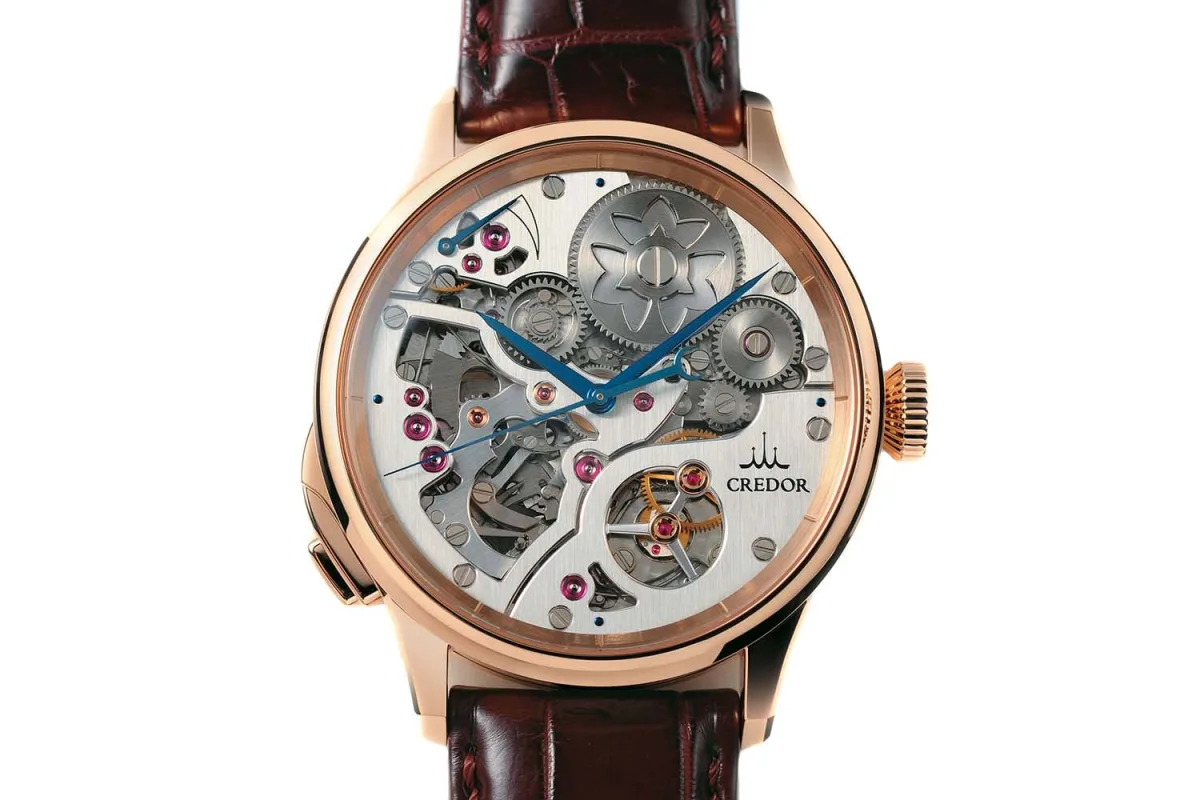
It is here that gentlemen Masatoshi Moteki and Kazunori Hoshino realize their artistic abilities together with a team of technical experts, such as Katsumi Nakata, who was recognized as a contemporary master craftsman and became the third member of the Micro Artist Studio team to receive the Yellow Ribbon Medal from the Japanese government. This is the place where the takumi are found.
After the presentation of the new Masterpiece SBGZ007 watches, we had the opportunity to talk with Mr. Moteki and Mr. Hoshino to understand what the studio does, as well as to learn details about how these new Masterpiece watches came to be.
Finishing and Polishing of Parts
First, we discovered the section where the finishing of parts for the Masterpiece watches is carried out, as well as some Credor movements - Eichi, Sonnerie, and Repeater. In the most traditional manner, as seen in the example of the gear train bridge of caliber 9R02, the anglage is done entirely by hand, using softwood vapors, files, and polishing pastes to achieve the so-called bercé (rounded profile) bevel, which only a limited number of highly skilled craftsmen can obtain. Similarly, the deceptively simple hairline finish of flat surfaces is again done by hand and requires multiple passes to achieve such a high-precision level of brushing.
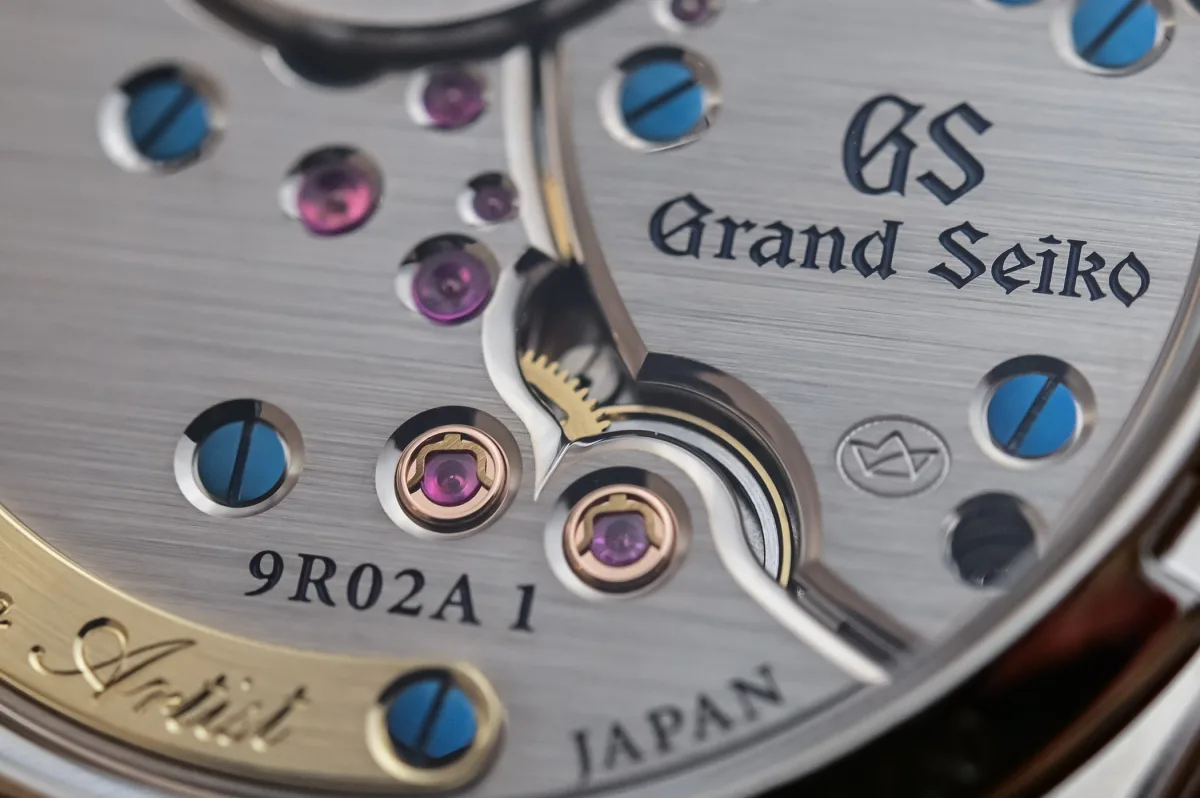
A funny anecdote: in the studio hangs a photograph of Mr. Philippe Dufour, who, as you probably know, advised some of the studio's watchmakers in defining these finishing methods. Mr. Maejima, responsible for polishing the movement, says that all the polishing work on the new caliber 9R02 takes about 20 hours.
Conversation with Mr. Moteki and Mr. Hoshino
How do the mechanisms from the classic Grand Seiko collection differ from the new caliber 9R02 made in the Micro Artist Studio?
Masatoshi Moteki - There are three points that distinguish this new mechanism. The first point is the way parts are finished. The masterpiece made by the studio includes more parts finished by hand than the classic Grand Seiko mechanism, except for caliber 9R31 from GS (where the bridge has a hairline finish), and all Spring Drive movements, whose gears and pivots are also hand-finished. Returning to the new caliber 9R02, parts including bridges, gears, and even the top of the wheel shaft are polished by hand, allowing for a beautiful finish to the movement itself.
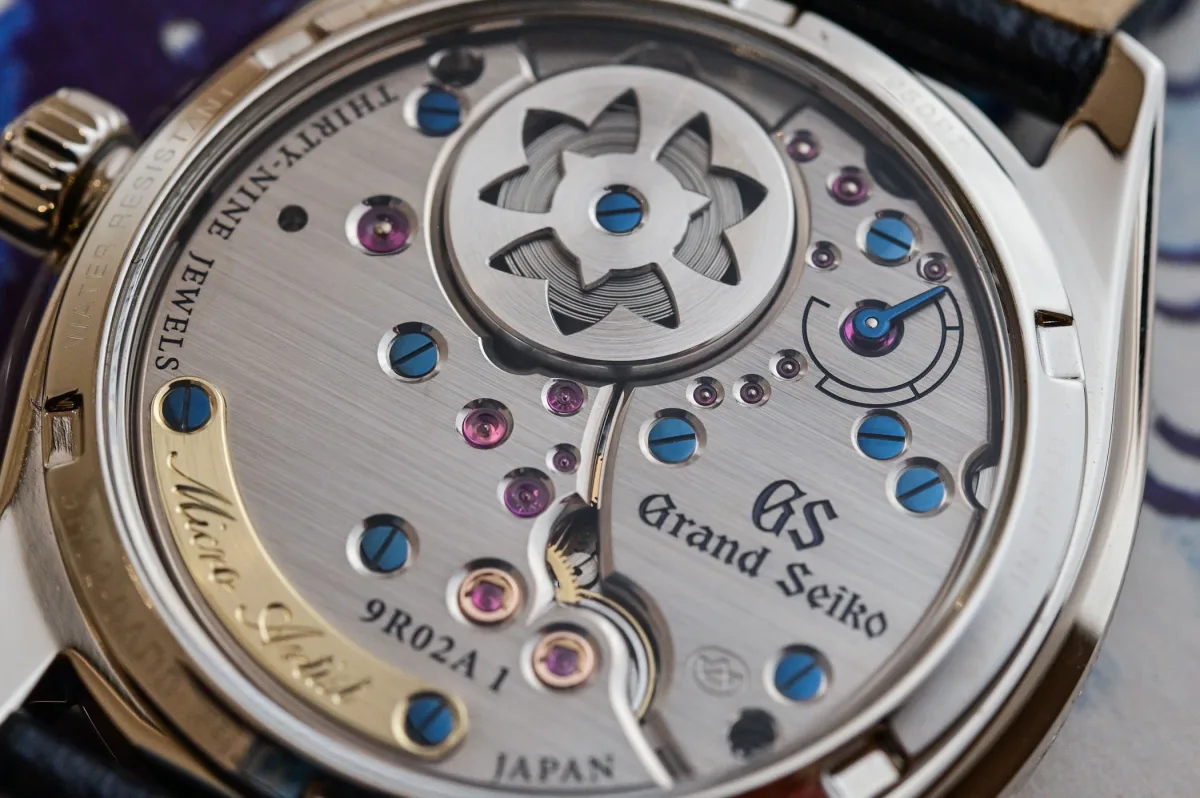
Secondly, the assembly process differs. Grand Seiko mechanisms are assembled by a team. In the mechanisms made by the Micro Artist Studio, including caliber 9R02, a single experienced watchmaker is responsible for the entire assembly process, from installing jewels and pins into bridges to setting gears into wheels. This allows for careful adjustment of each watch, including the clearances between gears and parts. Ultimately, this ensures smooth operation of the watch, even if the wheels are made thicker for greater durability.
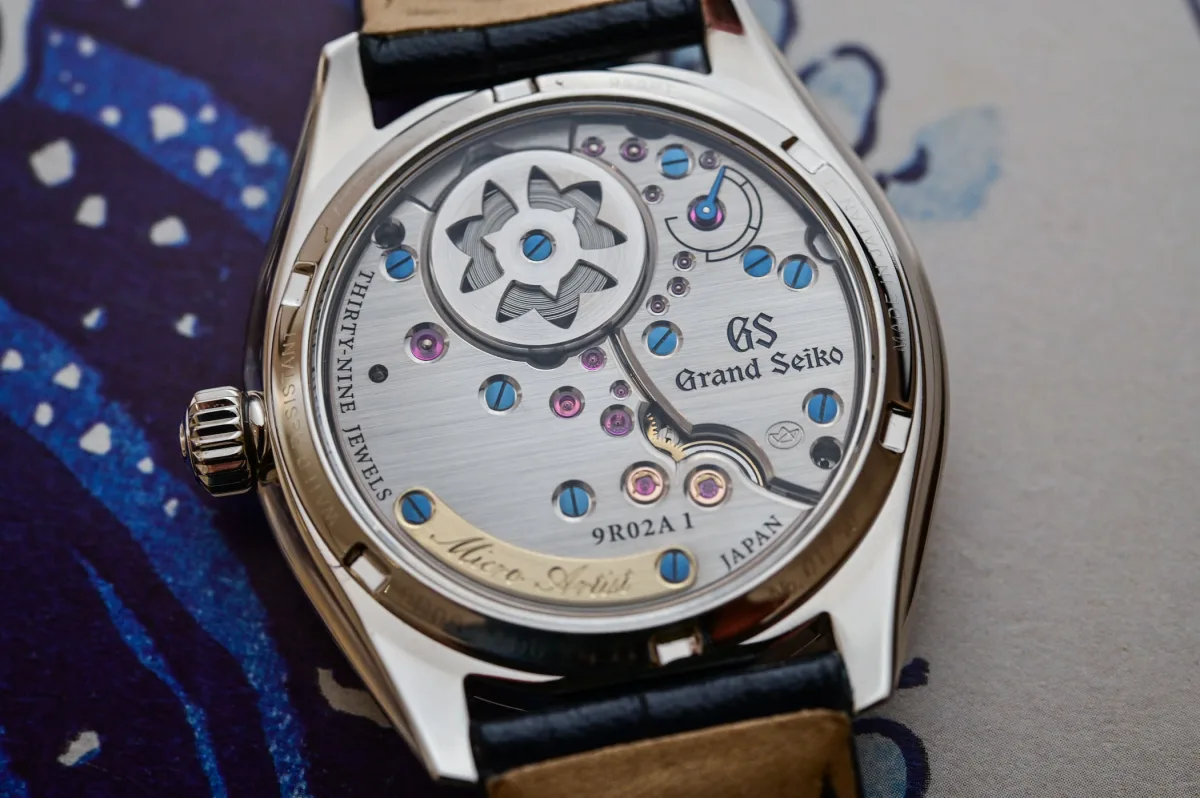
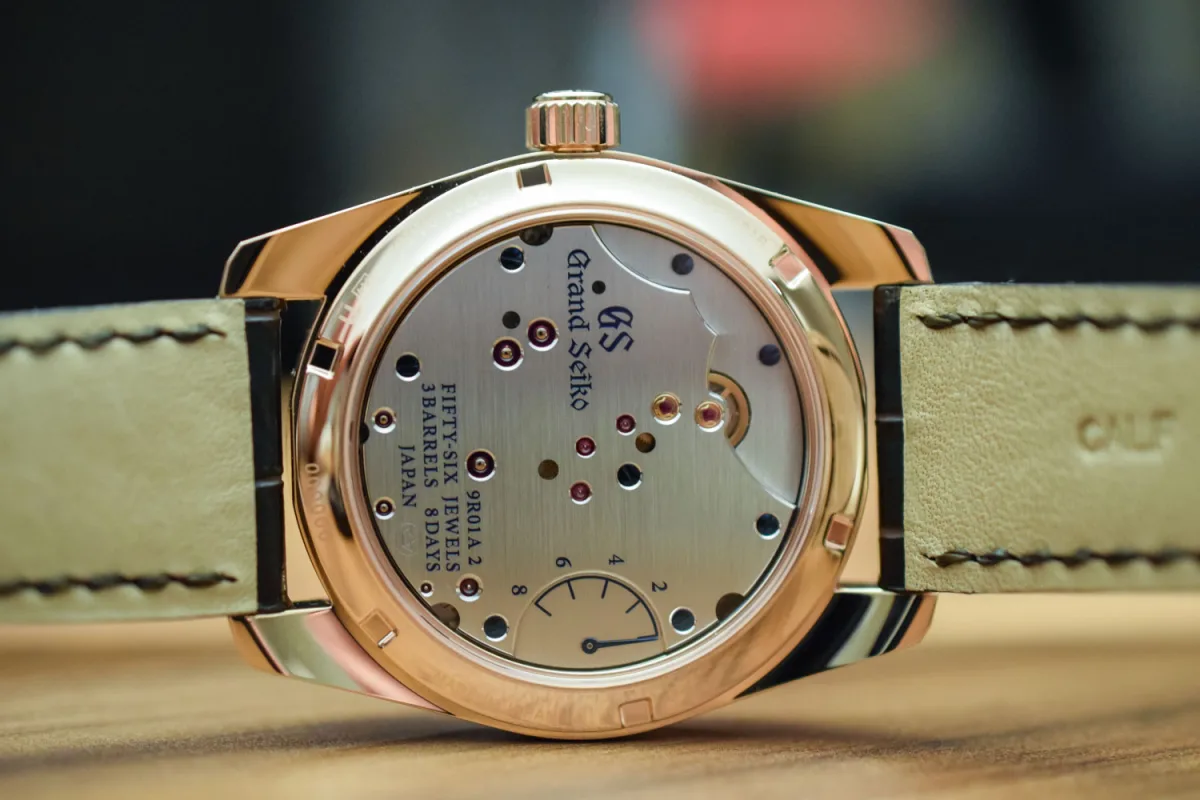
And finally, the use of unique watch technologies, such as the torque return system, which is not applied in ordinary Grand Seiko watches. This has allowed the power reserve to be increased from 72 hours to 84 hours in the 9R02 model. The mechanism parts developed by the Micro Artist Studio are also made to stricter standards than Grand Seiko, because due to the complexity of the design, these parts require greater strength and durability. The 9R02 also uses German silver for the gear train and power reserve bridges, which allows for an even more exclusive design and finish.
What finishing techniques are used and how are they performed in the atelier?
Masatoshi Moteki - Two types of finishing techniques are used in the Micro Artist Studio. One is polishing for beauty and aesthetics. The other is for functionality, to reduce friction and prevent part wear. Of course, in some cases, both can be found in one part. When a smooth surface is required, parts from non-Masterpieces watches may use barrel or chemical polishing, which, however, causes the edges of parts to round off, losing sharpness. In the case of the Studio, we use wooden sticks, sandpaper, or files to polish only the necessary areas, not the entire part. This helps us preserve the aspect of the mechanism and parts, having a mirror finish where needed, while other areas remain sharp. This is especially noticeable on the bell of the caliber 9R02.
What are the positive aspects of working with a Spring Drive compared to a classic mechanical movement from the perspective of a movement developer? Is this technology suitable for modernization?
Masatoshi Moteki - The Spring Drive mechanism has some design advantages. For example, the glide wheel is very light and allows for a simpler design. Additionally, due to its concept, there is no need for shockproof bearings. This simplicity is one of the advantages. As in mechanical watches, the Spring Drive mechanism is driven by a mainspring, which can create a large torque. Along with the smooth sliding motion of the second hand, which is silent, it is ideal for chiming watches, such as Sonnerie and Minute Repeater.
What are the key design elements of the 9R series and the 9R02 caliber in particular?
Kazunori Hoshino - I believe that one of the key elements and something that I consider important in the design of calibers is "beauty based on functionality" or the beauty of use. This value is highly cherished in Japan, and I try to incorporate it as much as possible into the design of my mechanisms.
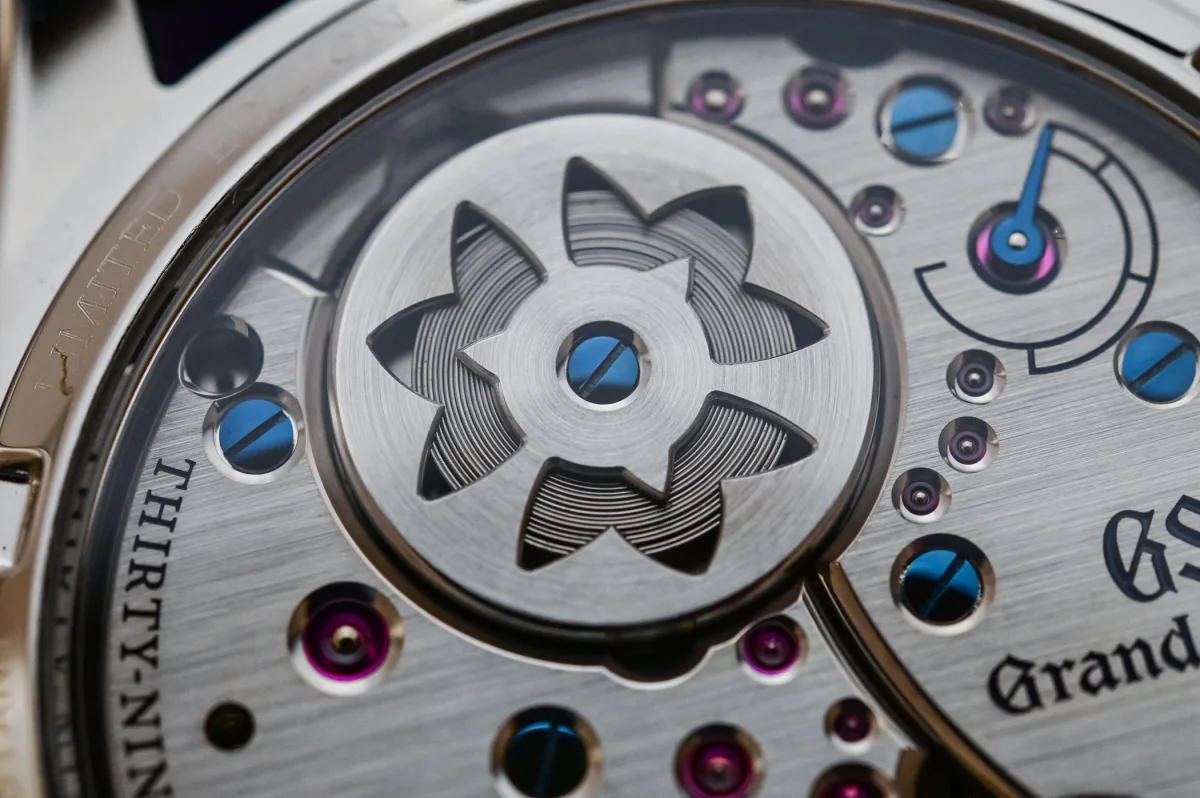
Masatoshi Moteki - There is something important in the 9R02 model. For example, in the 9R01 model, the bridge represents the image of the outline of Mount Fuji. In the case of the 9R02, the mainspring barrel is made in the shape of a bellflower, a symbol of the city of Shiojiri in Nagano Prefecture, where the studio is located. Thus, the design also reflects the origin of this mechanism.
Regarding the new Masterpiece SBGZ007 model, what guided the design development and what does the combination of the starry blue dial and engraved case represent?
Masatoshi Moteki - The inspiration for the design of the dial and case was the night starry sky over Achi. We tried to recreate this image on the blue dial, which is also known as the color of Grand Seiko. The design concept dates back to the Masterpiece watch with an 8-day power reserve - note: SBGD202 - which also expresses the night starry sky. Based on the design development process of the black dial, we wanted to adapt it to the blue dial. The first trial versions had a different blue color and less sparkling qualities than the SBGZ007 model. Initially, we wanted to give the GS logo volume, but decided to etch it on the dial, further complicating the process.
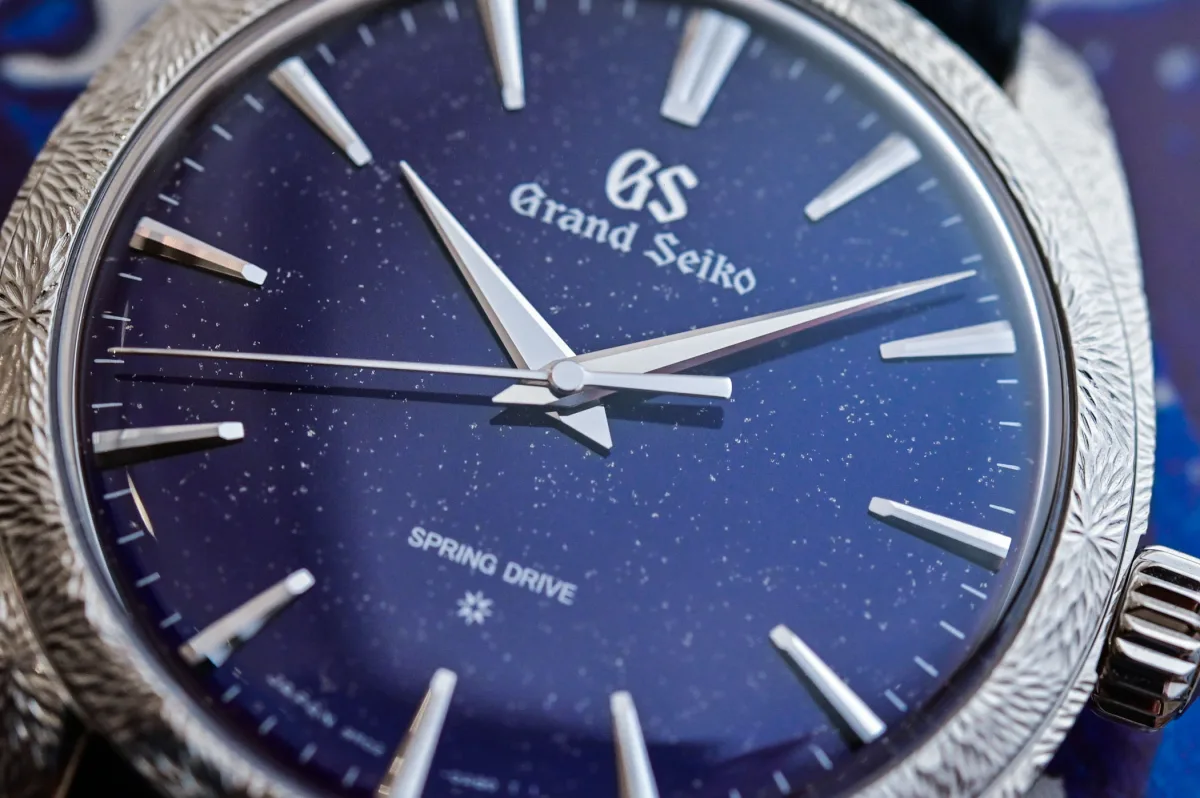
To decide what pattern to decorate the surface of the case with, I used a special book (called Edo Komon), which contains small traditional patterns from the Edo period (1600-1868). Thanks to this selection of ancient works, I decided on what to use to create a specific pattern engraved on the surface of the case. After the pattern was created, we applied it to a flat surface to feel how to carve this pattern. The next step was to take this pattern we created and apply it to the actual case, which is of course more difficult given the three-dimensional nature of this part.