A 50th-anniversary surprise is hardly what anyone expects.
People celebrating five decades often prefer to be surrounded by close ones who understand their desires and enjoy a fine dinner with an exquisite selection of wines. This is likely the atmosphere Patek Philippe had in mind when celebrating the 50th anniversary of the iconic Nautilus model. The four anniversary editions look familiar yet ceremonial, befitting the mature age of this luxurious sports model.
How to Celebrate the Anniversary of a Legendary Watch?
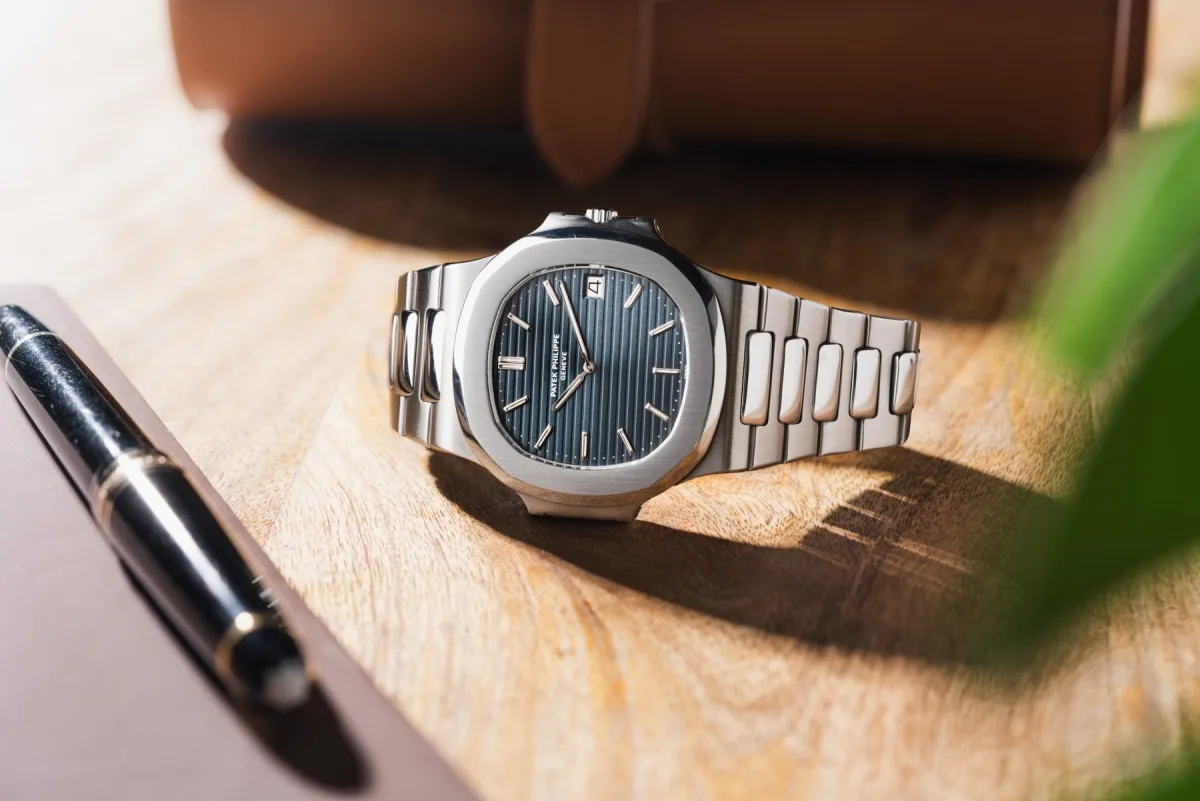
How to celebrate the birthday of a watch that has turned into a legend 50 years after its release? Calling the Nautilus an "icon" acknowledges the endless waiting lists and the secondary market prices reaching triple the retail value. The original Nautilus model - reference 3700/1A "Jumbo" - was a bold watch in every sense. The nickname relates to the case size - 40 mm (measured from 10 o'clock to 4 o'clock), which seems even larger when considering the "ears" of the case. Its sturdy, integrated design and staggering price - around 3000 euros at the time of release - caused a sensation. Such a cost for a steel watch was unprecedented; adjusted for inflation, this is approximately 15,000 euros today. Patek Philippe even boasted in ads: "One of the world's most expensive watches is made of steel."
The Creation Story of Patek Philippe Nautilus: A Brief Overview
The origin of Nautilus is shrouded in debate. According to legend, designer Gérald Genta sketched the design on a napkin in just a few minutes at a watch fair in Basel, noticing Patek Philippe executives in the same restaurant, and handed them the drawing. His sketch resembled one of his earlier works - the Audemars Piguet Royal Oak, introduced in 1972. These watches helped Audemars Piguet survive the Quartz Crisis by positioning themselves as ultimate luxury. Nautilus confirmed the success of such a strategy. The similarity between the two sports models is evident: the Royal Oak is inspired by a diver's helmet, the Nautilus by a ship's porthole. Both debuted with ultra-thin automatic movements by Jaeger-LeCoultre, integrated bracelets, and blue dials.
Nautilus ref. 3700/1A: Features of the Original
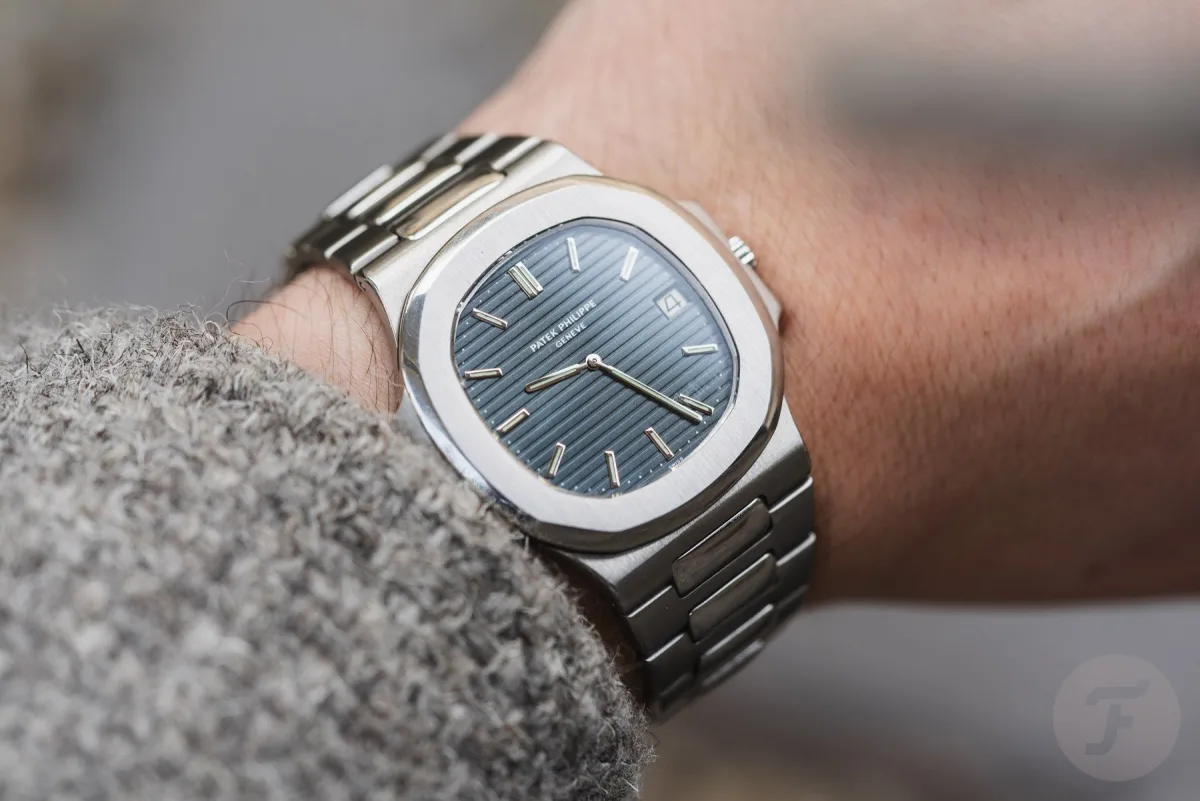
The key features of the original Nautilus are its case and dial. The two-part case is joined with screws in the "ears," turning the porthole-inspired design into an aesthetic and practical construction. Thanks to the two-part case, the movement was inserted from the front, which complicated servicing but allowed for a slim profile - only 7.5 mm - despite the automatic movement with a central rotor. The result is an elegant, harmonious, and flexible integrated design.
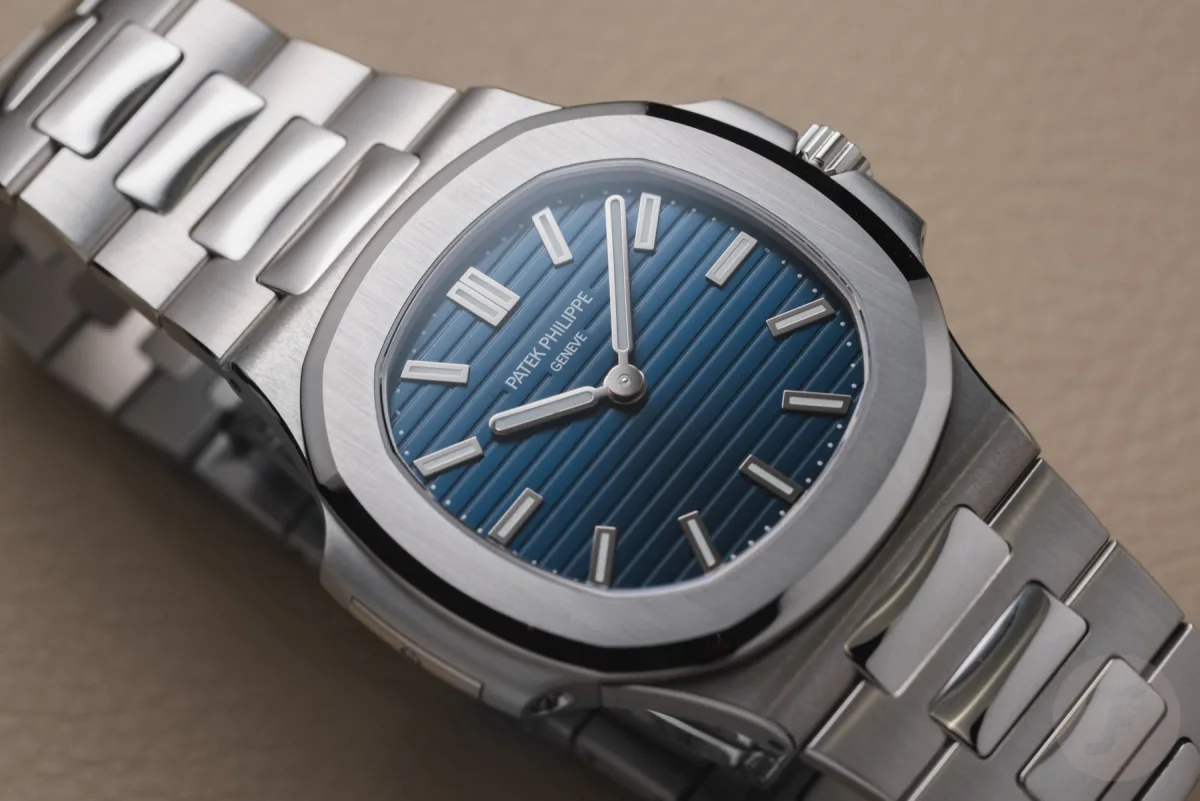
The recognizability of Nautilus is maintained by the gray-blue dial with a "deck board" pattern. The texture was hand-crafted, then a thin sunburst finish and blue lacquer were applied. Simple rectangular hour markers in white gold contrast with the rounded baton hands. The distinctive case shape and fine details create the unique look and recognizable character of the Nautilus.
Nautilus ref. 5810/1G-001: Gold Instead of Steel
Patek Philippe marked the 50th anniversary of Nautilus ref. 3700/1A with three models paying tribute to the original and one version in the brand's tradition of releasing special desk clocks. Interestingly, the anniversary editions are made not of steel but of more expensive materials - white gold and platinum.
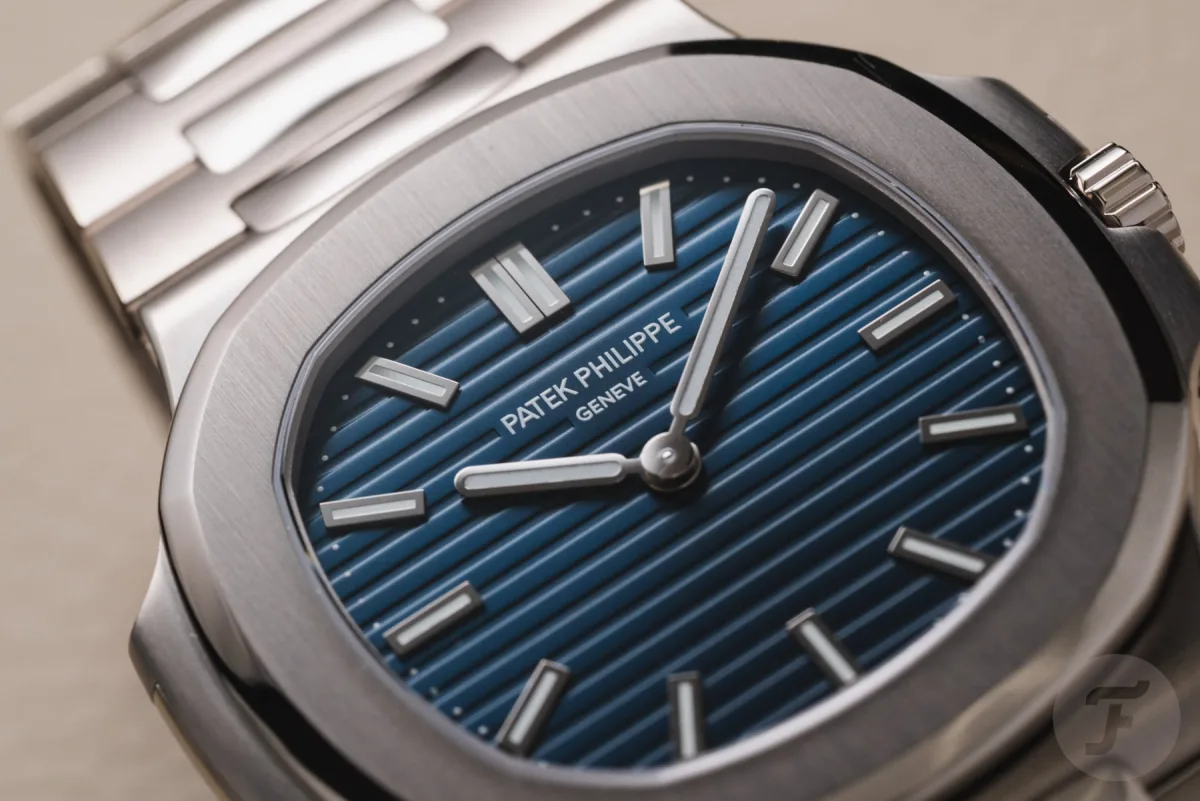
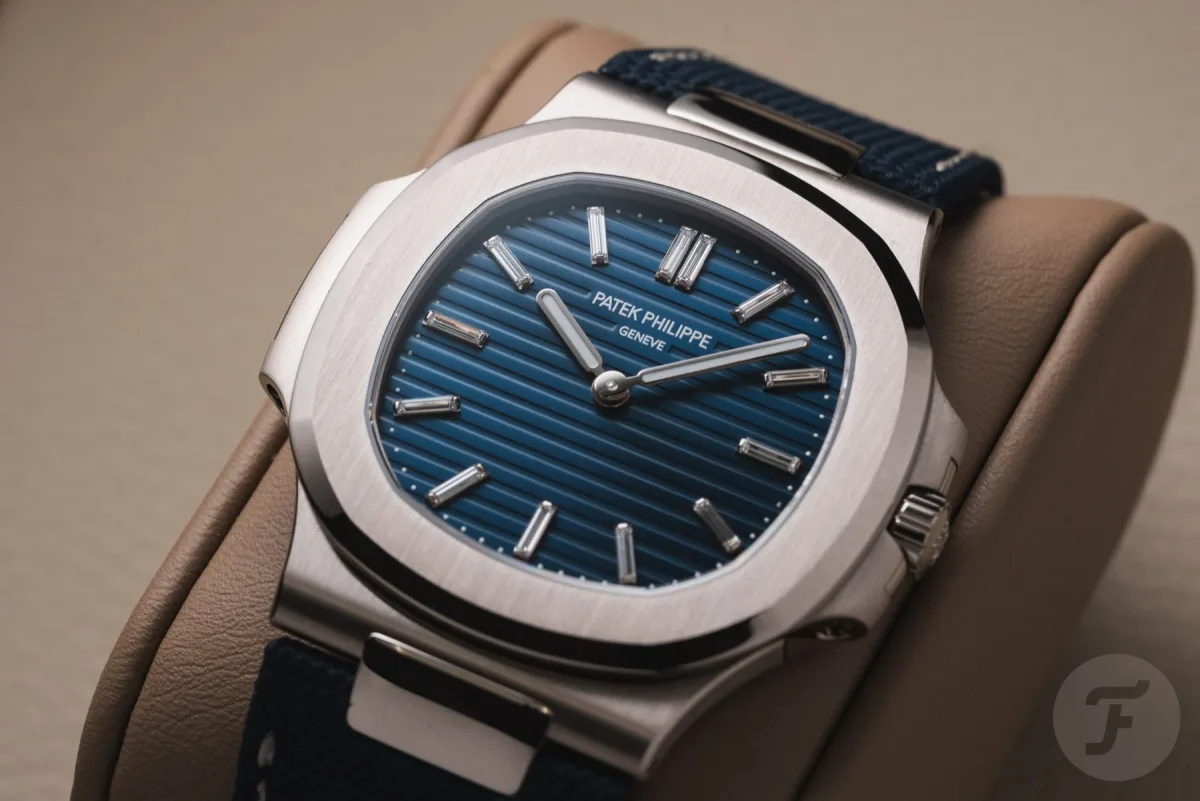
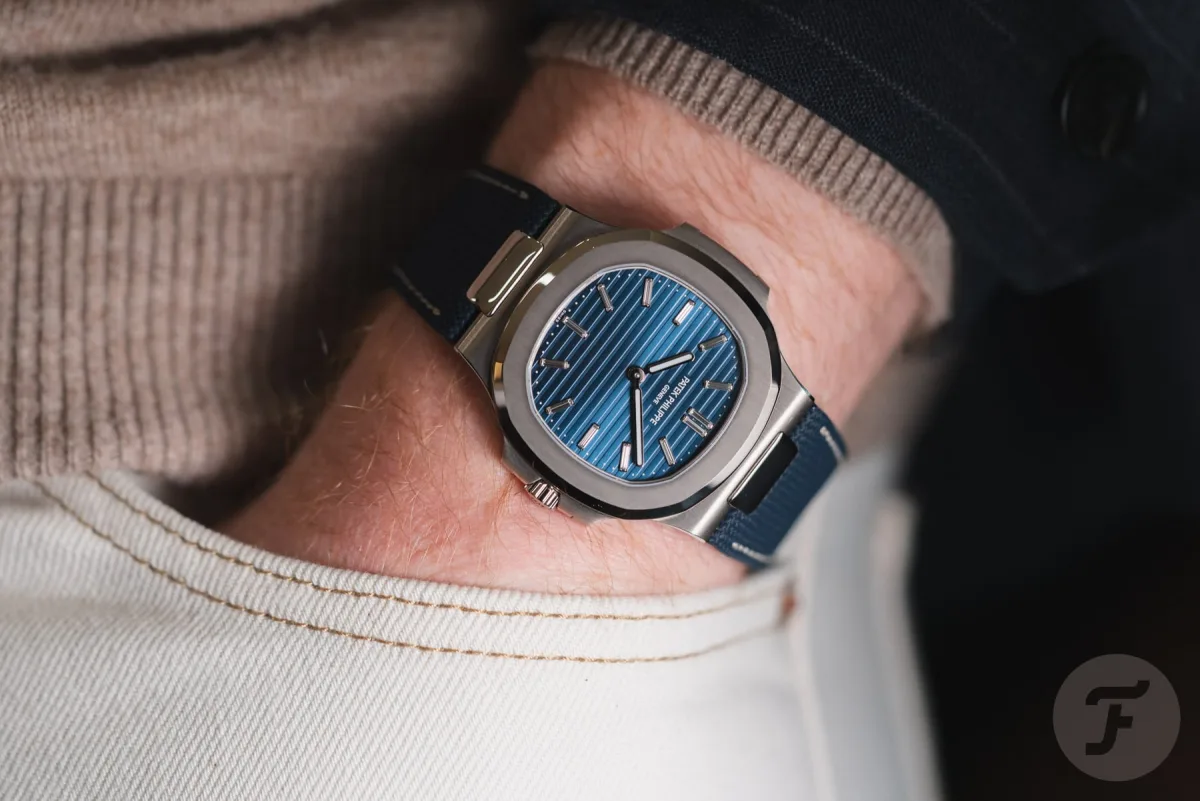
The model ref. 5810/1G-001 (limited to 2000 pieces / €88,400) features an integrated white gold bracelet, while the 5810G-001 (limited to 1000 pieces / €70,000) comes with a blue composite strap with a fabric texture, cream stitching, and a white gold folding clasp. The dials differentiate the models: the first uses markers with luminescent Super-LumiNova coating, the second - 13 hour markers of baguette diamonds. The white gold cases measuring 41 × 6.9 mm for both "Jumbo" are identical, being a millimeter larger and 0.6 mm thinner than the original.
Nautilus ref. 5810G-001: Thin Movement with Micro-Rotor
The reduced case thickness is due to the presence of a movement with a micro-rotor instead of a central one. The automatic caliber 240, visible through the sapphire crystal case back, is equipped with a 22-carat gold micro-rotor engraved with "50 1976–2026." The movement thickness is 2.53 mm, the power reserve is 48 hours, and the balance is equipped with a modern silicon balance spring. Unlike the original ref. 3700/1A, the new white gold models do not have a date window. This can be considered an improvement. For some, the 3700 is perfect and untouchable, but the date configuration without a central seconds hand looks somewhat strange. The new models also lack a central second, and the absence of a date gives the look restraint and even majesty. In my opinion, this is almost perfection.
Nautilus ref. 5610/1P-001: Platinum Anniversary with Diamond
The new platinum model Nautilus ref. 5610/1P-001 (limited to 2000 pieces / €106,000) measuring 38 × 6.9 mm is inspired by the medium-sized Nautilus ref. 3800, which debuted in 1981 with a case of 37.5 × 7.5 mm.
Traditionally, Patek Philippe marks platinum cases with a diamond, usually located between the lugs at 6 o'clock. Since Nautilus has an integrated bracelet, the diamond was moved to the 9 o'clock position, where it is less noticeable. As with the white gold versions, the caliber 240 is installed here, so there is no date and central second, providing a clean and balanced look. The blue dial with Nautilus's horizontal embossing sparkles thanks to the sunburst finish and blue PVD coating, and the white gold hour markers and hands are filled with Super-LumiNova.
Nautilus on the Wrist: Impressions of the Models
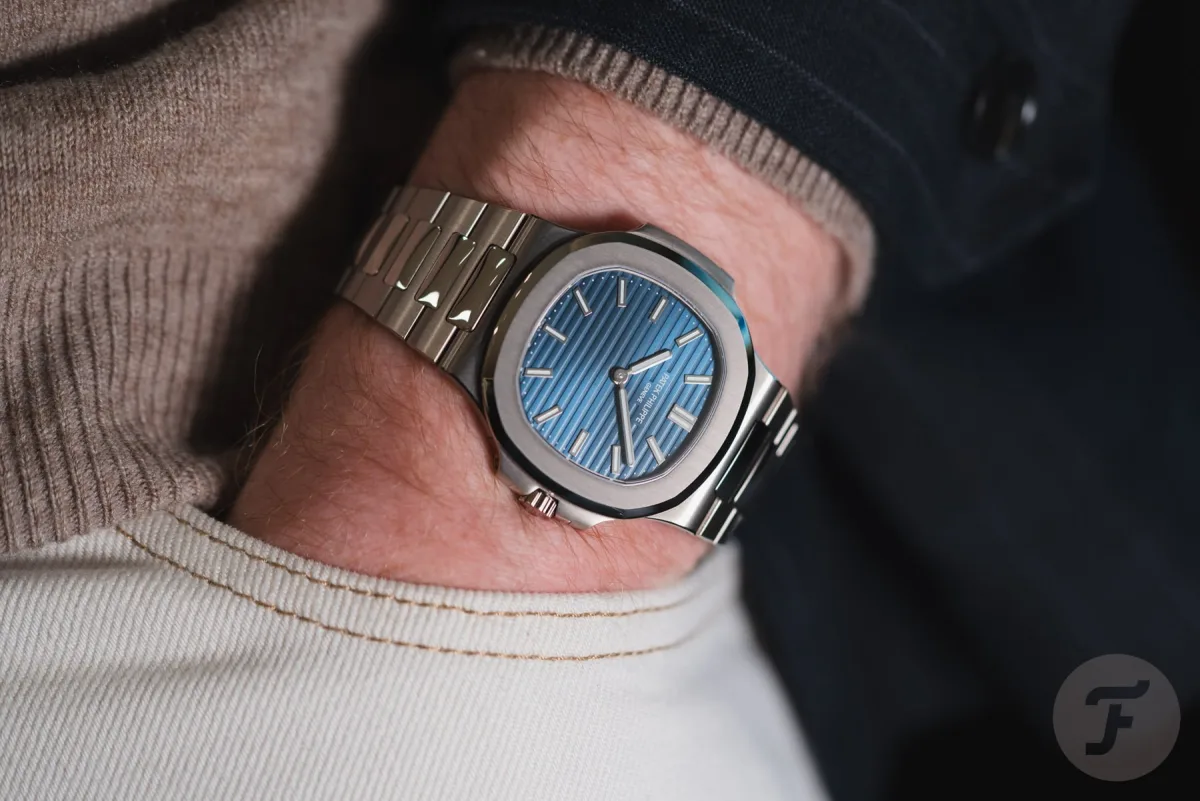
We did not have the opportunity to examine the desk clock ref. 958G with a white gold case 50.65 mm in diameter, but we thoroughly studied the other three options at the Watches and Wonders 2026 exhibition. The first was the ultra-expensive and heavy ref. 5610/1P-001. The impressions of these watches are hard to overestimate - the weight, appearance, and finish create a sense of something otherworldly. At the same time, the watch sits comfortably on the wrist, slightly protruding with the bracelet.
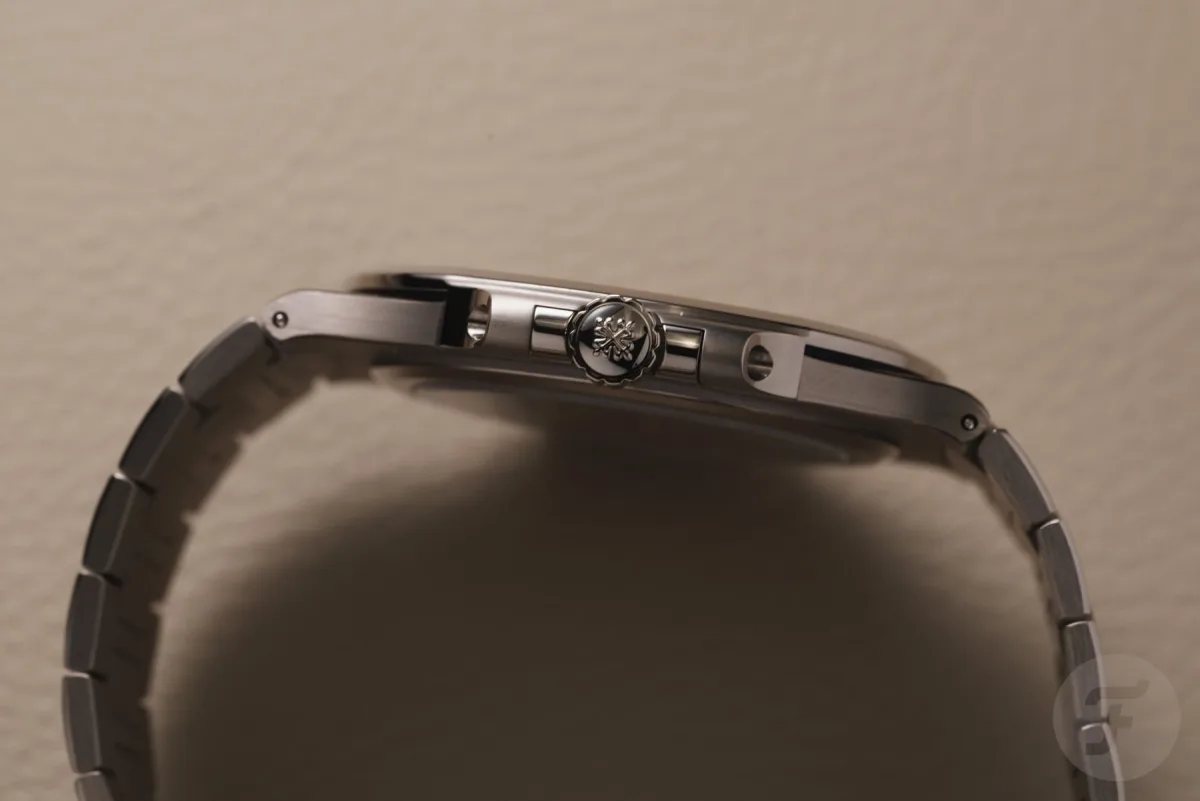
However, as soon as you take in hand the ref. 5810/1G-001 "Jumbo" with a gold bracelet, the mood changes. It's all about the proportions. The thickness of only 6.9 mm combined with a diameter of 41 mm perhaps creates a more harmonious image. The lines of the case seem longer and look more impressive than the model with a 37.5 mm case. Does this mean ref. 5810/1G-001 is the winner? Don't rush, because there's also ref. 5810G-001 with a blue composite strap with a fabric texture and contrasting cream stitching.
Choosing the Perfect Nautilus
Aside from the case material and movement, both 41 mm white gold models have a unanimously successful dial configuration with two hands and no date. The differences lie in the strap and hour markers. My choice is ref. 5810/1G-001 with a bracelet. Firstly, this is closer to the original design. Nautilus on a strap is more of an addition, an extension of the collection, rather than the essence. An anniversary is about roots and origins, so the version on a bracelet seems preferable. Moreover, the contrasting stitching on the strap, in my opinion, does not embellish the Nautilus.
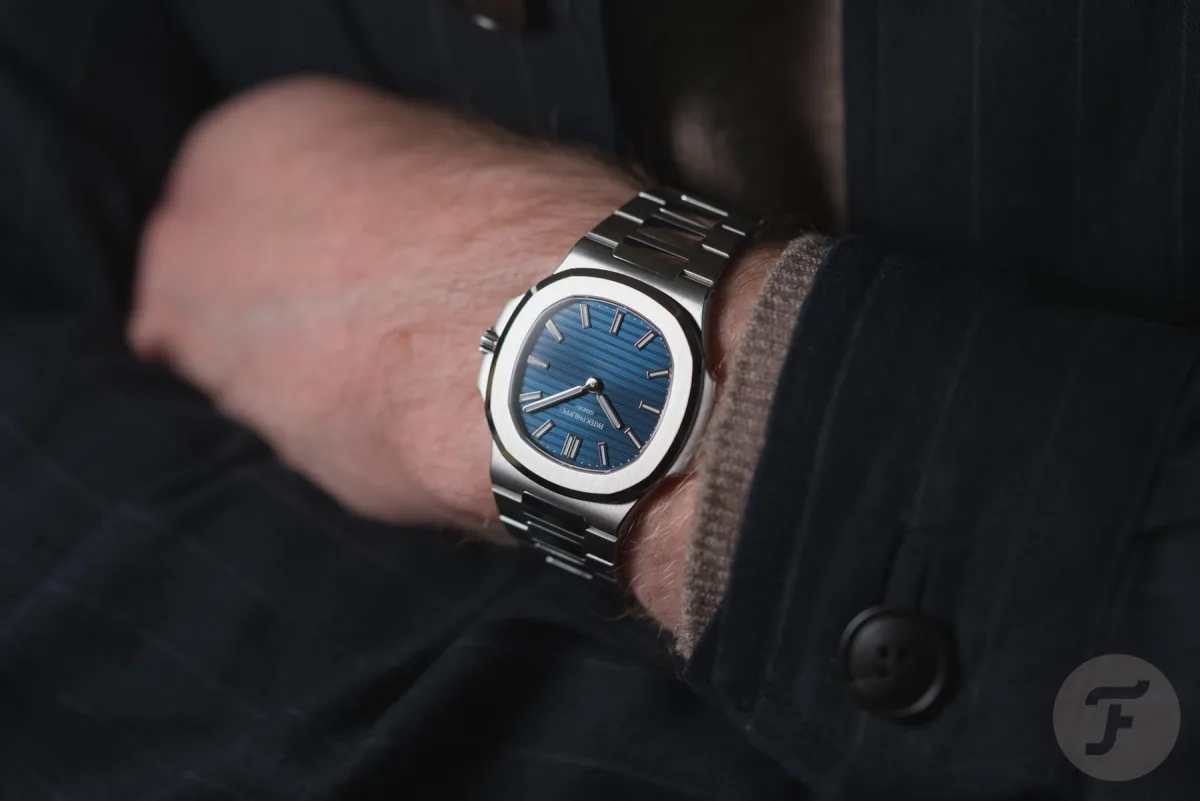
Configuration of the Perfect Nautilus Watch
"Jumbo" on the bracelet is my favorite, but it isn't perfect. The baguette diamond markers on the strap version look festive but not gaudy. I think 0.39 carats of diamonds is the optimal balance. Their placement on the familiar blue striped background and interaction with the rounded luminescent white gold hands create an image of the highest class.
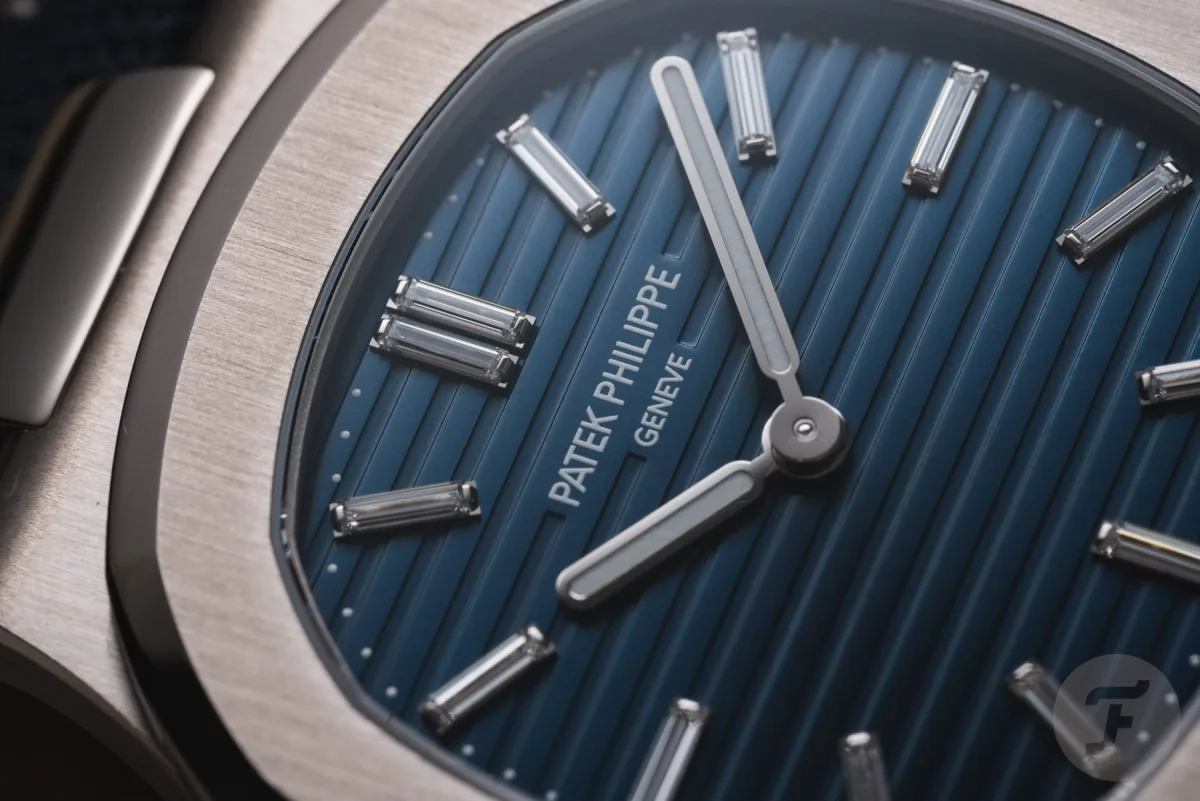
It's a pity that such a diamond-studded dial is not available on the anniversary Nautilus version with a bracelet. To obtain both versions, you have to buy them both and switch the bracelet to the strap, becoming the happy owner of two limited Nautilus - one for wearing with the subtle sparkle of diamond markers, the other as an investment. Or use the model on a sporty strap as a weekend watch. This strategy will cost approximately €158,400. This may be justified, considering these are limited anniversary Nautilus models. They are unlikely to lose value.
Final Questions
Two questions remain: are these Nautilus models timeless or beyond time? And should Patek Philippe have released a steel version with a different dial color - gray, green, or white - or would that have been too unexpected a decision? Leave your opinion in the comments. Thank you.