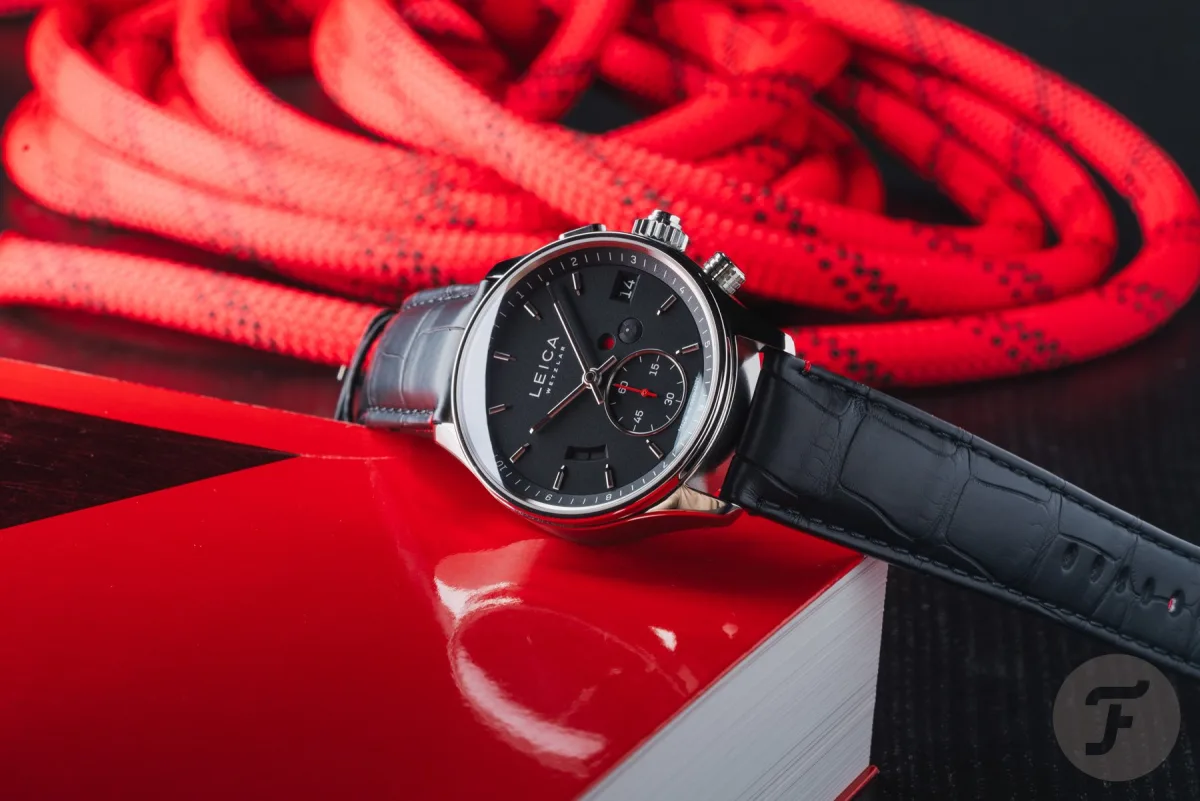
The Leica brand is often mentioned in the Onewatch office.
This is usually linked to its famous cameras, but since the German brand introduced its first mechanical watches, we have begun to associate Leica with the art of watchmaking as well. This highlights the close connection between mechanical watch production and photography. In both cases, precision tools are crucial, and Leica undoubtedly understands this. I was fortunate to try the Leica ZM 1 and ZM 2 watches - two remarkable pieces that skillfully integrate elements reminiscent of the brand's cameras. Let me explain further.
Leica's Introduction to the World of Watches
It is known that four independent companies use the name Leica, with Leica Camera AG being the most famous. Leica is well aware of its position in the optics world, and its focused strategy has inspired many other brands.
One might debate the advisability of Leica entering the watch market. Personally, I believe brands should focus on one area and perfect their craft. Through its cameras, sports optics, and home theaters, Leica demonstrates a high level of quality for consumers around the world. Therefore, I was skeptical about the idea of Leica engaging in watchmaking - I simply did not associate this brand with watch movements, and I was not sure I ever would.
However, after studying Leica's history in watchmaking, I quickly found an explanation for the emergence of the ZM 1 and ZM 2 models. Ernst Leitz actually trained in watchmaking in Switzerland in the 1850s before founding his microscope brand, which later became Leica. Moreover, Leica's experience in watchmaking is not as new as it seems: in the 1980s-1990s, the company produced chronographs based on the Valjoux 7750 movement. Leica also collaborated with Valbray, creating a limited edition Valbray EL1 Chronograph Leica Limited Edition. Furthermore, the ZM 1 and ZM 2 were first presented as prototypes back in 2018, indicating a long preparation for the project.
The Creation Story of Leica ZM 1 and ZM 2
Studying the ZM 1 and ZM 2 models, I understood the concept behind them. Leica wanted to maintain a connection to its photographic roots. These watches are niche products, embodying the same commitment to precision and craftsmanship as its M series cameras, making them understandable and appealing to Leica fans.
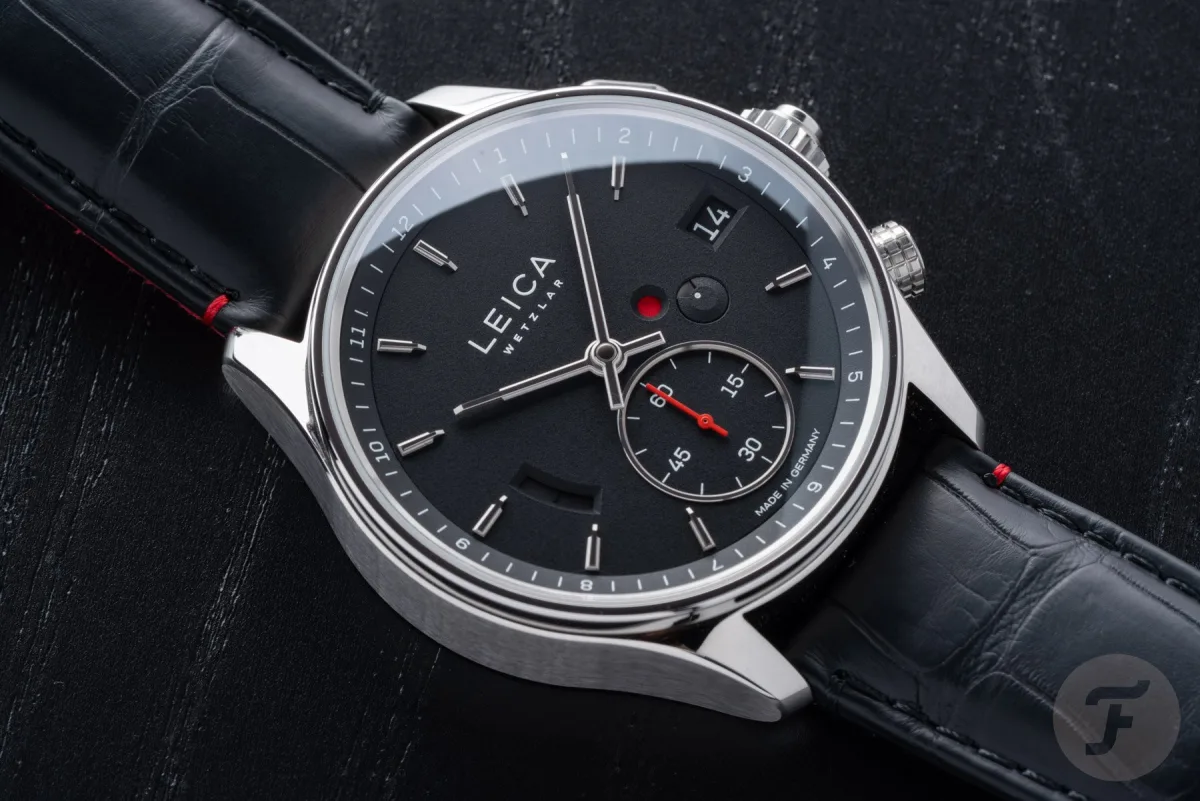
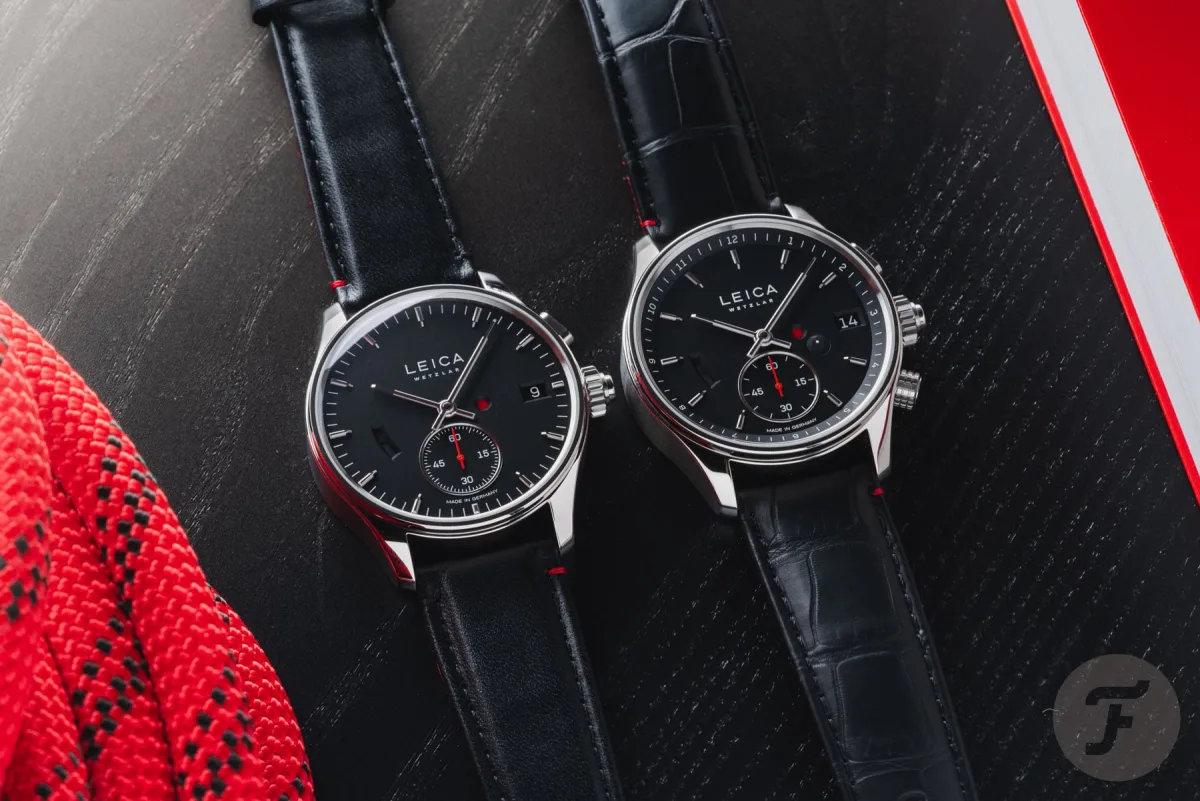
The M 1 and ZM 2 combine expressive design, focused on the essentials, with unconventional solutions in classic watchmaking. Simply put, the design can be described as minimalist, without excessive ornamentation. This approach is familiar from other German brands, such as Junghans and Nomos. In the ZM 1 and ZM 2, the design is defined by thoughtful details and impressive mechanical solutions. Both models feature a stainless steel case with a diameter of 41 mm, a thickness of 14.5 mm, and a lug-to-lug distance of 48 mm.
Features That Make the Watches Unique
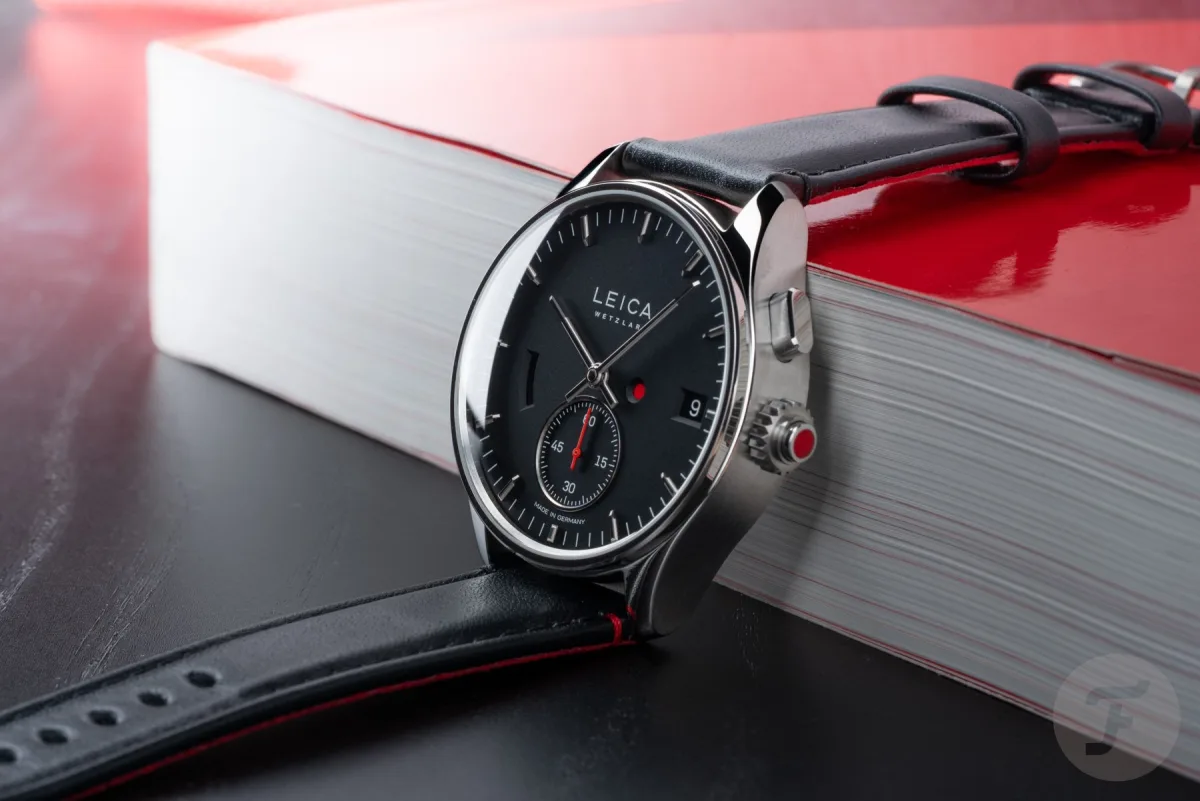
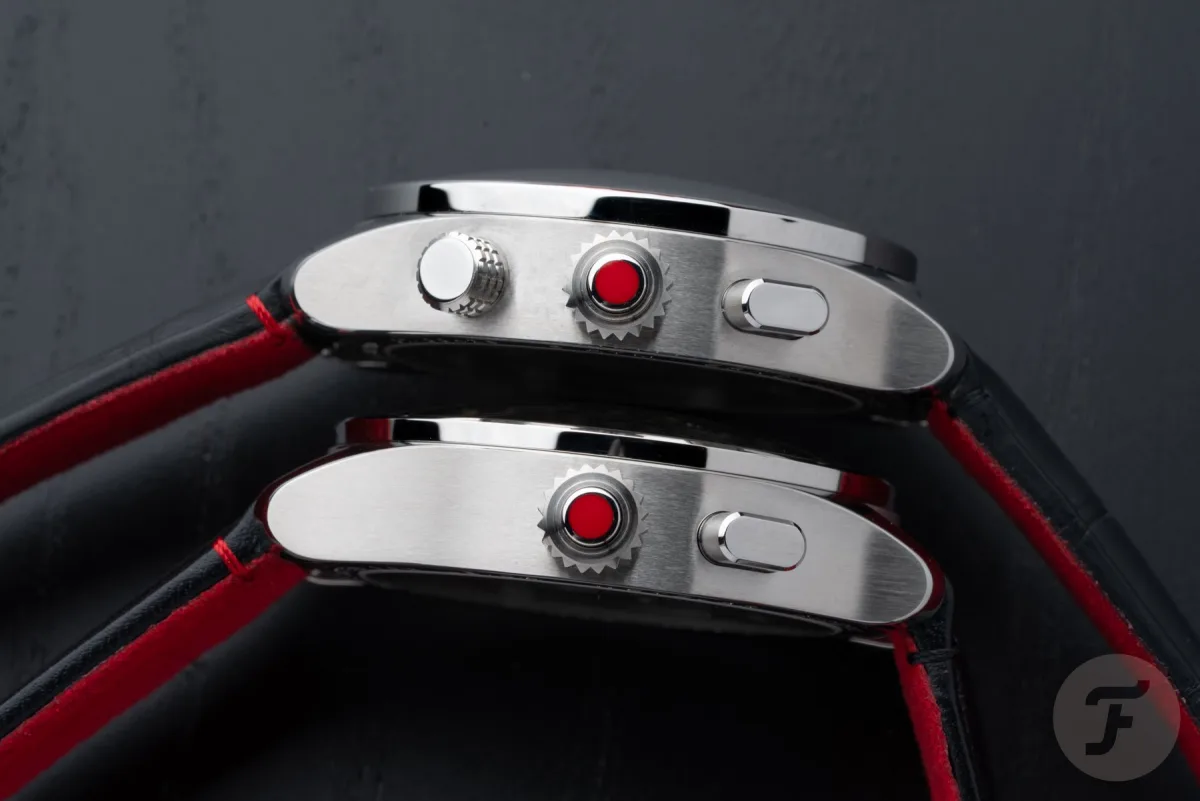
Although the case is not small, the watches are comfortable to wear thanks to excellent proportions and downward-curved lugs. This thoughtful design belongs to Professor Achim Heine, a product design lecturer at the Berlin University of the Arts. He participated in the creation of many Leica products and proved to be the right specialist for this job. A fun touch - the side views of the ZM 1 and ZM 2 resemble the top plate of a Leica M camera, achieved through the strongly convex sapphire glass reminiscent of a lens.
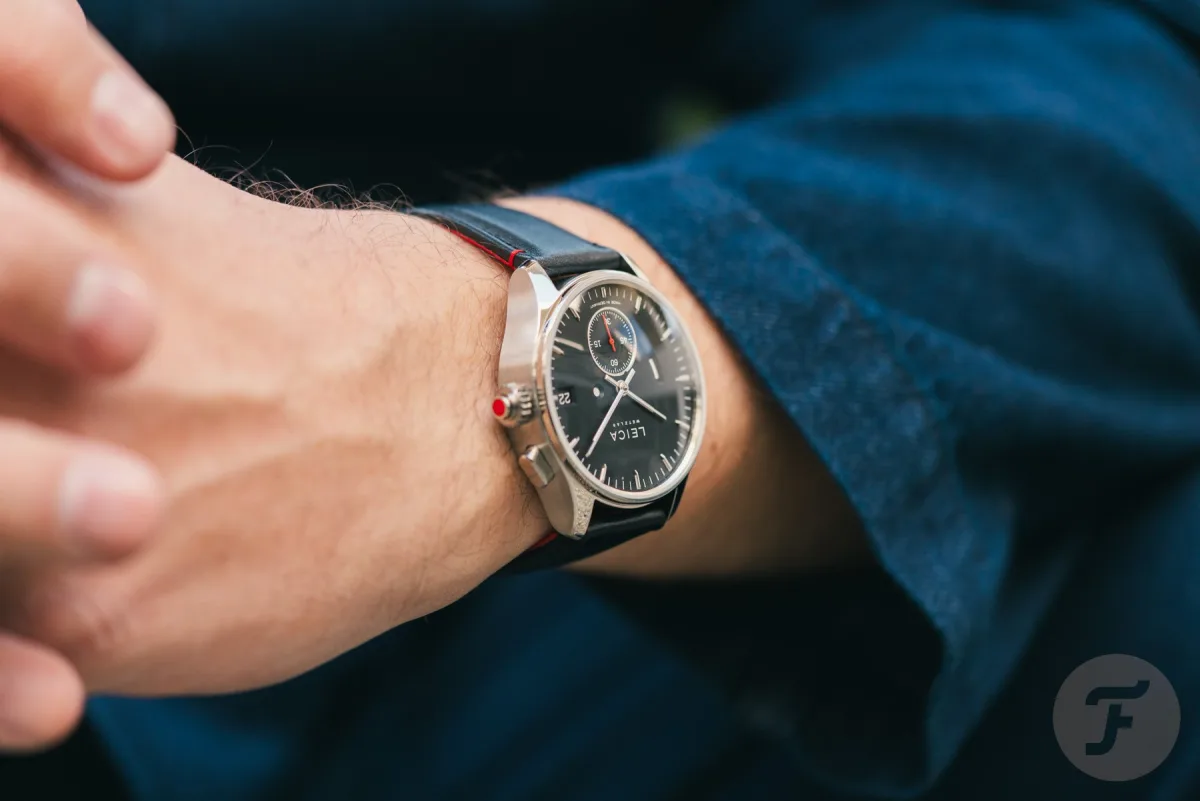
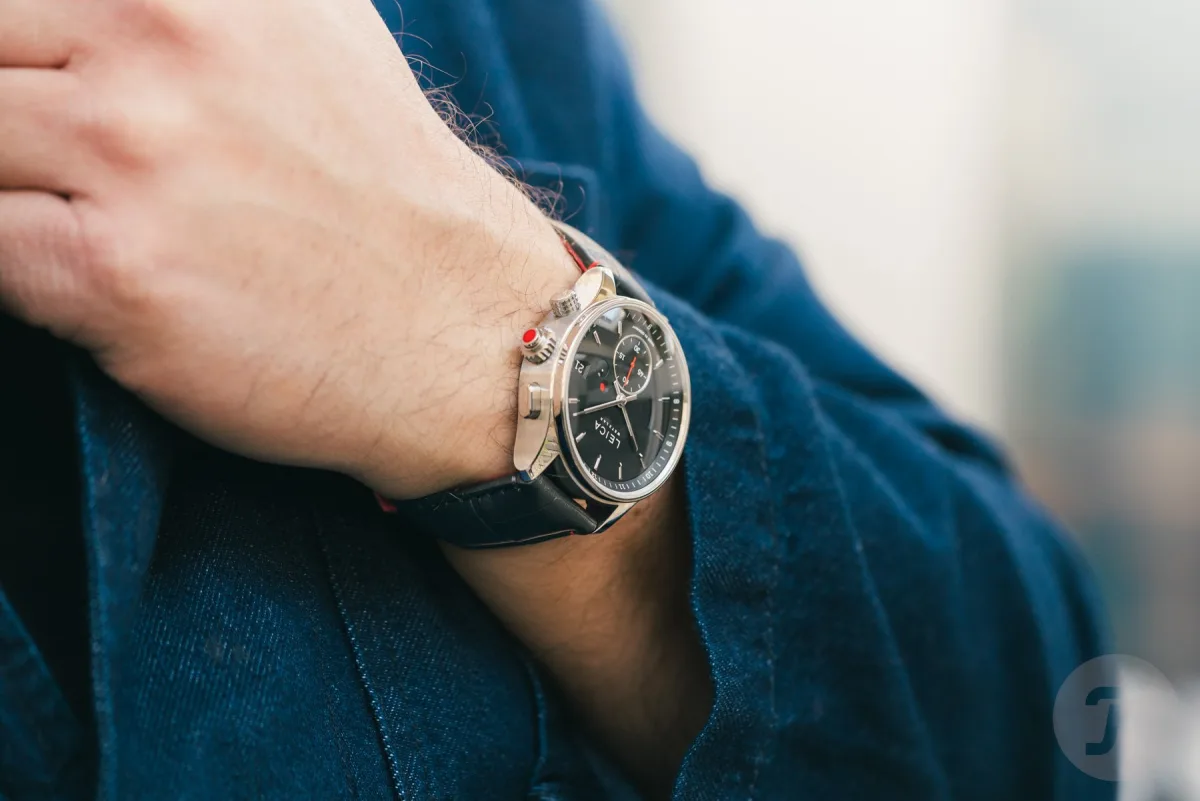
However, the resemblance to Leica cameras is not only visual. The case finish creates tactile sensations reminiscent of Leica cameras. The case combines sandblasted, brushed, and polished surfaces, giving it visual and textural expressiveness. On the right side of the case is a pusher at the 2 o'clock position for setting the date. The patented crowns at 3 o'clock are styled like the shutter release buttons of Leica cameras and have a ceramic insert in Leica's signature red color. The ZM 2 model has an additional crown at 4 o'clock for controlling the internal GMT bezel.
Dials Reminiscent of Leica's Famous Cameras
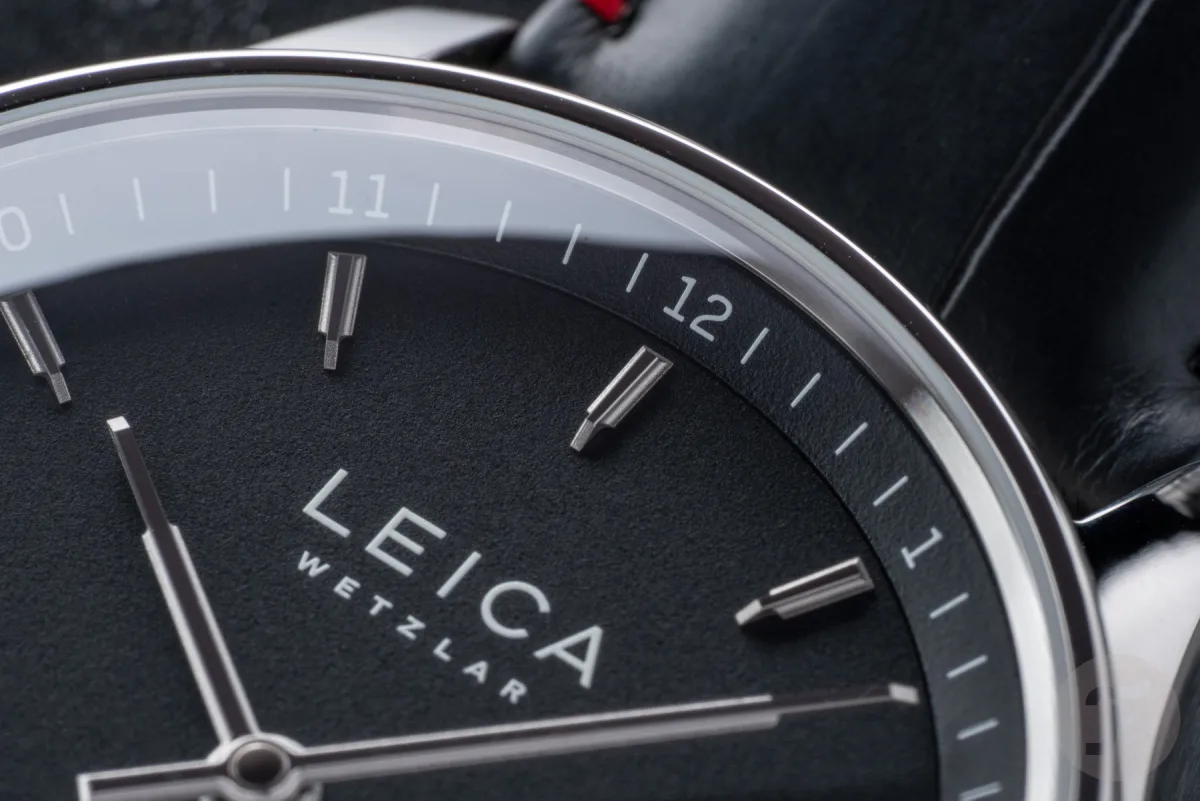
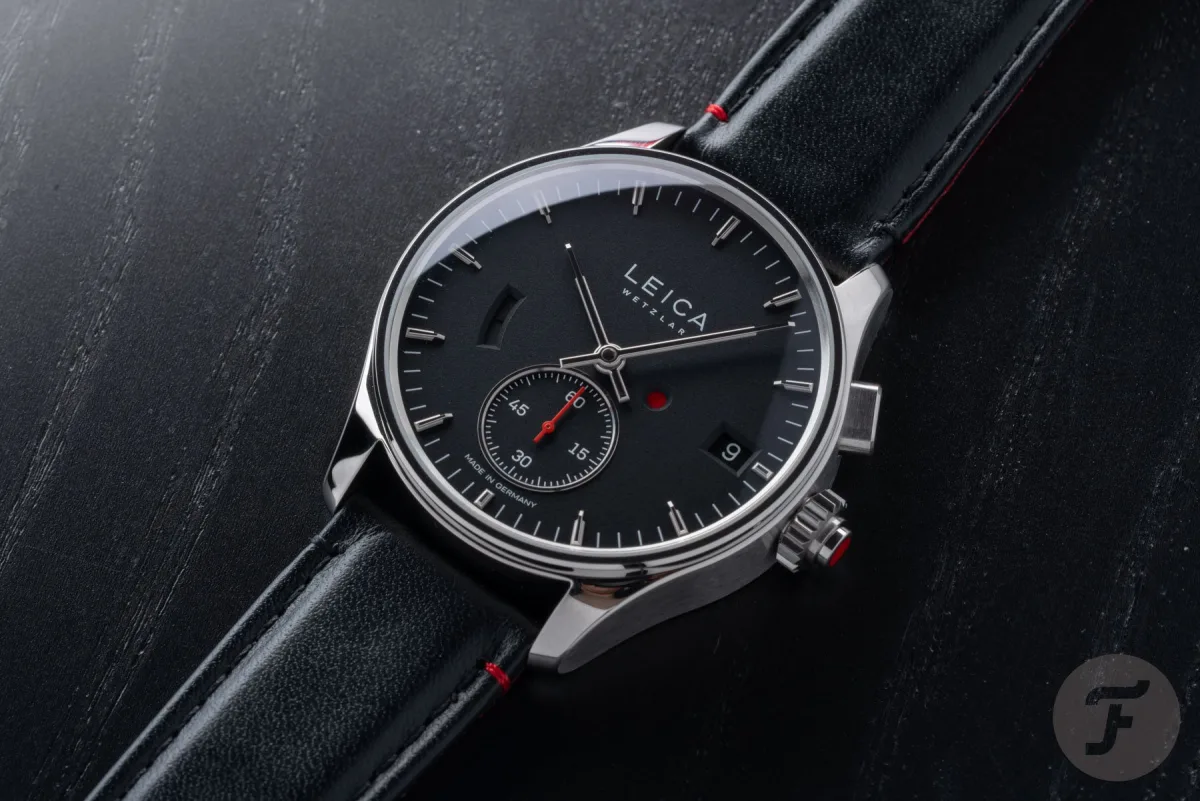
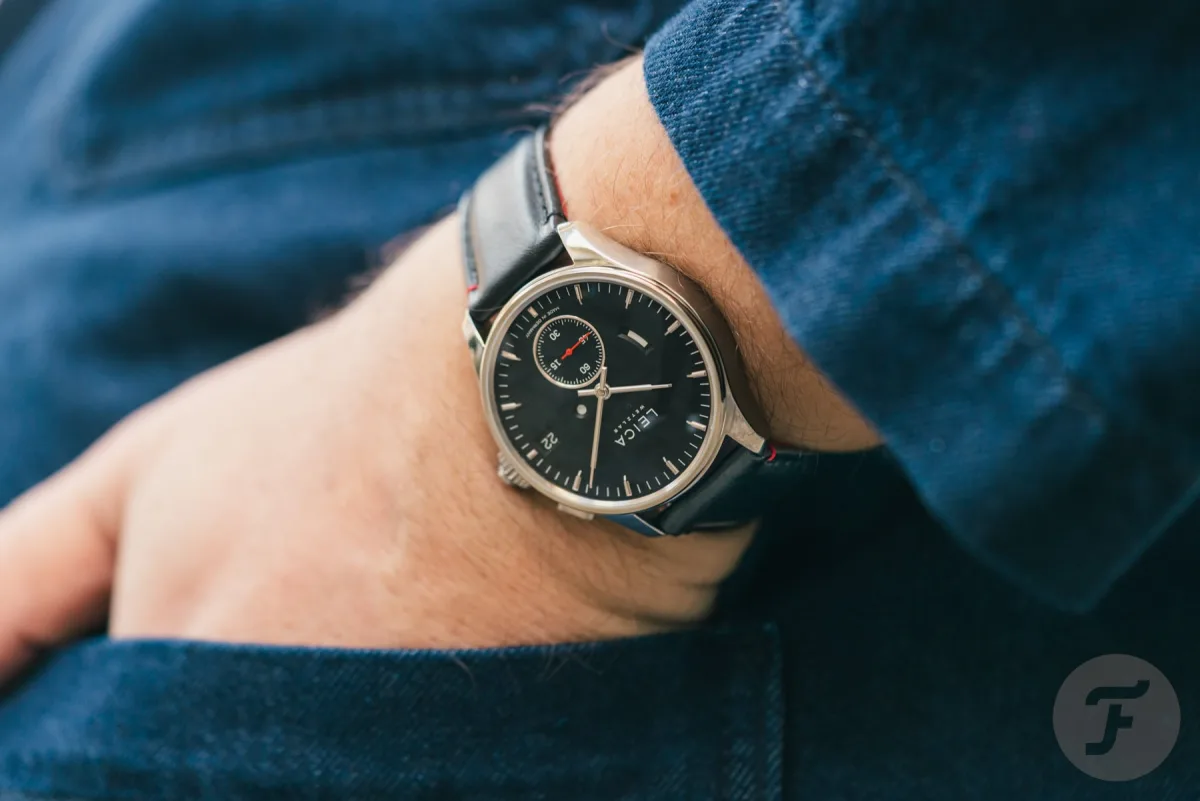
Both models feature matte black dials cut from a solid block of aluminum. However, upon closer inspection, differences are noticeable. The minute scale on the ZM 1 dial contains applied hour markers. The ZM 2 features a rotating internal bezel with a minute scale and an integrated 12-hour GMT scale. The hour indices for local time are applied directly to the dial without additional markers between them.

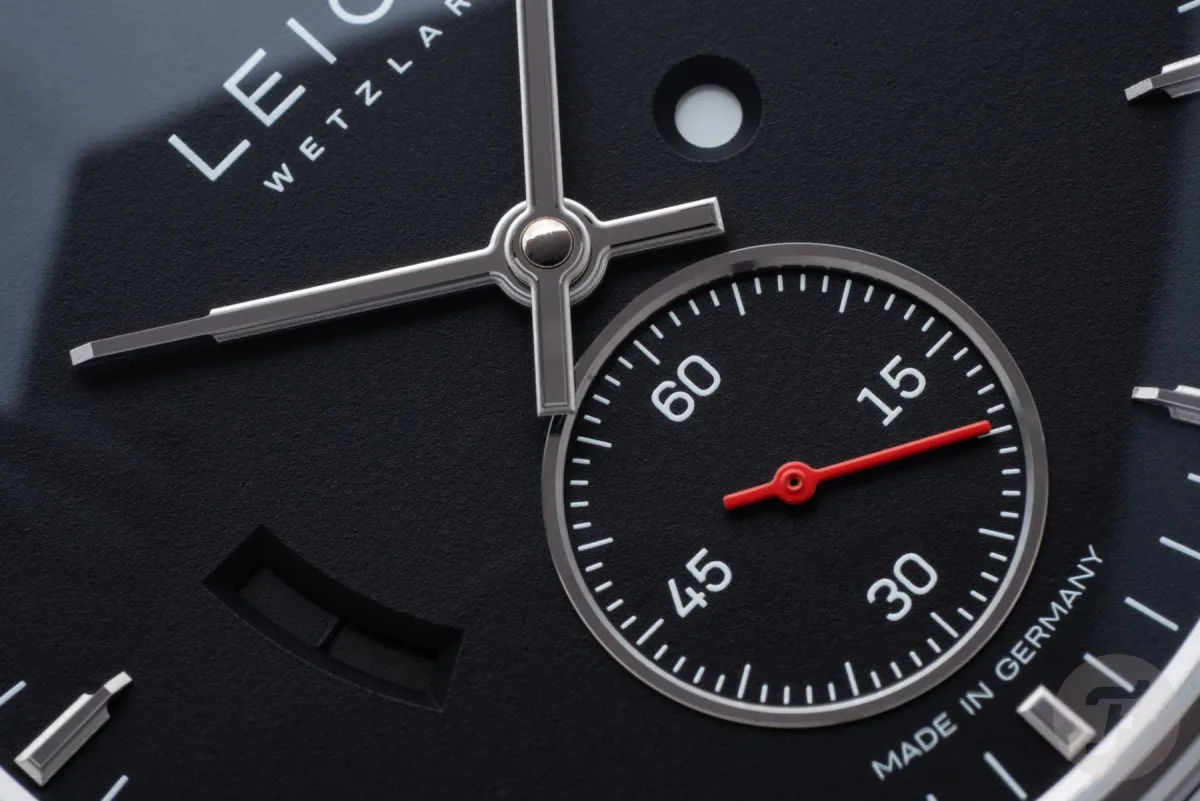
Both models have a small seconds sub-dial at the 6 o'clock position and a power reserve indicator at the 9 o'clock position. The indicator is designed like a Leica camera shutter: when winding the movement, the white part appears from the center and increases as it winds. To the left of the date window is a small indicator showing the movement's status: white means the movement is running, red means it has stopped.
One-Touch Function Control
Mode switching occurs by pressing the integrated button in the crown. If the watch is running and the button is pressed, the second hand returns to the 60 mark, and the movement stops, allowing precise time setting. The advantage is that the crown does not need to be unscrewed or pulled out. After pressing the button, you can immediately set the time by turning the crown. If the watch is running, turning the crown will wind the movement.
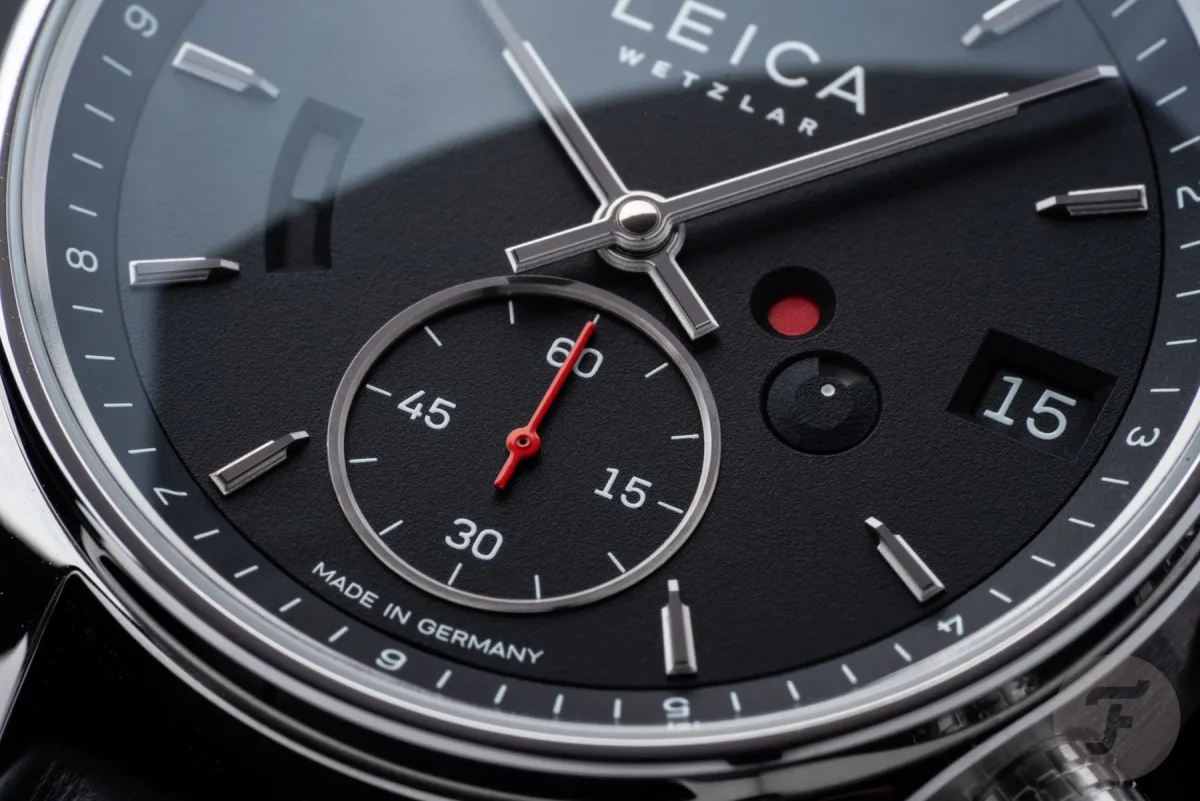
The ZM 2 additionally has a day/night indicator in the lower right corner, linked to the GMT function. The rotating internal bezel with a 12-hour scale indicates the time in another time zone. Above the dial are diamond-cut baton-style hour and minute hands, harmonizing with the indices.
Manufacture Movements LH-10 and LH-20 with Manual Winding
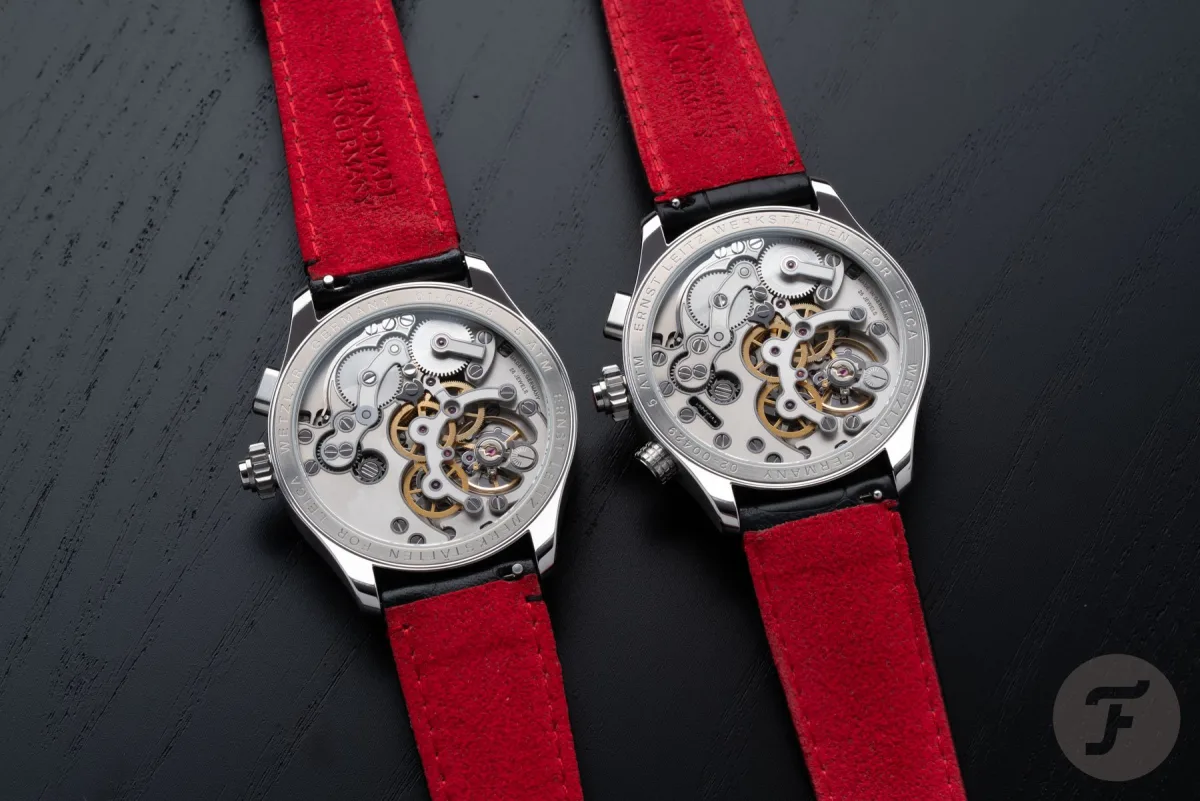
On the back of the watches, two impressive movements are visible. They were developed by Reinhard Meis, former head of development at A. Lange & Söhne, and independent watchmaker Andreas Strehler. The movements are produced by the German company Lehmann Präzision. The calibers are distinguished by high detail and superb finishing.
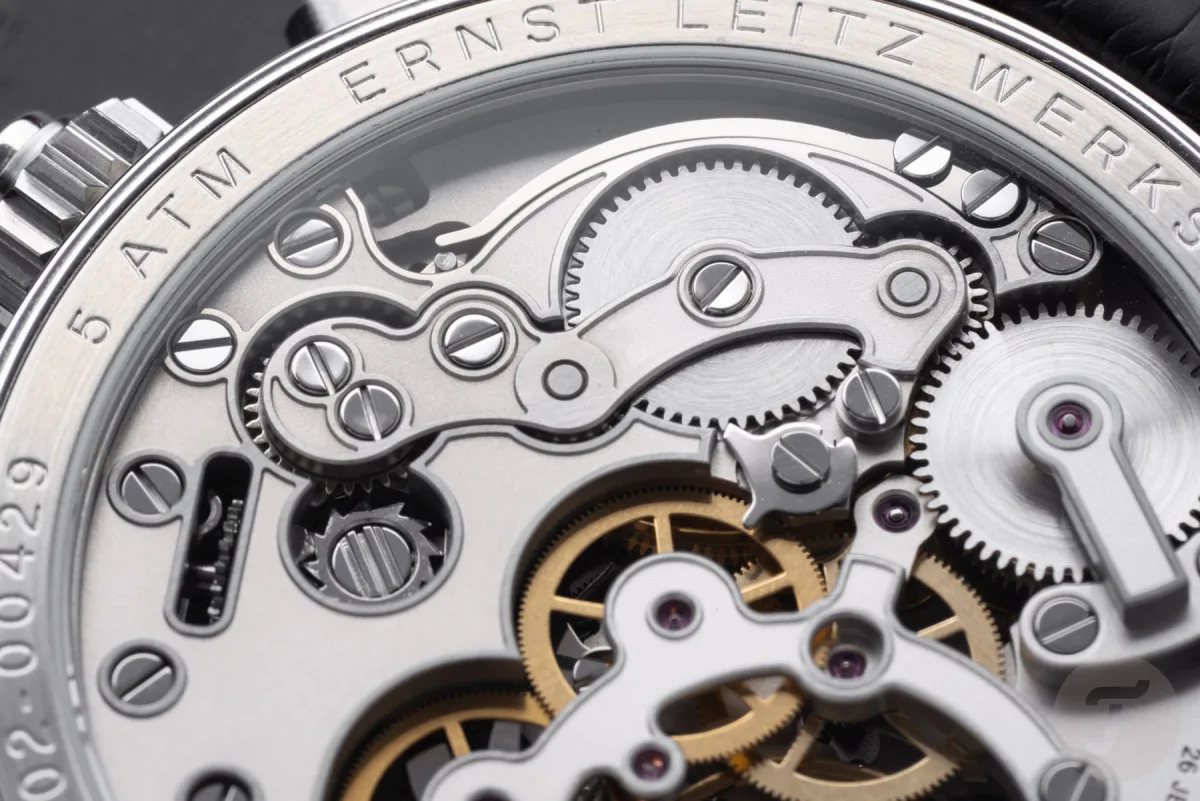
The main achievement is the patented system for starting and stopping the balance through the crown. It works via a blocking differential and a column wheel, which more closely resembles the mechanics of a chronograph rather than traditional time-setting systems. Both calibers operate at a frequency of 28,800 vibrations per hour, have 26 jewels, and a power reserve of 60 hours. Additionally, the movements are regulated in five positions.
Wearing the Leica ZM 1 and ZM 2 Watches
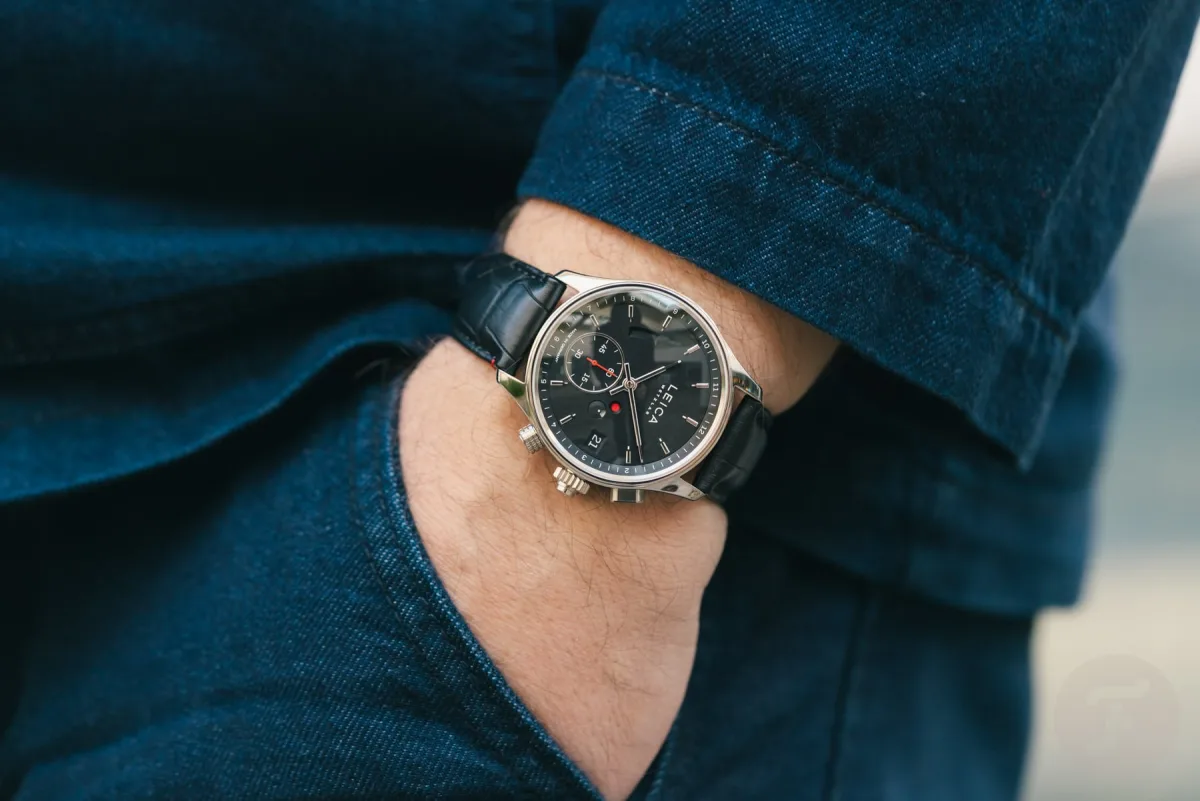
Both models come with a black leather strap with a single contrasting red stitch, red suede lining, and a signature steel clasp. Personally, this red-black ensemble seems too bright for me. I understand the connection to Leica's signature red color, but I would prefer a more restrained option. However, on the wrist, the watches are very comfortable. Given their size, the ZM 1 and ZM 2 are not suitable for small wrists, but thanks to the case shape, they fit comfortably even on my 18.5 cm (7.3 inches) wrist.
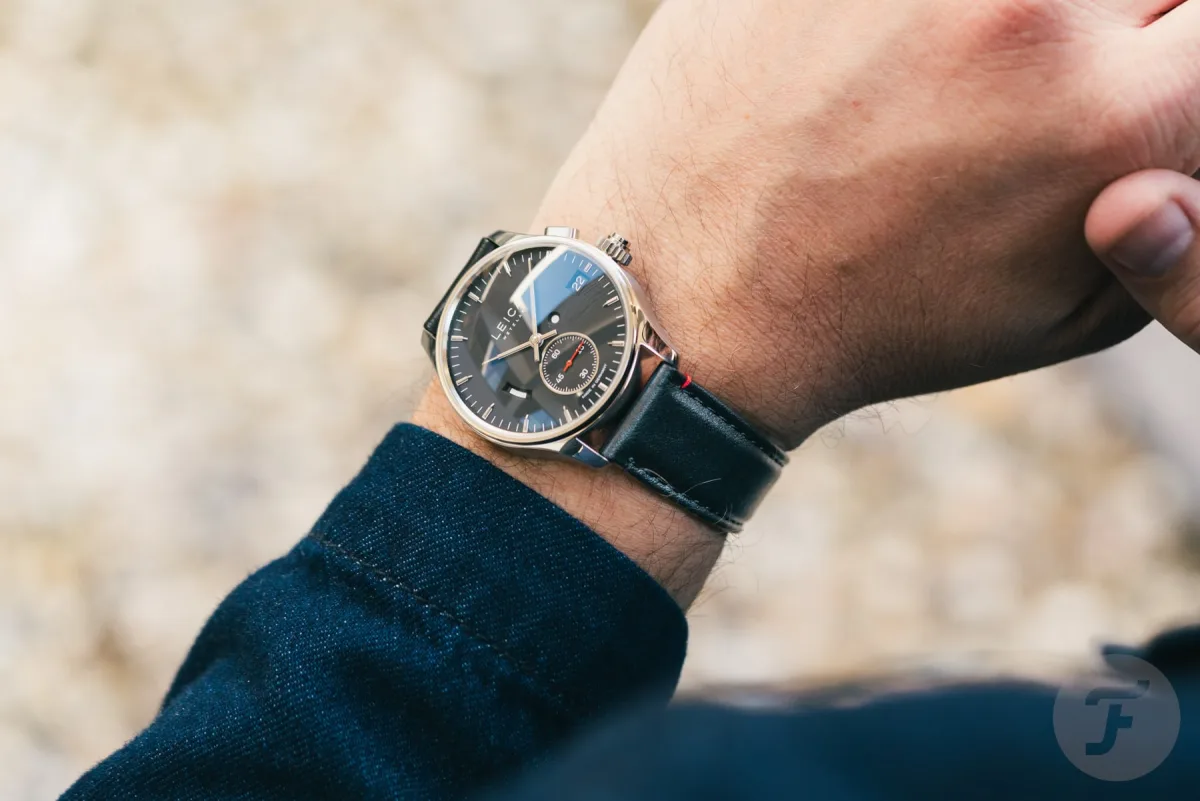
The first thing that stands out is the impeccable build quality. From Leica, I expected nothing less, but it was nice to confirm this in practice. It was interesting to try the start and stop function of the movement by pressing the red button in the crown - it's not only convenient for setting the time but also just fascinating. Another pleasant detail is the pusher at the 2 o'clock position for quick date adjustment. Its smooth operation and visual date change are truly enjoyable.
Conclusion on Leica ZM 1 and ZM 2
Despite initial doubts, the ZM 1 and ZM 2 quickly changed my mind. Leica has created two timepieces that are very close to the company's core principles. In design, functionality, and quality, these are unmistakably Leica watches. At the same time, many small design elements link the watches to the brand's cameras. From the power reserve indicator to the typography borrowed from the Leica M6 - for Leica fans, there's much to appreciate here.
The answer to why Leica ventured into watchmaking is now clear. The brand has maintained its philosophy, and these watches are much more than just products with the Leica logo.
The models are priced at €9,950 for the ZM 1 and €13,750 for the ZM 2, which is not cheap. However, considering the cost of Leica cameras, the price seems justified. These watches are niche products for true Leica enthusiasts. Owning one or more Leica cameras will help better understand these watches, and the brand will surely find its audience in the dedicated community of Leica fans. With limited production of about 20-50 pieces per month, this aligns with the brand's spirit. Although these watches are not for me, they have not affected my love for Leica and its products. They perfectly fit into the brand's strategy, which I highly appreciate, so I consider this project excellently executed.
Where to Buy Leica ZM 1 and ZM 2
The ZM 1 and ZM 2 watches are available exclusively at Leica boutiques and selected retailers. To learn more about the models, visit the official Leica website.