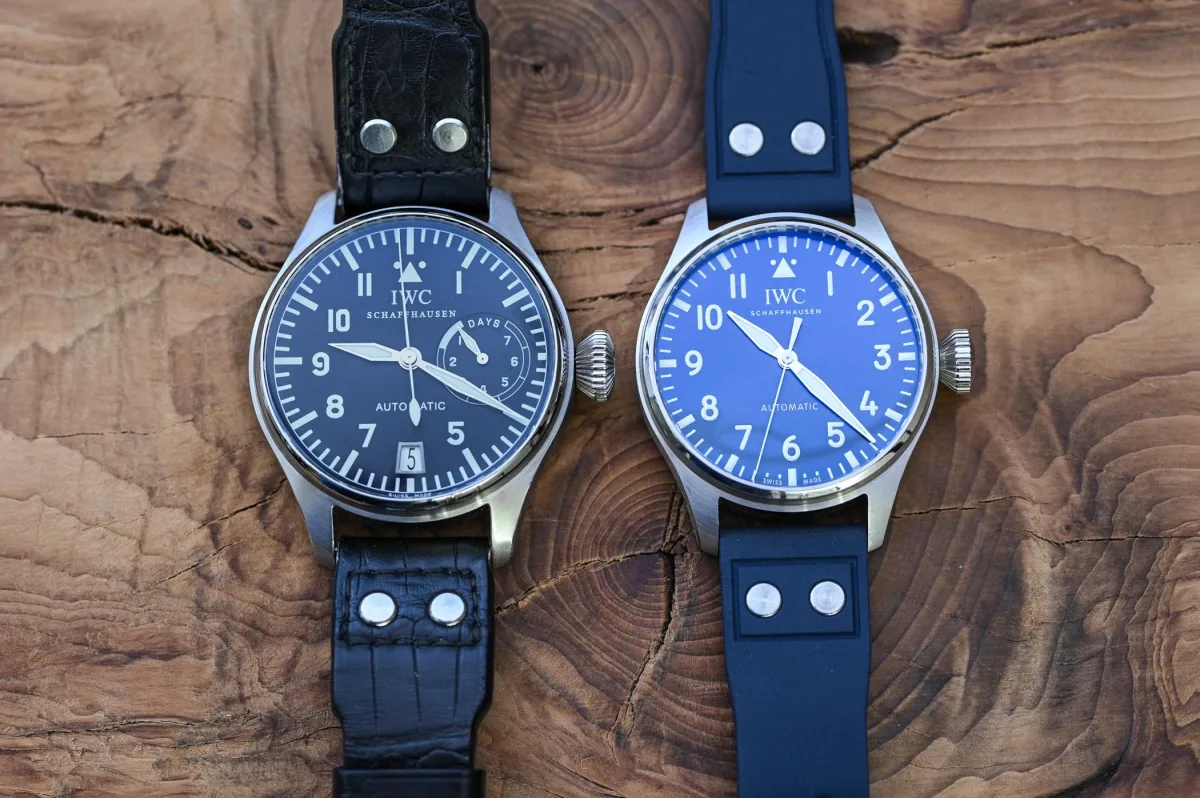
The Big Pilot... If you think of iconic, unmistakable IWC watches, you can hardly find anything better than these. At least for me, these are the watches that have defined the brand's collection for many years, watches that make a true statement and remain among the most famous modern watches after almost 20 years of production. Having said that, you probably guessed that I love the IWC Big Pilot... I am fortunate to say that I own the Big Pilot ref. 5002 (first-generation model). Therefore, when IWC introduced the new, smaller, streamlined Big Pilot’s Watch 43 earlier this year, it was significant news for me. It was more than just new watches; it also concerned the actual naming of the watches. Now that I've had the chance to take these 43mm watches to the office for a review, it's time to tell you what I, as a Big Pilot fan, think of these new watches.
History of the IWC Big Pilot’s Watch
Before reviewing the modern Big Pilot models, it is necessary to turn to IWC's history. Like many other manufacturers in the late 1930s and early 1940s, IWC had to participate in military strategy for most European forces. As a result, the company, located in Schaffhausen, developed numerous watches designed for pilots and aircraft crew members. Although it all started in 1936 with the IWC “Special Watch For Pilots” model, the most recognizable watches in this area are the 1940 Big Pilot’s Watch Calibre 52 T.S.C. (reference IW436).
The massive watches supplied to the Luftwaffe (German Air Force) in 1940 were classified as observation watches and released in a limited edition of about 1,000 pieces. The case diameter was 55mm, and the dial was easily readable due to the large luminous hands and markers. It featured large Arabic numerals and a triangle with two dots to help identify the 12 o'clock position in the dark. Inside was a reliable and highly accurate pocket watch movement. After World War II, production of these watches ceased, although their famous design persisted.
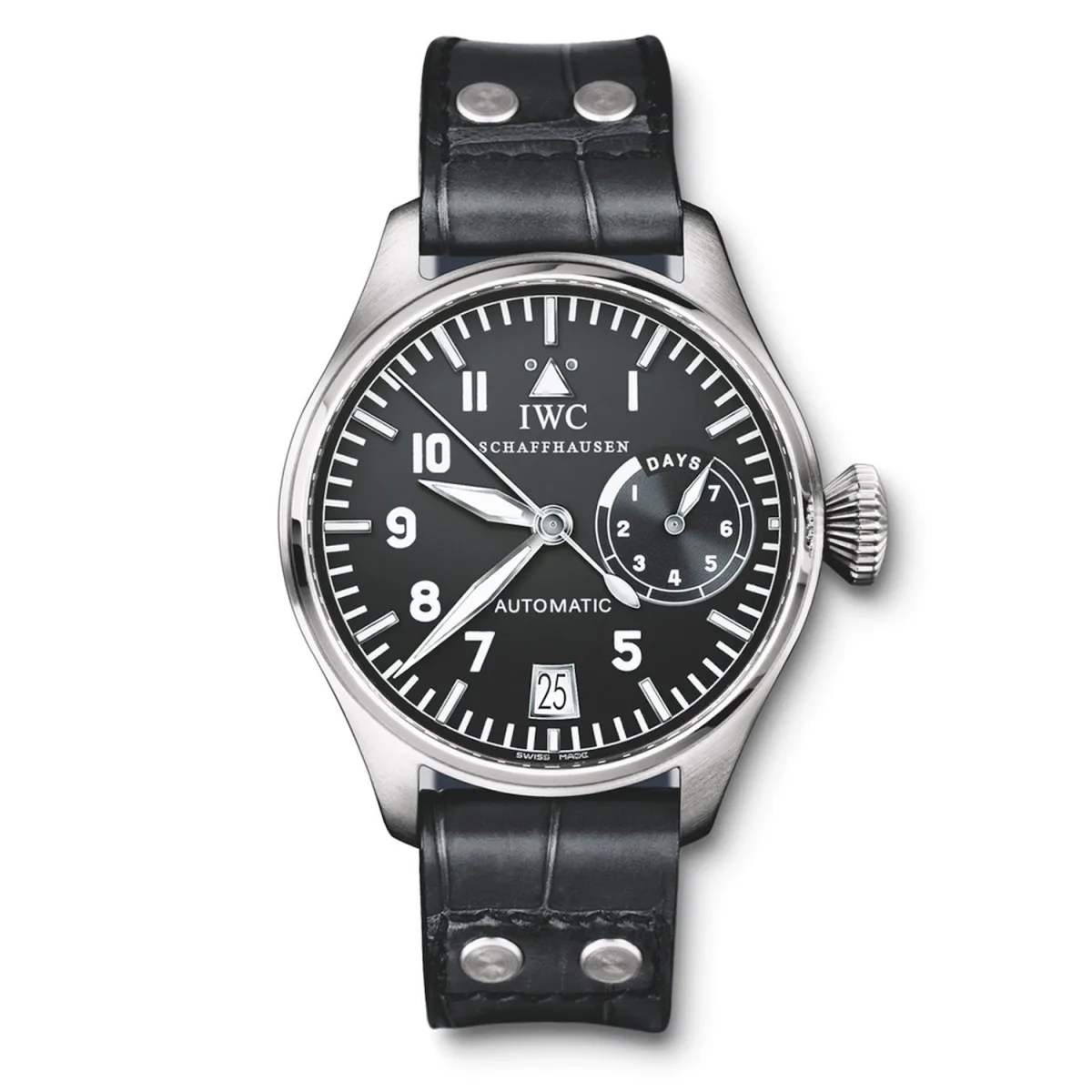
In the early 1990s, IWC (re)launched the Pilot’s Watch collection with the Mark XII model and several Flieger chronographs. It took quite a few years before the brand decided to revive the concept of observation watches - oversized, ultra-light, ultra-precise watches with all the distinctive elements of “B-Uhr” models. In 2002, IWC took its new ultra-powerful automatic movement (found in the Portugieser Automatic), modified it with a central seconds indicator, and produced a modern interpretation of observation watches. Named “Grosse Fliegeruhr” or Big Pilot’s Watch, the model (IW5002) was smaller but no less impressive at 46mm. Except for the date and power reserve indicator, its dial was a faithful homage to the B-Uhr watches. The original model ref. 5002-01 was replaced in 2003 by a transitional model with the same appearance but an improved movement with a higher beat frequency (and a different crown now engraved with the brand's motto, Probus Scafia, instead of the original “fish crown”).
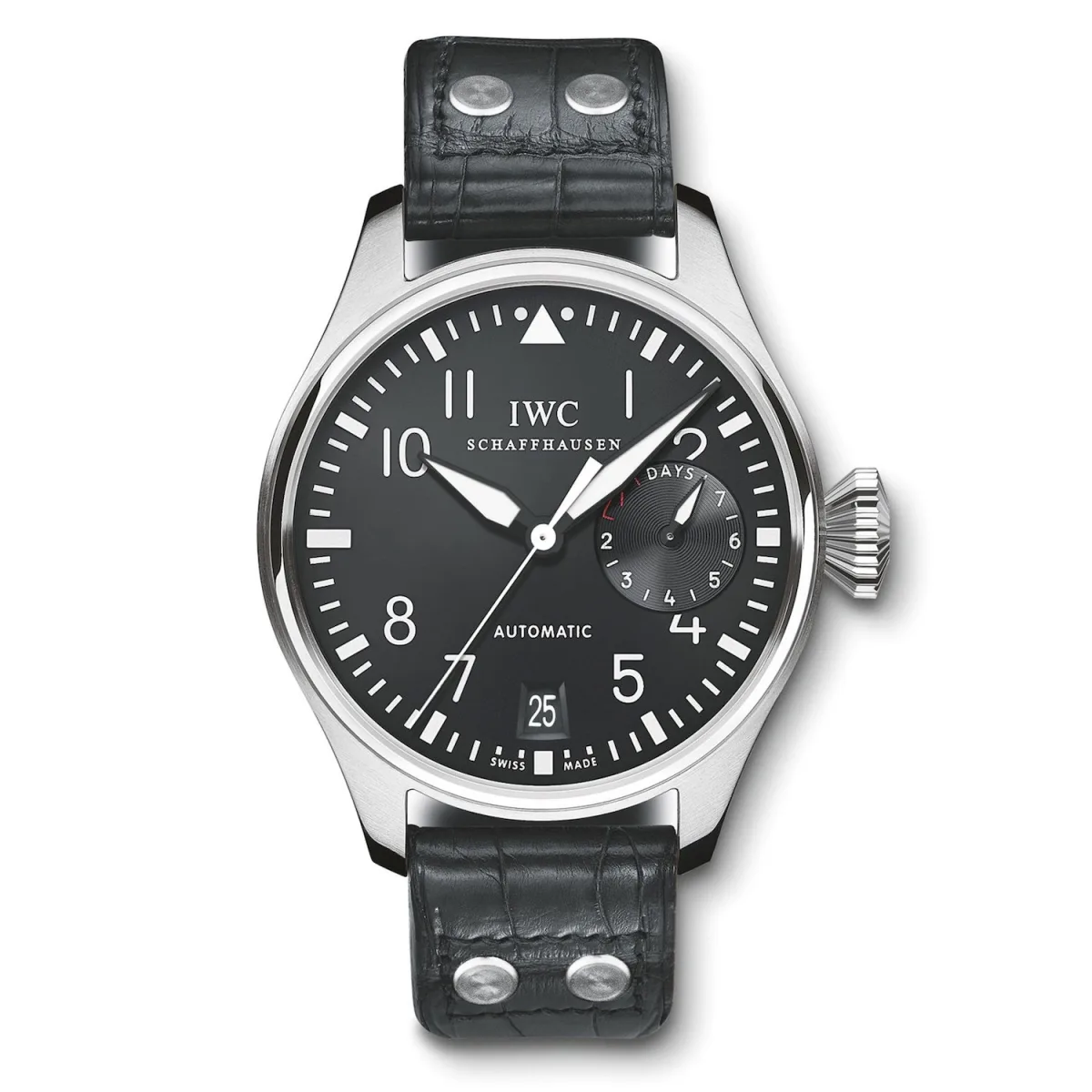
In 2006, the Big Pilot’s Watch was subtly redesigned as reference IW5004. The number 9 on the dial disappeared, and the numbers at 2 and 4 o'clock were partially cut. The ref. 5004 dial was fully painted, without applied indices. The strap was changed from buffalo to alligator. The movement was improved but remained at a frequency of 3Hz; initially caliber 51110 in 2005/2006, then caliber 51111 in late 2006. In 2012, some improvements were made to the crown and stem sealing system, and the Big Pilot’s Watch became known as IW5009. Finally, the Big Pilot was refined again in 2016, receiving a new movement, caliber 52110, under reference IW5010. Some small updates also touched the dial (including the return of the “9”).
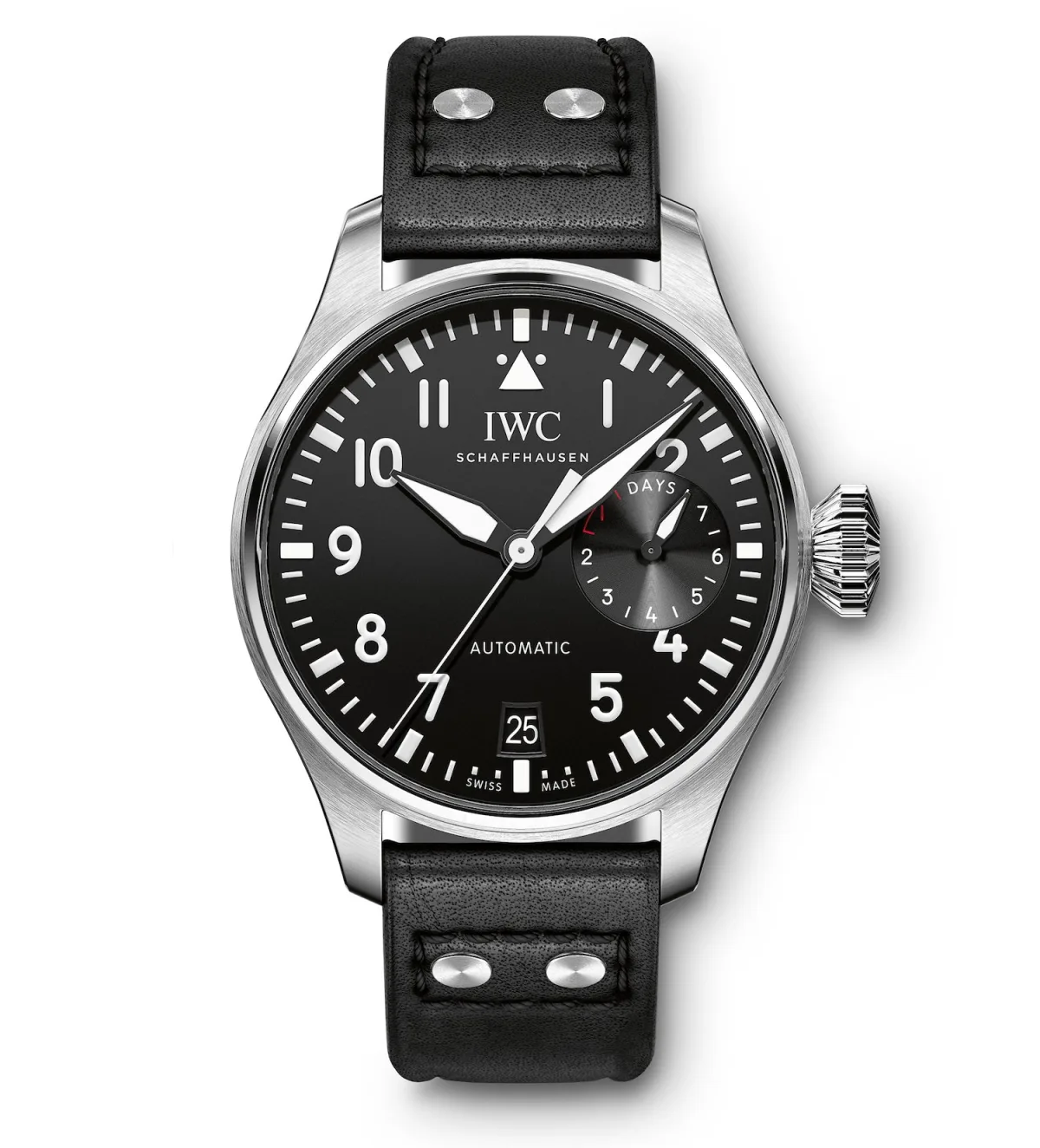
Iconic features – over all the years of production, some things remained true for the Big Pilot’s Watch. Firstly, the large diameter of 46.2mm – or even larger in some series, – the presence of a date window at the “6 o’clock” position, the oversized automatic movement with a 7-day power reserve, and a power reserve indicator at the “3 o’clock” position. These elements, in my opinion, are the signature design and technical features that are part of the model's design. It's not only about size but also about display and mechanics. Size really does matter. So, let’s look at the new IWC Big Pilot’s Watch 43.
The IWC Big Pilot’s Watch 43
Smaller, thinner, more focused… a new member has arrived in the BP family, and it's called the IWC Big Pilot’s Watch 43. But let me return to the main technical specifications before answering the important question: “Is the Big Pilot’s Watch 43 a real Big Pilot?”.
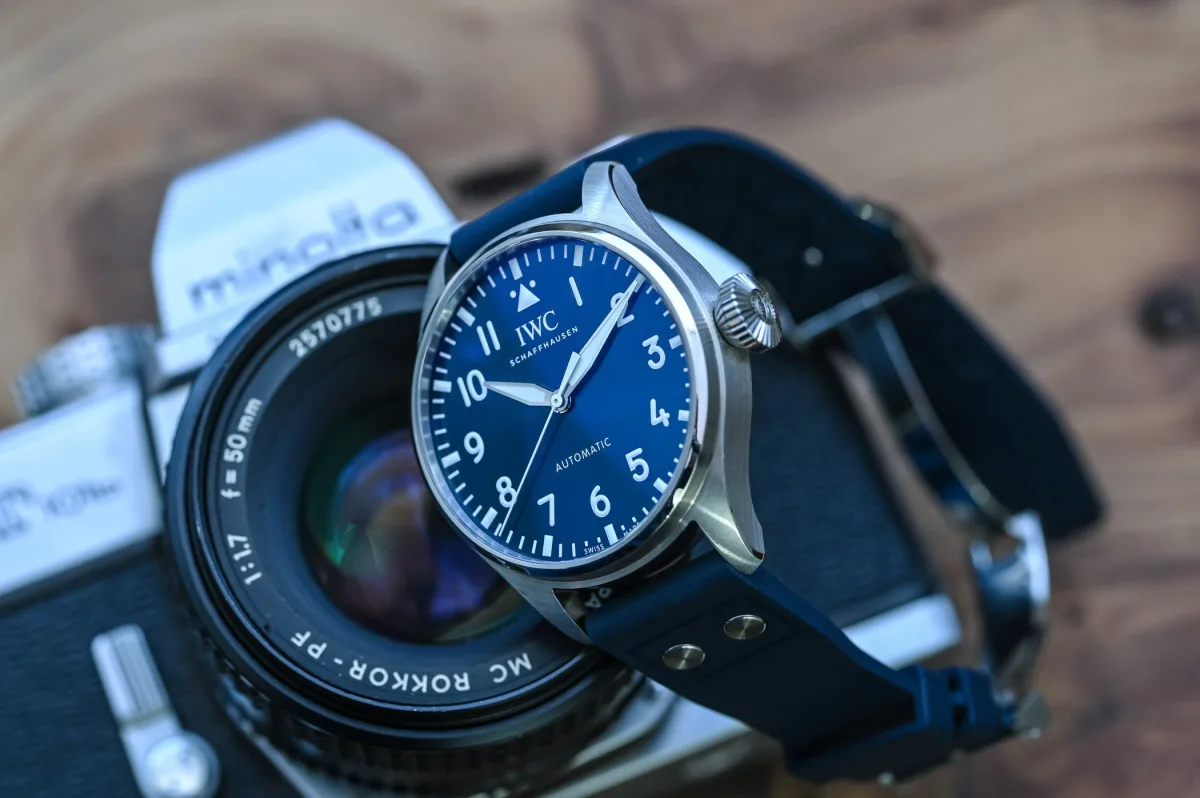
First of all, the BP43mm does not replace the original Big Pilot’s Watch (now known under article IW501001). The new, slightly “less big” Pilot’s Watch is an additional family member, aimed at a new target audience. It’s a less rigid, slightly more consensual, more accessible (not only financially) and more everyday version of the IWC pilot’s watch. If you want to feel the original Big Pilot’s taste, you will still have the opportunity to purchase it.
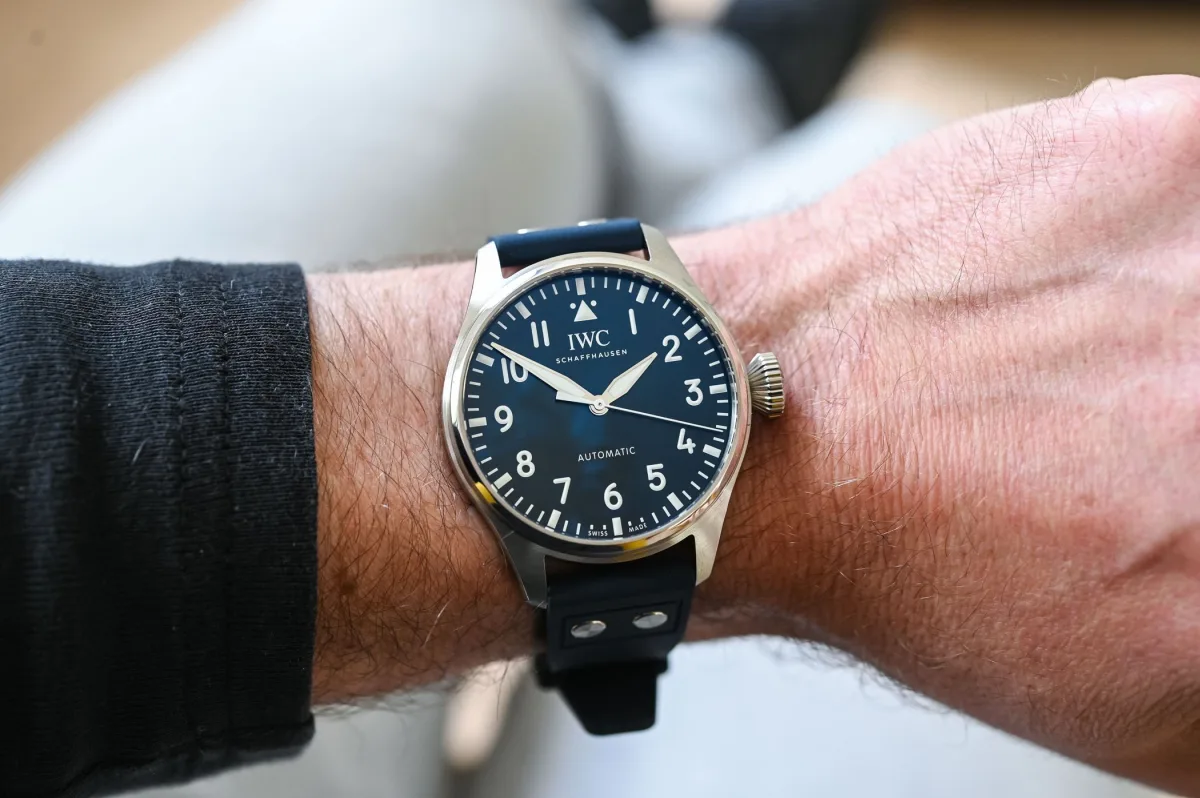
One of the main updates concerns the case size, which now has a diameter of 43mm, a height of 13.6mm, and a lug-to-lug length of about 53mm. By no means small, they are nevertheless significantly smaller than the original BP model, which measures about 3mm more in every dimension (46.2mm x 15.5mm x 57mm). The BP43 stainless steel case is classic, fully consistent with the rest of the IWC pilots' collection, with a diamond-shaped crown, large shoulders, an ultra-thin bezel raised above the case, and a combination of matte surfaces and polished accents, the latter on the lug bevels and the bezel. However, there are some significant additions to the case, such as water resistance, now at 100 meters. On the other hand, the soft iron inner case is gone, as the watch is equipped with a screwed caseback with a sapphire window. This already gives you an idea of the calling of these Big Pilot’s Watch 43.
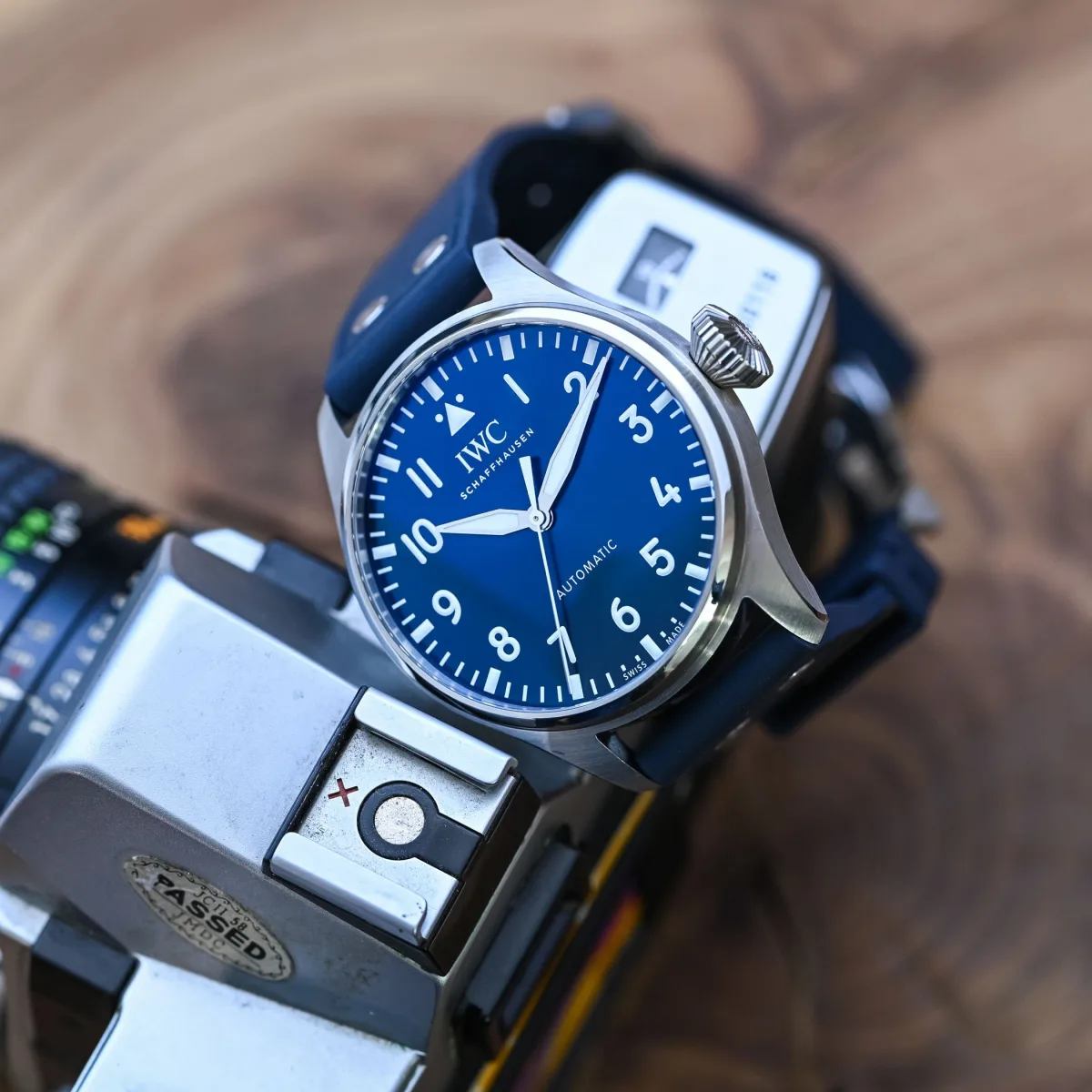
The dial of these smaller BP43 watches holds no surprises. As with the case, the connection with the rest of the brand’s pilot watches is undeniable, and it has all the expected signature features. This means an ultra-wide dial completely oriented towards legibility. I mean, it’s hard to beat the clarity of this dial both day and night. The contrast is excellent, the markers are wide and mostly filled with Super-LumiNova, the hands are large and adequately reach the markers. As for the design, the classic rounded Arabic numerals are taken from the latest Big Pilot’s Watch releases, as is the shape of the triangular marker at the “12 o’clock” position and the hands. You’ll find yourself in familiar territory.
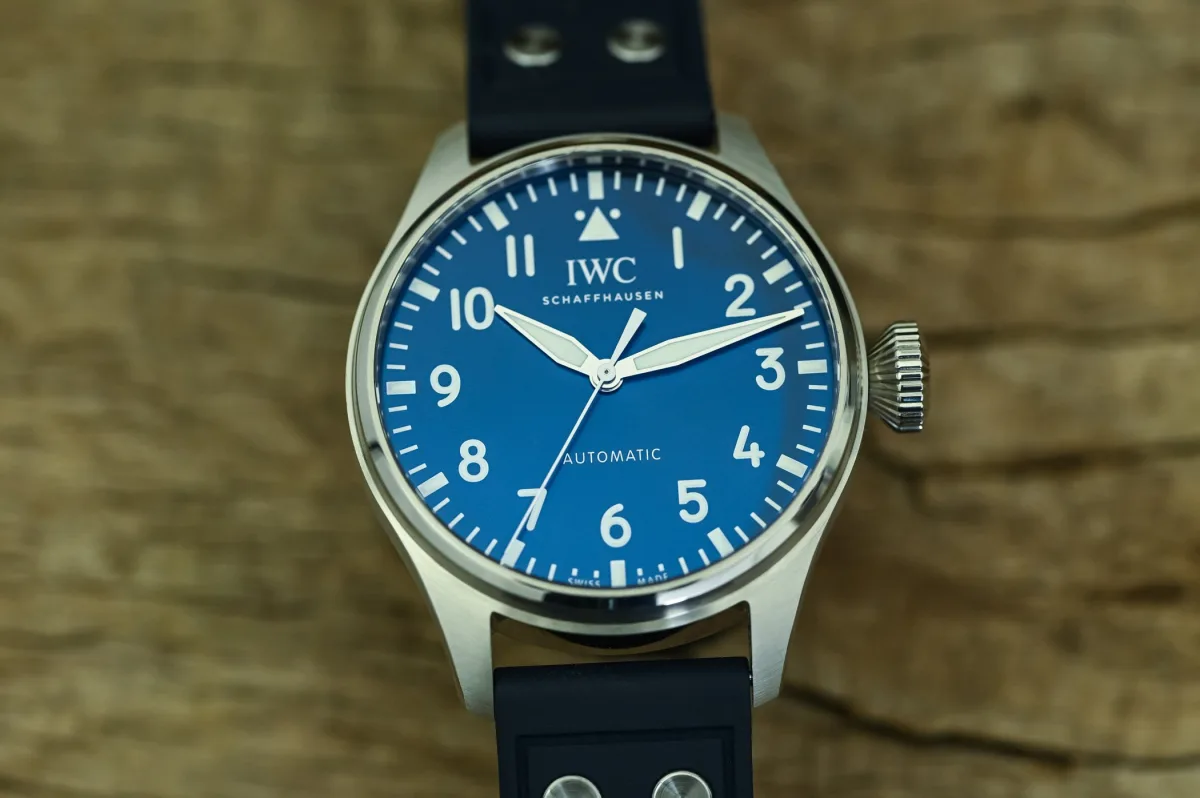
The watch I had for this review was equipped with a more modern blue sunray-patterned dial, providing pleasant highlights and looking less strict than the classic matte black dial. You can't go wrong with either option, but the blue one is different, less traditional. Otherwise, there’s nothing on this dial worth mentioning. No additional functions, just 3 hands and very limited “literature”.
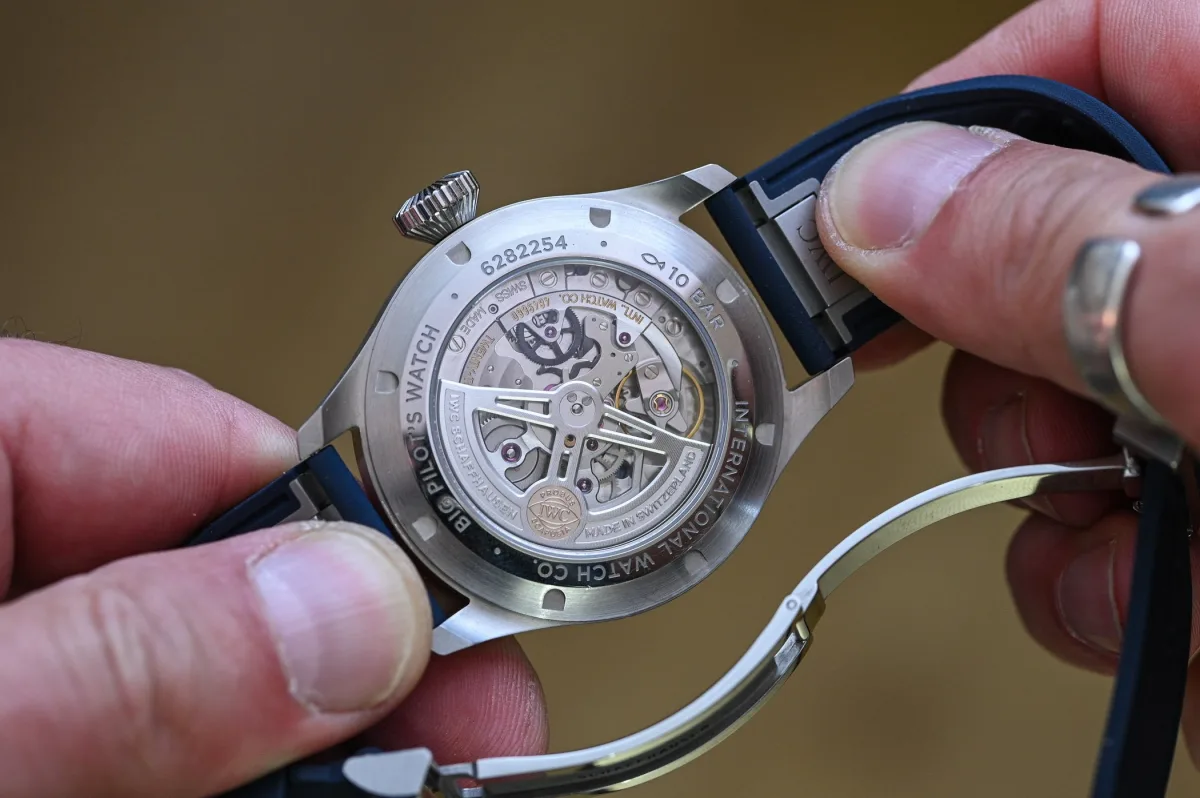
When it comes to the movement, IWC applies the same recipe as a few years ago with the Portugieser 40mm. The original Portugieser Automatic, with a 42mm case, is powered by a large 7-day power reserve automatic movement, the same as found in modern Big Pilot editions. For the BP43, IWC relies on a simpler but more modern automatic caliber, 82100. This movement was conceived as a replacement for third-party movements, with numerous improvements over them. Automatic winding is done via the brand’s signature Pellaton winding system, offering a comfortable 60-hour power reserve, and the movement’s diameter is 30mm, making it more suitable for modern-sized watches, especially for the BP43 with a transparent caseback. Additionally, the movement has a pleasant design with open bridges that expose most of the movement’s components. The decoration, though industrial, is well-executed and simply looks very attractive. Finally, some components, such as the automatic wheel or pawls engaging with it, are made of virtually wear-free zirconium oxide-based ceramic.

Fantastic Versatility Thanks to Interchangeable Straps/Bracelet and Folding Clasp
One part of the new IWC Big Pilot’s Watch 43 that truly deserves attention is the strap/bracelet. To put it briefly, IWC has created one of the best interchangeability systems on the market, period! And this is one reason why this new 43mm edition is much more versatile than its bigger brother.
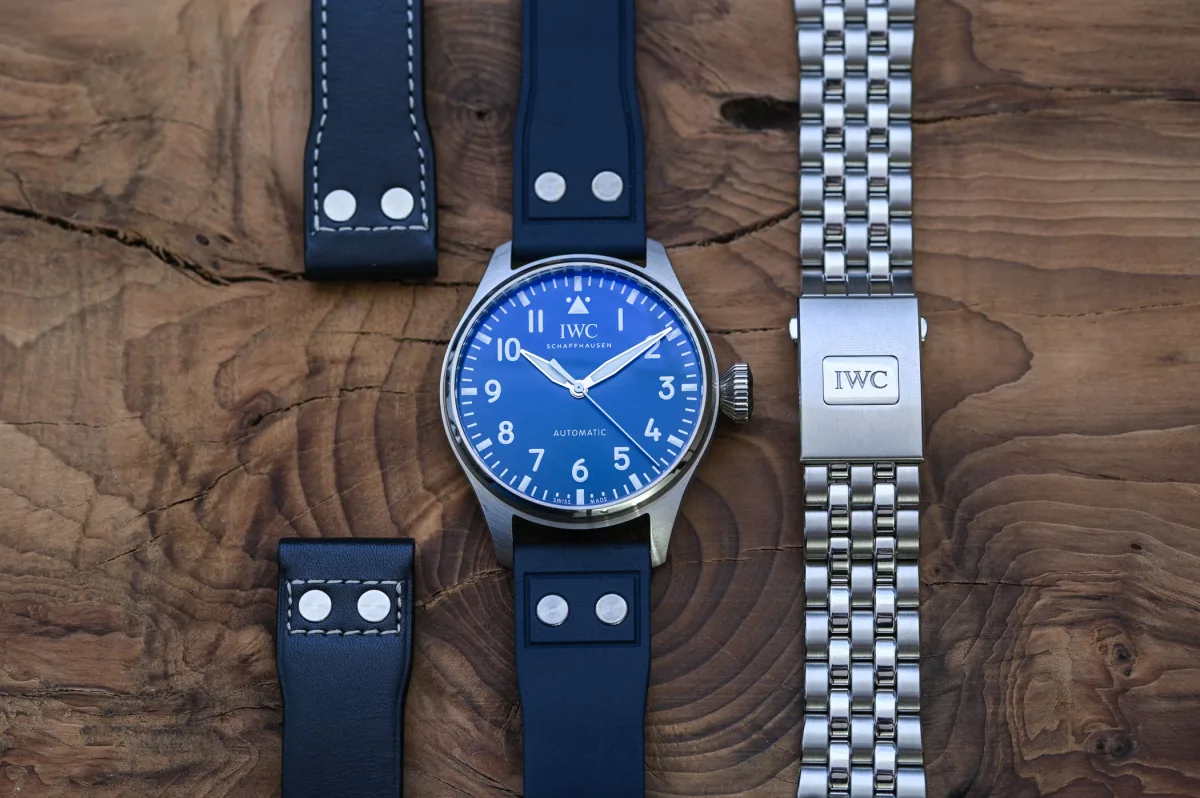
Firstly, IWC now offers the possibility to wear the Big Pilot’s Watch on a stainless steel bracelet, which in itself is an event – it’s a first for this segment of the Pilot’s collection – and radically changes the watch’s appearance. For instance, it truly makes the watch feel entirely new. Secondly, the bracelet’s concept itself is simply stunning. The narrow links provide flexibility and comfort, the combination of matte and polished surfaces gives the look elegance and ease, and finally, a beautifully crafted clasp. Indeed, despite the clasp being quite compact (yes, that’s a compliment), it is equipped with a micro-adjustment system, meaning you can extend its length by simply pressing the IWC logo on the clasp. Additionally, the clasp is quite flat and well-secured, with two buttons. Excellent work, IWC!
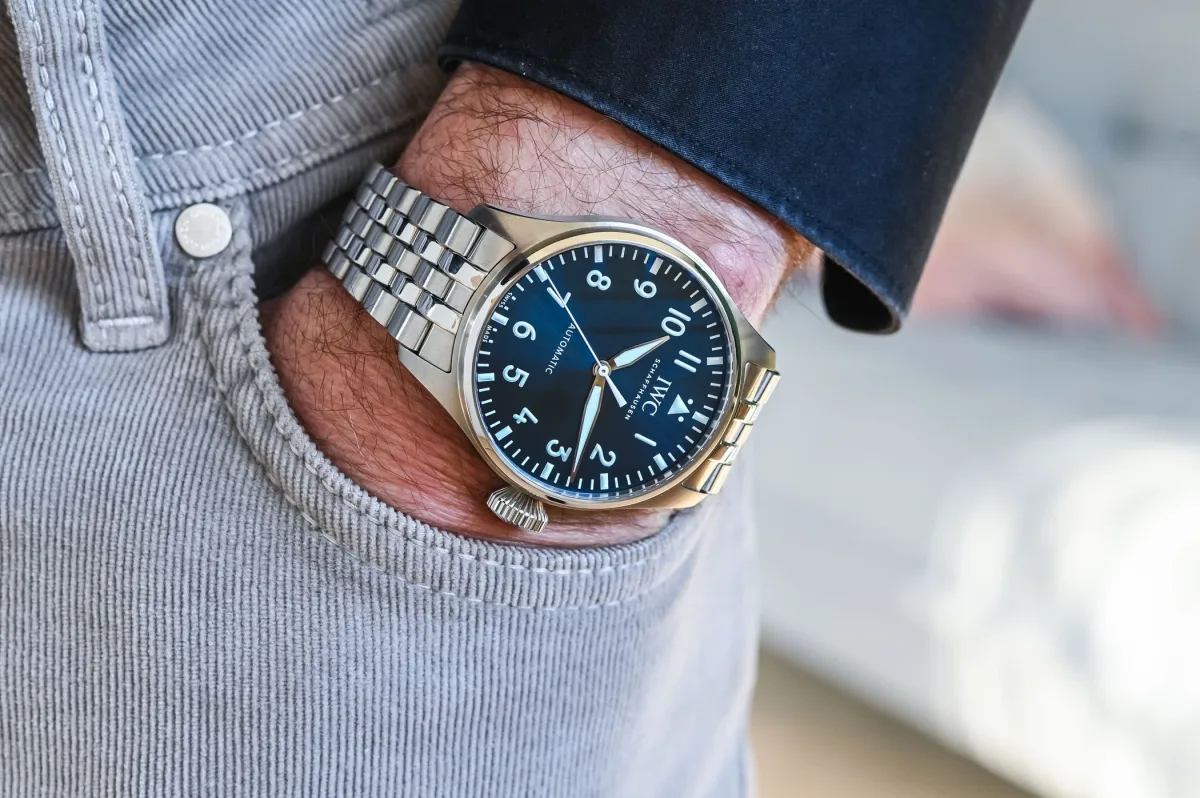
And moreover – the interchangeability system itself is one of the simplest on the market. It’s simply “plug and press”, requiring neither tools nor complex mechanisms on the back of the lugs or bracelet.
With this quick-change device in mind, IWC has also developed a new range of straps. In addition to the classic calf leather strap with rivets, available in black, brown, or blue, or the stainless steel bracelet above, the brand has developed a new rubber strap, which retains the classic pilot look with rivets but will make the new BP43 much more of a summer watch, with the possibility of even a quick plunge into the sea – which is now fully possible with its screw-down crown and 100-meter water resistance. This rubber strap is available in black, blue, or even red for a bolder look.
Finally, the brand has taken this concept even further, as not only is the strap change very simple, but so is the folding clasp, which can be used on both leather and rubber straps. This is, as far as I know, a world first, which future watch owners will surely appreciate. Simply effortless. Once again, excellent work, IWC!
A Fan’s Perspective on the Big Pilot’s Watch 43
Now it’s time for me to be more critical, or at least, let’s say, more opinionated. As I explained in the introduction, I am a true fan of the original “big” Big Pilot’s watches. I own a first-generation model, reference IW5002-01 with the so-called “fish” crown and automatic movement with a slow (2.5Hz) 7-day power reserve. These watches are among those that impressed me when I started getting into watches, and I have developed a genuine love for them.
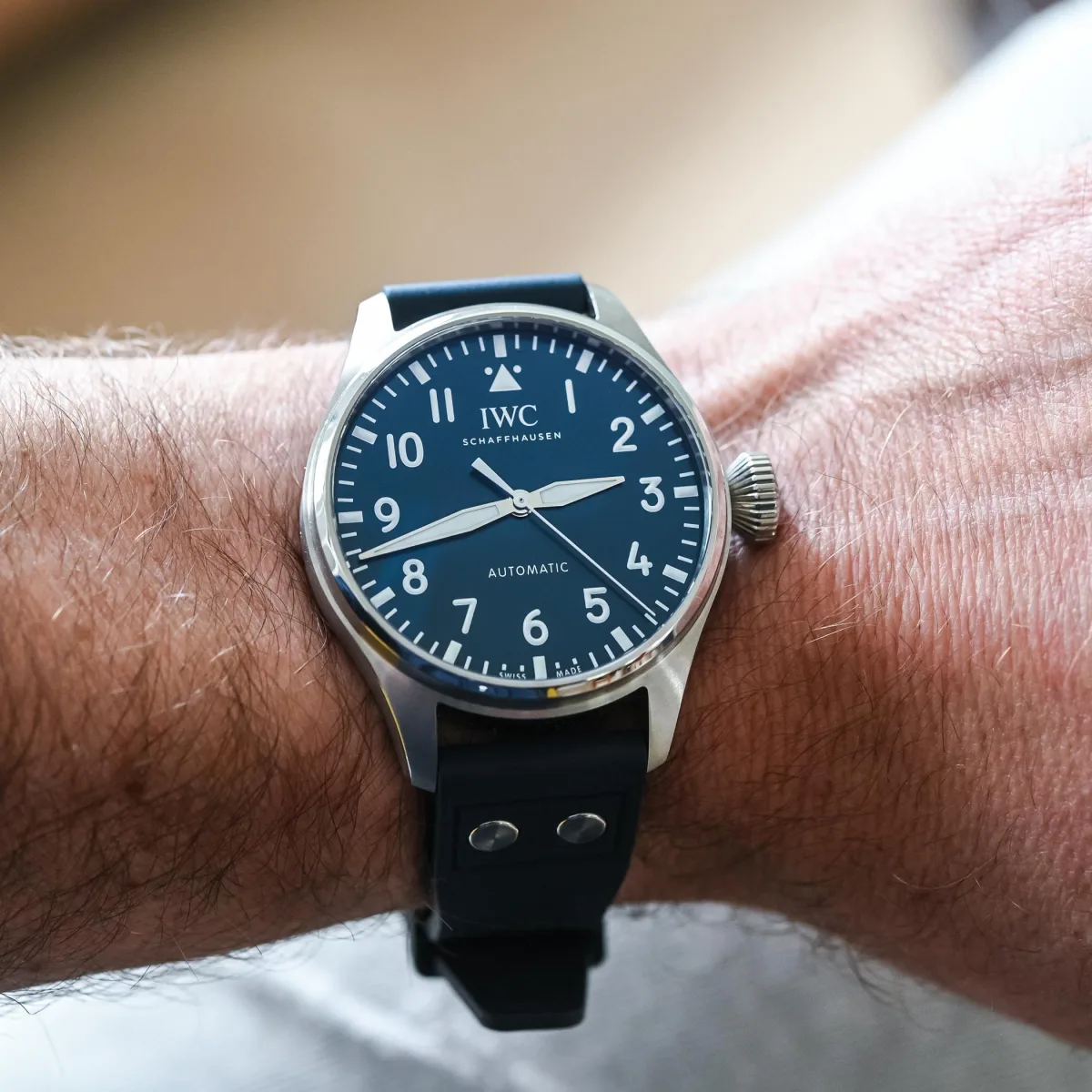
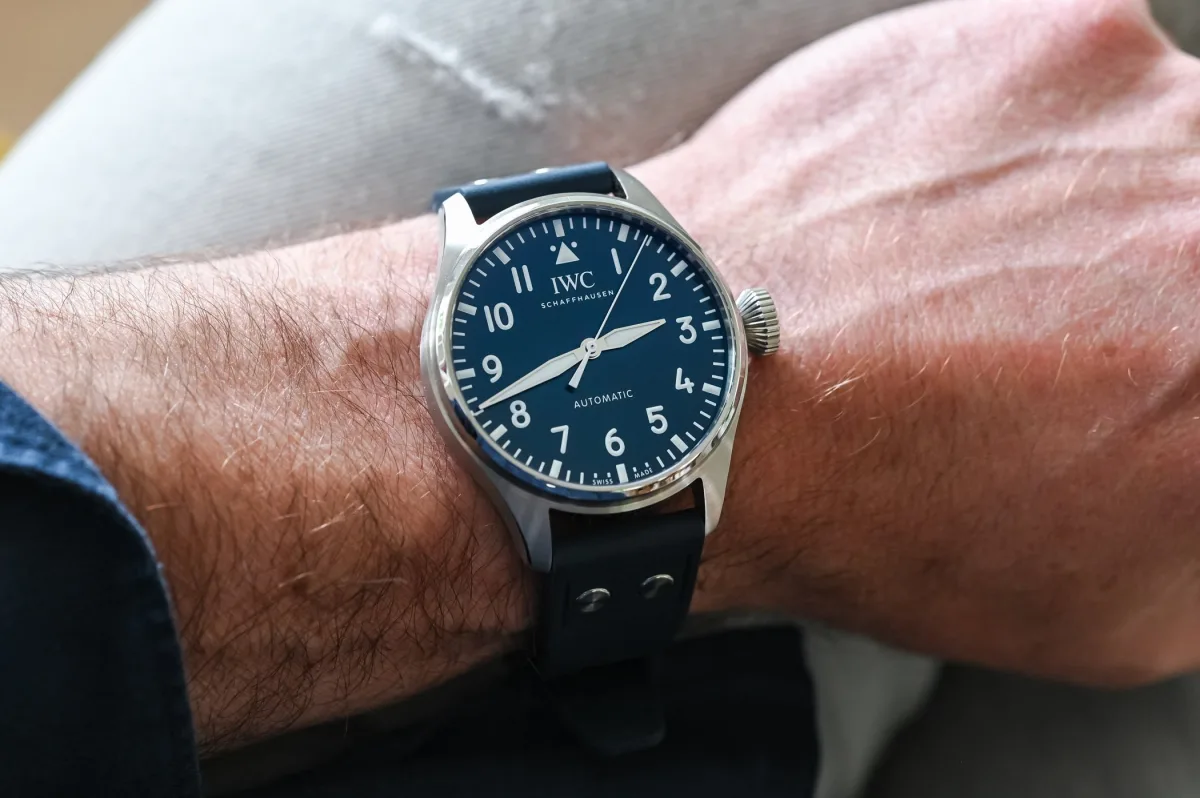
Now that the new IWC Big Pilot’s Watch 43 is on my wrist, what do I think of them? Truthfully, they are quite impressive watches, they look good, they have quite a wrist presence, and everything is well made! In fact, the more I think about them, I can only find one real “issue” with them, which has nothing to do with the watches themselves. Objectively, IWC has once again released watches that are beautifully made, with undeniable build quality. The case feels very solid, sharp in its finish, and neat when it comes to assembling various parts. I highly appreciate the increased 100m water resistance and the ability to switch straps, clasp, and bracelet. The dial is clear and flawless, even when considering the smallest details. All surfaces are pleasing to look at and touch, and the dial is exactly what you'd expect from IWC Pilot’s Watch.
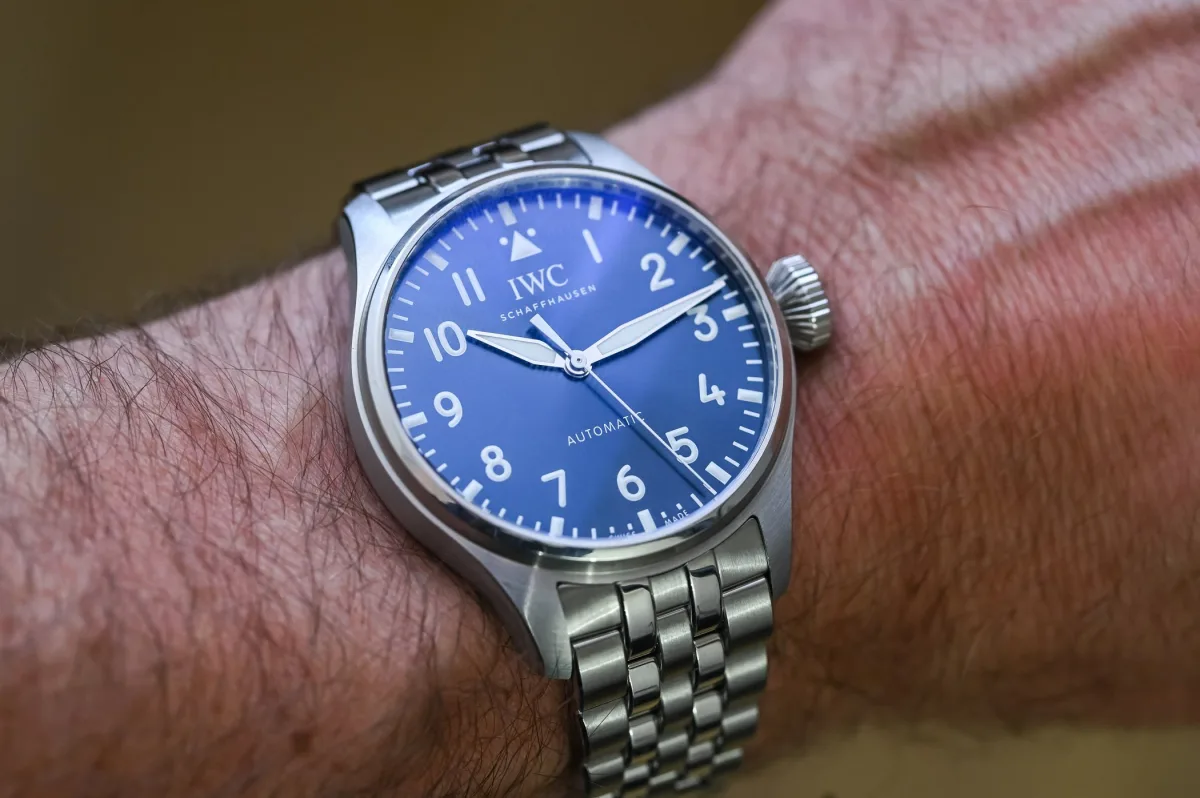
Moreover, even though the movement is not as advanced and powerful as the massive 7-day power reserve movement found in classic BPs, it remains a very well-constructed piece of horology, with a comfortable power reserve and designed with precision and durability in mind. The skeletonized appearance of caliber 82100 is very graceful, and watching it through the caseback is a real treat. As mentioned in the previous section, the interchangeability system is top-notch and provides great versatility.
In this release, Big Pilots have become easier on the wrist and to the eye. These are watches that anyone can wear and enjoy, watches with no major flaws. The slightly more compact dimensions make them relatively comfortable for everyday wear – although, to be fair, the watch still makes an impressive “wrist presence”. The lack of additional complications combined with the ability to wear the watch on a rubber strap or stainless steel bracelet makes it more casual, slightly sporty. In short, it’s a more mature, more reasonable, and more versatile Big Pilot. And here, at least in the eyes of a Big Pilot enthusiast, things get a little more complicated.
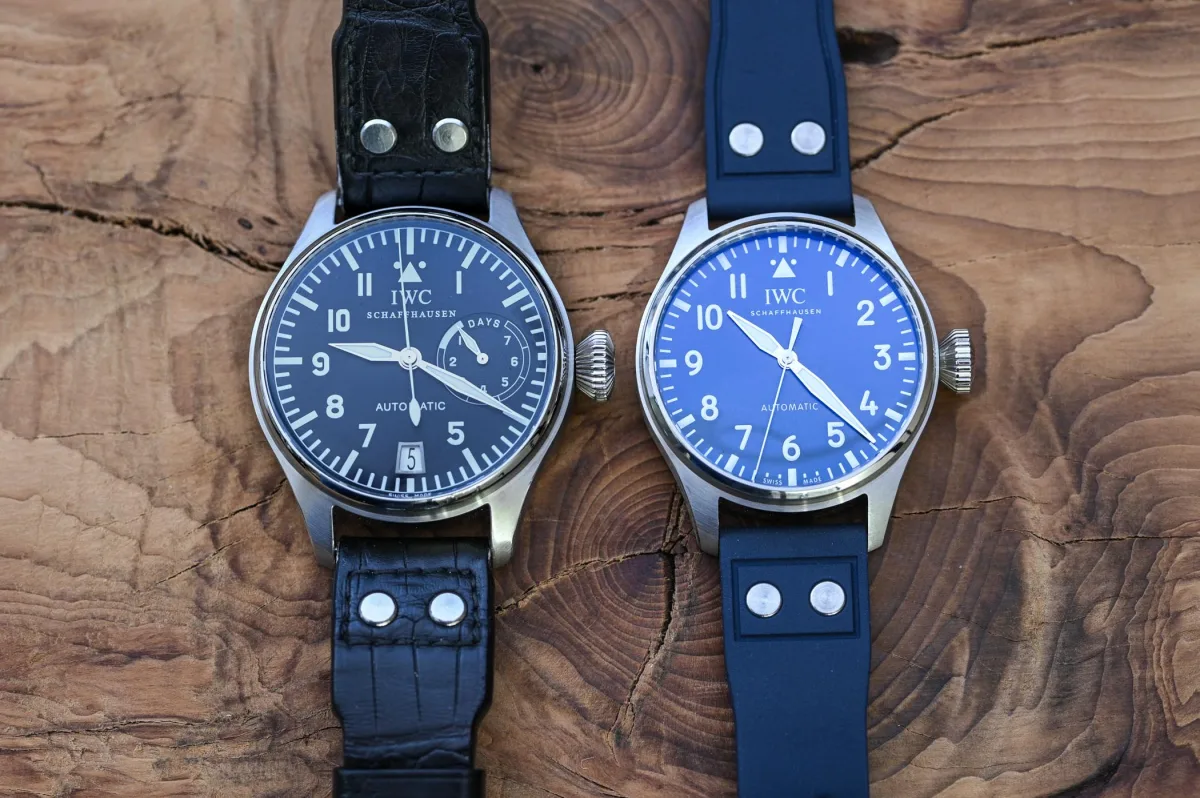
You see, the original Big Pilot was never meant to be a versatile watch. It was never created to be reasonable. When the Big Pilot was released in the early 2000s, it was (and remains) a benchmark. It was not the kind of watch designed for commercial success per se (though it subsequently gained significant popularity). They were made to push the rest of the collection, as a showpiece, as a conversation piece. They were meant to be demonstrative, excessive, slightly outrageous. Wearing a Big Pilot is a kind of event. Such a watch is not worn every day or for any occasion. This demonstrative nature, this sense of sensation in the Big Pilot, even its impracticality, its weight, its visual impact – all of this is part of its charm. It is this eventfulness that makes the Big Pilot, among other things, an iconic model.
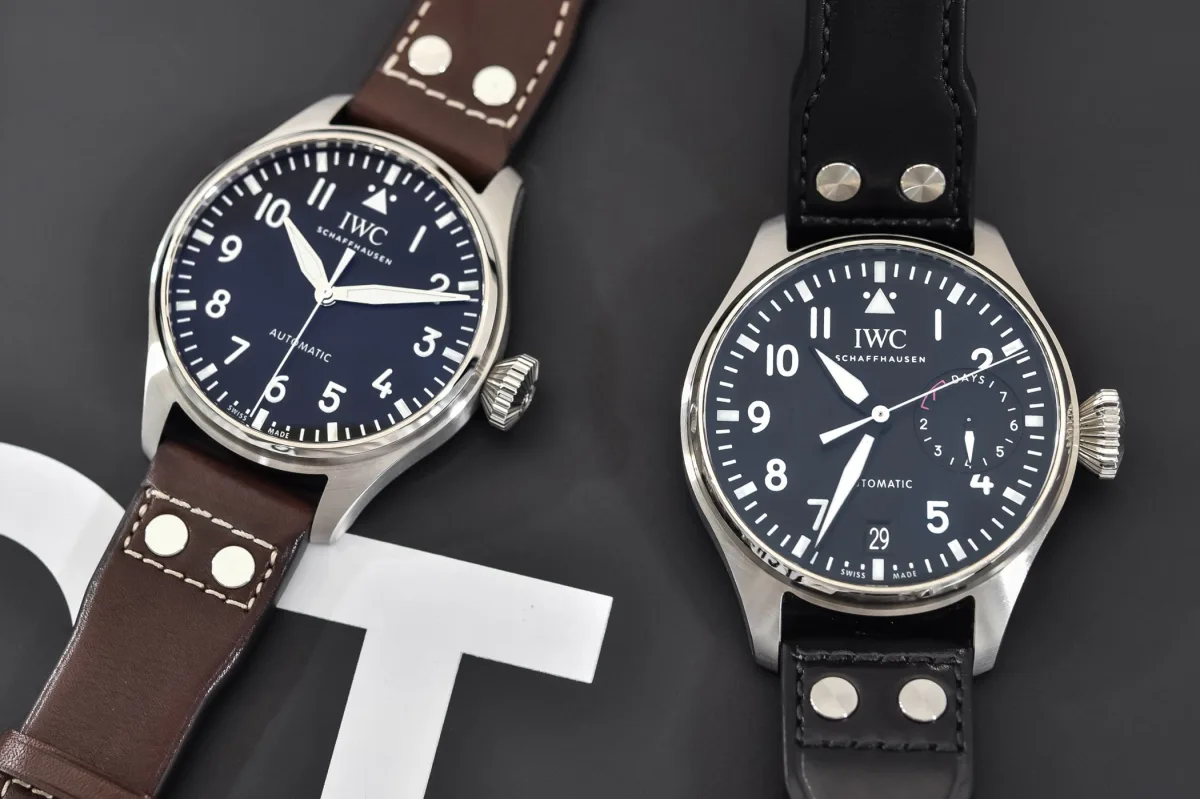
And then there’s the display. For me and probably many other collectors, the power reserve and date window are two elements that are integral to the design of these watches, just as much as the oversized case. All these elements together create a watch that is and feels special, watches not meant for a wide audience. This non-standard spirit, in my opinion, is the reason for the existence of the original Big Pilot.
With the BP43 model in front of me, I have a more refined, three-hand watch, more everyday, more versatile, easier to wear, and designed to be on your wrist almost daily. Does this make the new Big Pilot’s Watch 43 a bad watch? Absolutely not. It’s a great watch with undeniable quality. Plus, they look very good.
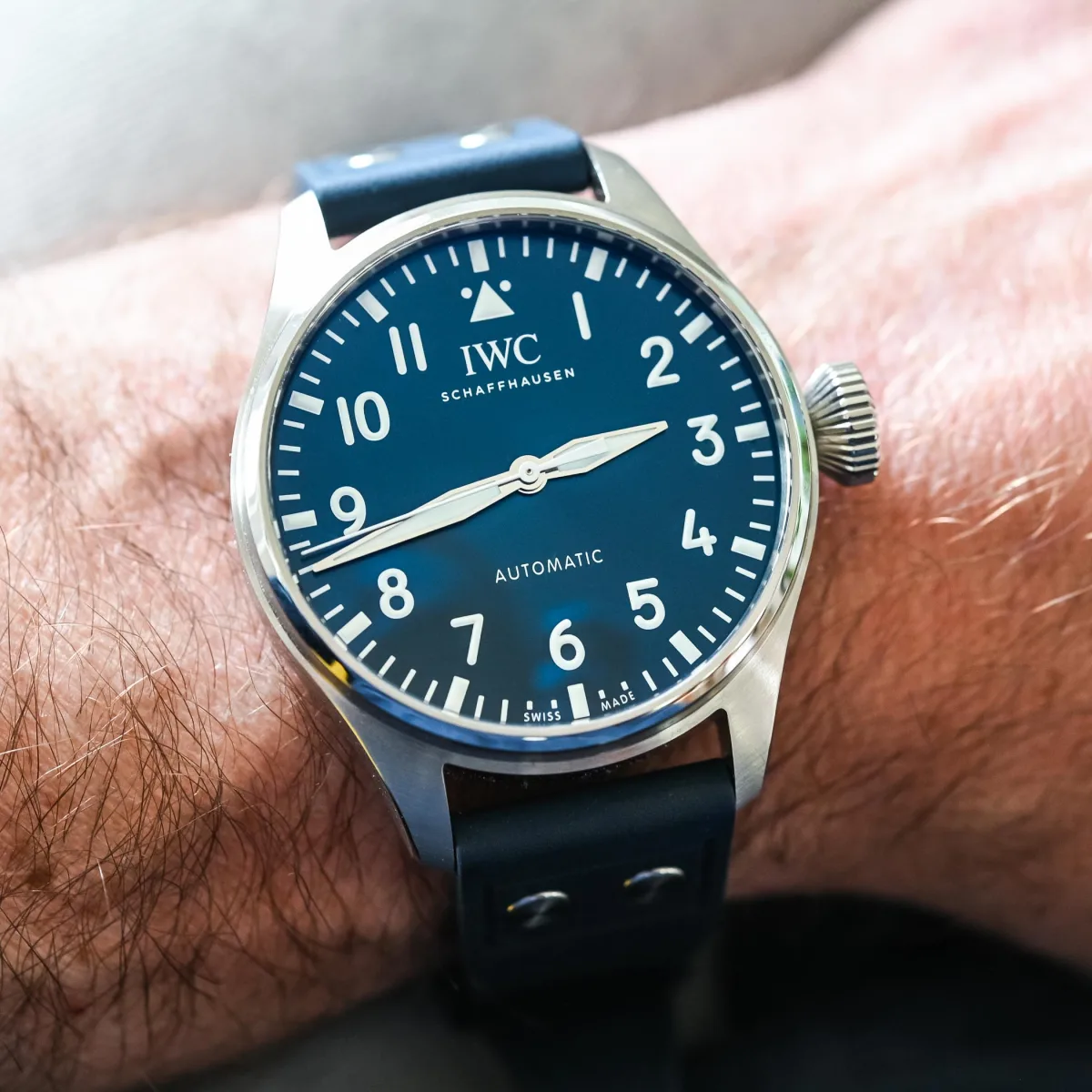
And as a result, I think these watches have the wrong name. The Big Pilot’s Watch 43 is, in my opinion, a larger, more upscale, more sporty version of the Mark XVIII. For me, this is not a Big Pilot. I know I may sound like a purist, but these are just the feelings of a Big Pilot fan. There’s nothing wrong with the BP43, on the contrary, it just doesn’t have the right name. Just like I wouldn't accept a three-hand Speedmaster, whose chronograph is an integral element of its DNA, I want my Big Pilot to be sensational, non-standard, demonstrative, and with a very specific display.
Availability and Price
The IWC Big Pilot’s Watch 43 is now available at IWC boutiques, authorized retailers, or the IWC online boutique. Several editions are available, including a black dial with a brown leather strap, a blue dial with a blue leather strap, or a blue dial with a stainless steel bracelet. Additionally, you can purchase a leather or rubber strap and a stainless steel bracelet as an accessory from IWC, which will fit any model in the collection. The Big Pilot’s Watch 43 collection starts at 8,850 Euros, 8,900 Swiss Francs, 8,400 US Dollars, or 7,200 British Pounds, which is about 45% less than the cost of the classic BP46 watches. This last piece of information can also significantly change your perception of these watches...
For more details or to place an order, please visit iwc.com.
TECHNICAL SPECIFICATIONS – IWC BIG PILOT’S WATCH 43
Case: diameter 43mm x height 13.6mm – 53mm lug-to-lug – stainless steel case, matte and polished – convex sapphire crystal, AR-coated – glass secured against displacement due to air pressure changes – transparent sapphire caseback – screw-down crown – water resistance 100m
Dial: classic Pilot’s dial in matte blue – painted Arabic numerals and markers, with Super-LumiNova – rhodium-plated hands with Super-LumiNova
Movement: IWC Caliber 82100 – in-house, automatic – 22 jewels – Pellaton automatic winding system – 28,800 vibrations/hour – power reserve 60 hours – hours, minutes, central seconds hand (hacking)
Bracelet: offered either on a calf leather strap (blue or brown) with a folding clasp, or a 5-link matte and polished stainless steel bracelet with a folding clasp
quick-change strap system on both leather and steel bracelet
References: IW329303 blue dial, blue calf leather strap, IW329304 blue dial, steel bracelet
Availability: Now available at IWC boutiques, authorized retailers, or the IWC online boutique
Price: 8,850 EURO, CHF 8,900, USD 8,400, GBP 7,200