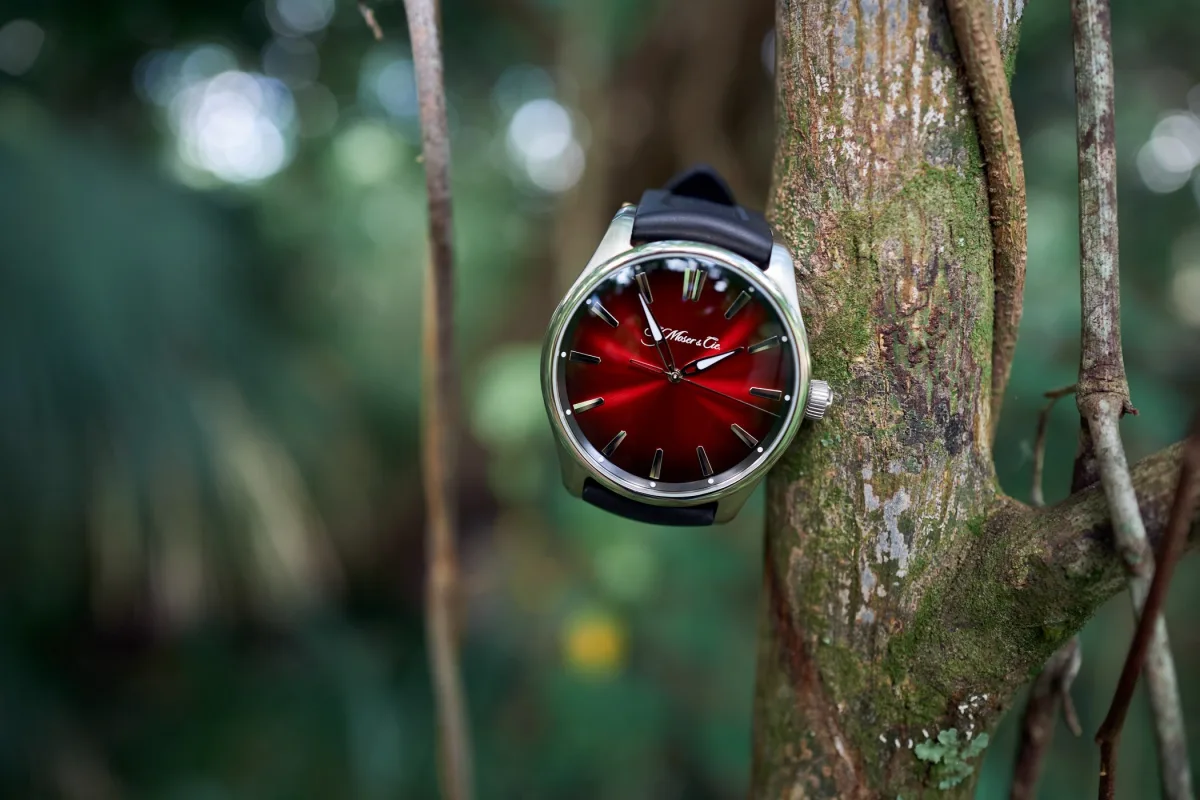
Every watch enthusiast inevitably reaches a point of overload once or twice in their watch journey, looking at their watch box and feeling more apathy than excitement. The thought arises: "Do I really need so many watches?" And "Wouldn't life be simpler with just one...?" Of course, this feeling usually passes, and we return to our all-encompassing madness, but it's a fun mental exercise while it lasts. Watch brands seem to know we want this, at least in theory. There is no shortage of marketing statements subtly suggesting that THIS is the one you need, these watches can do it all! And today, that watch is the H. Moser & Cie. Pioneer Centre Seconds Swiss Mad Red.
H. Moser & Cie. is a brand most of you are familiar with, known for their vibrant and shiny dials and genuine sense of humor. While the excellent Streamliner model has been attracting more attention lately, the Pioneer line is Moser's answer to the "one watch problem." But can it truly do it all? Are they suitable for any situation? We take the H. Moser & Cie. Pioneer Centre Seconds Swiss Mad Red on an eventful trip to Florida to find out.
Today, Moser consists of four main collections: Streamliner, Endeavor, Heritage, and Pioneer. The Pioneer line is the sportiest of them all, presented as versatile watches for everyday wear and adventure. I tested this statement during an adventure-filled week in sunny Florida. I wore them for everything from casual dinners to underwater diving in a natural spring and a hike in a swampy forest. But before we get into that, let's review the key highlights.
The Watch
Swiss Mad Red is one of five variations of the H. Moser & Cie. Pioneer Centre Seconds model and the only one that departs from the cool blues (Funky Blue and Blue Lagoon) and greens (striking Cosmic Green). And it is indeed a departure.
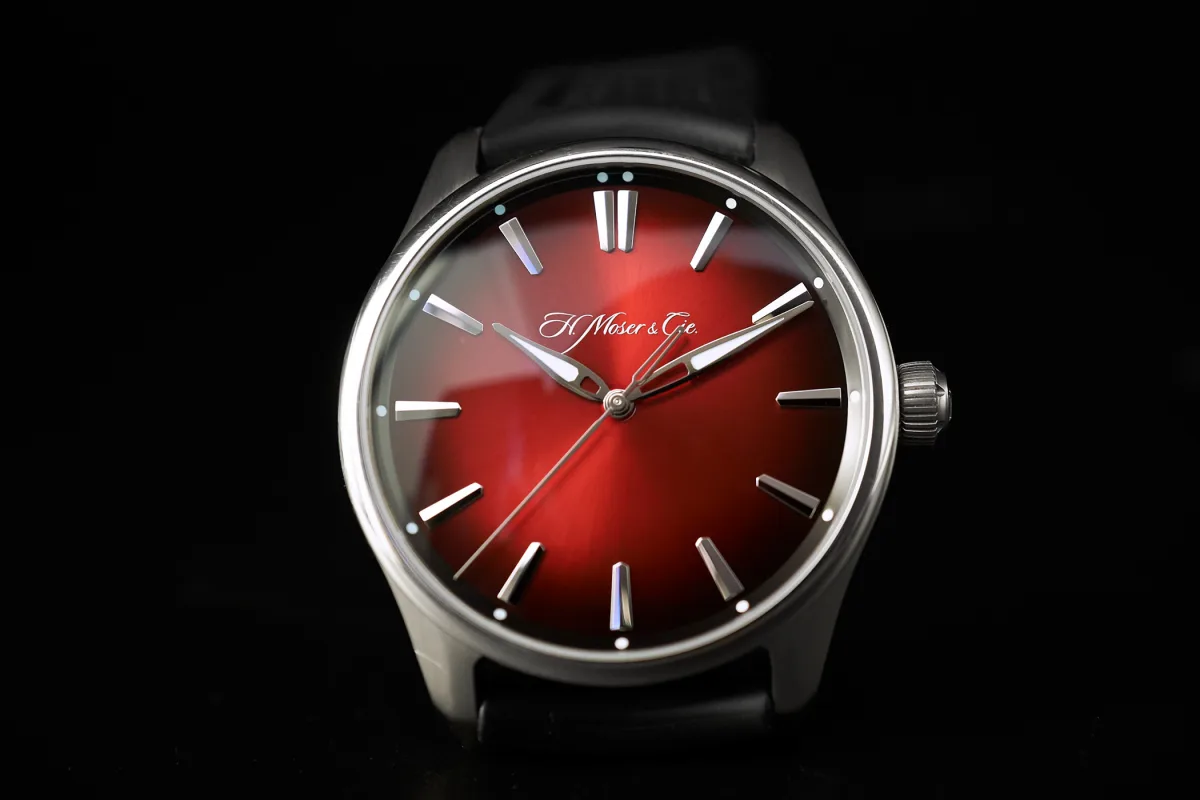
The 42.8 mm stainless steel case is large enough to give the watch a confident presence on the wrist, yet it doesn't feel too big or bulky. The relatively short lugs and sculpted design, combined with a modest thickness of 10.6 mm, allow the watch to hug the wrist well, which is essential for versatile sports watches. The case is crafted in a beautiful combination of polished and matte surfaces, interrupted only by vent holes on the side. These details give the watch additional character and enhance its sleek, aerodynamic look.
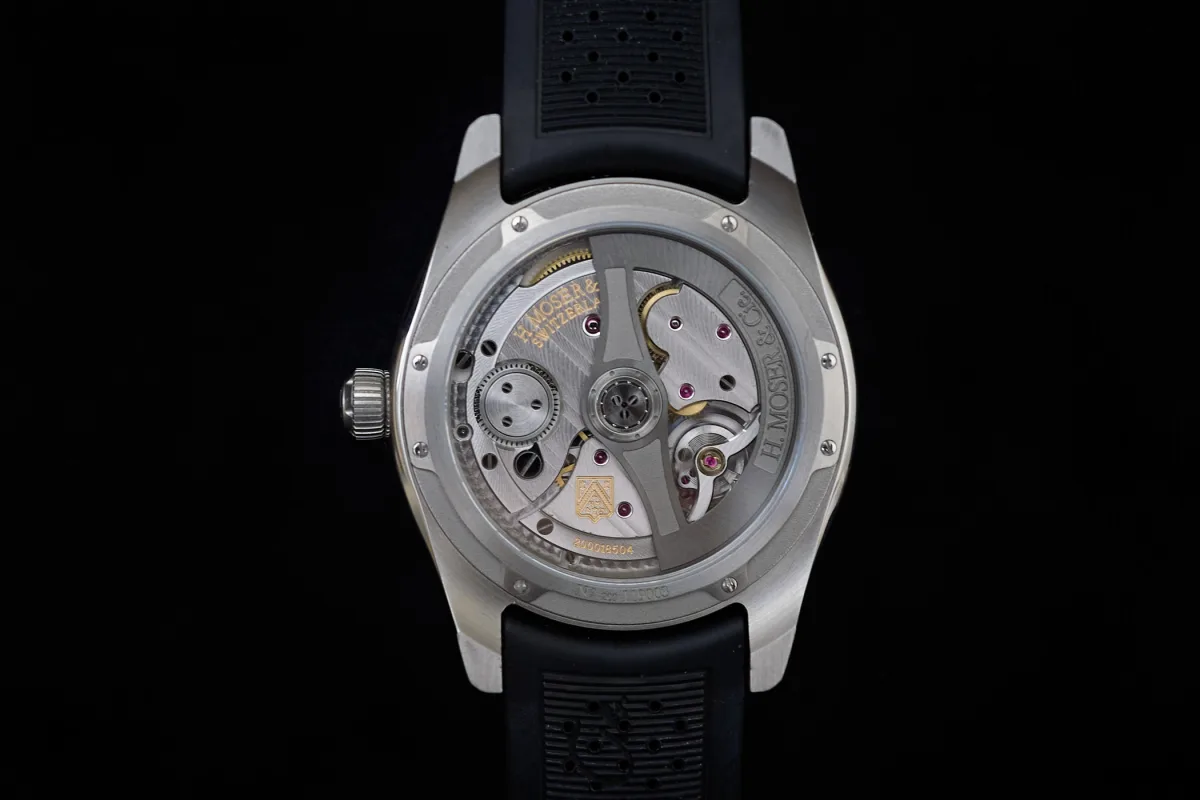
Flipping the watch over reveals the full view of the HMC 200 movement through the sapphire case back. This is Moser's in-house-developed three-hand movement. Beautifully finished with Moser's famous double stripes on the bridges and plate, as well as gold engraving, this 27-jewel movement with a frequency of 21,600 vph boasts a substantial power reserve of 3 days, wound manually and/or with a skeletonized engraved rotor. The movement is mesmerizing and would be the main attraction if it weren't for what lies on the other side: the Swiss Mad Red dial.
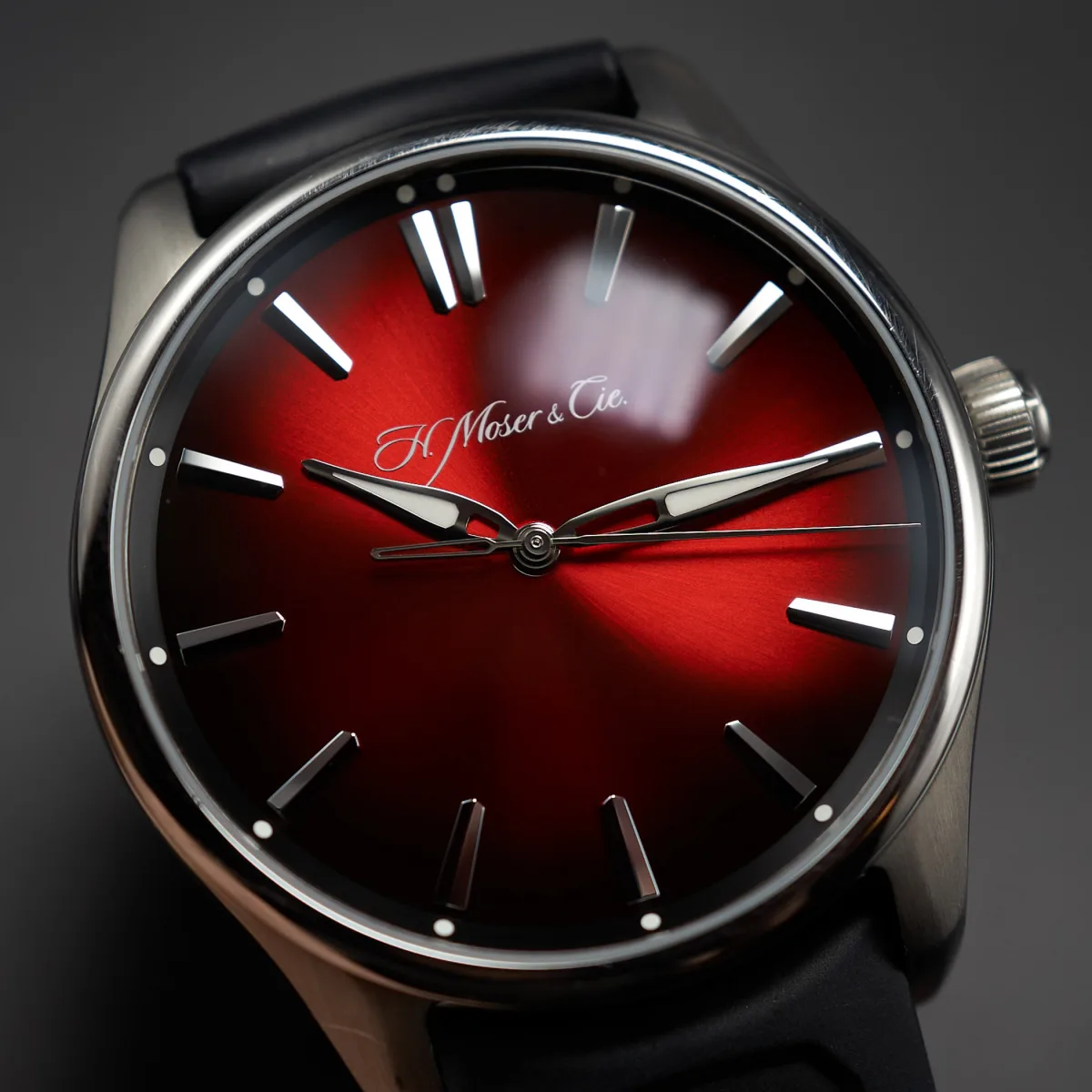
First appearing on the 2017 Moser Swiss Mad Watch (yes, a watch partially made of cheese), this bright red fumé dial with a sunburst gradient pattern is pure Moser craftsmanship. Nobody makes fumé dials as colorful as they do, and this model is no exception. It starts with a bright, candy apple color at the center and gradually darkens outward until it becomes a deep cherry red at the edges. Add to this the sunburst pattern that playfully shifts with changes in lighting, and you have a dial that truly mesmerizes, one that you can't help but stare at for unsettling periods, much to the concern of friends and family.
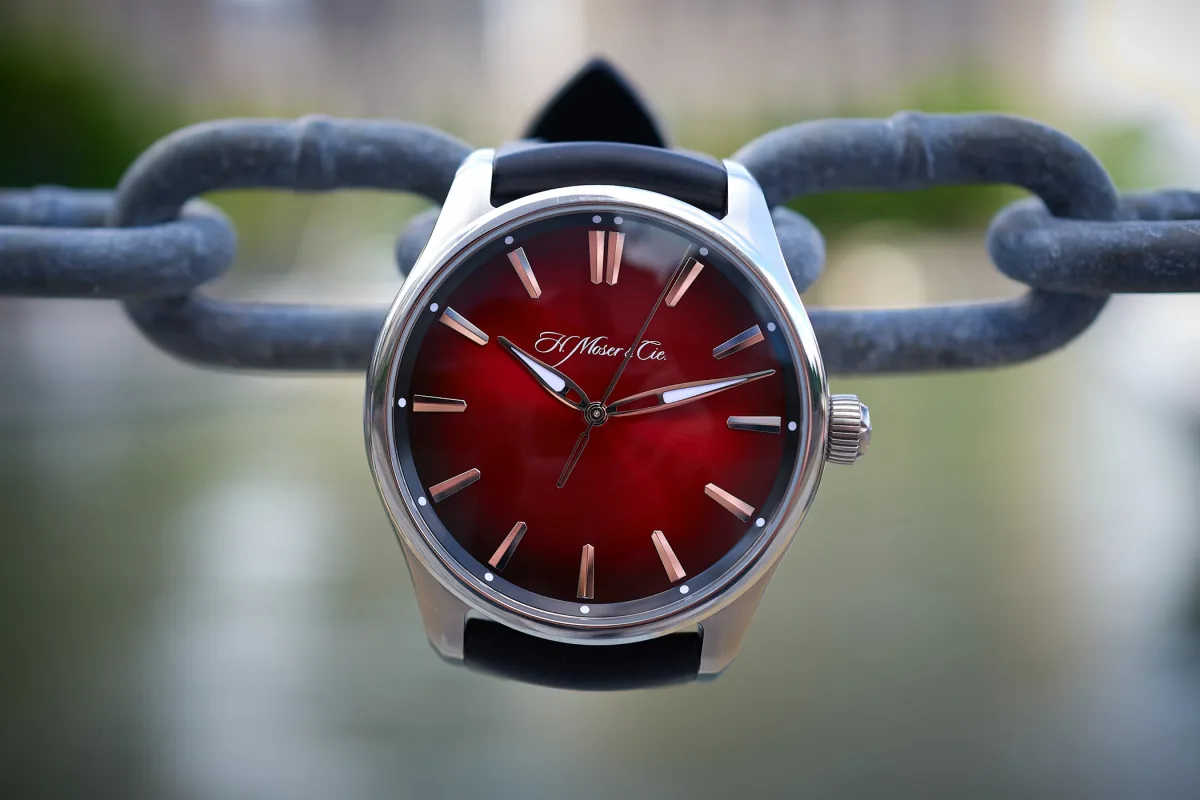
The beautiful dial is accented by polished indices, each with a small luminescent strip at the base, because they're not sports watches if you can't read them in the dark. Moser's signature leaf-shaped hands also glow, but are skeletonized at the base to let more red show through. Every little piece matters.
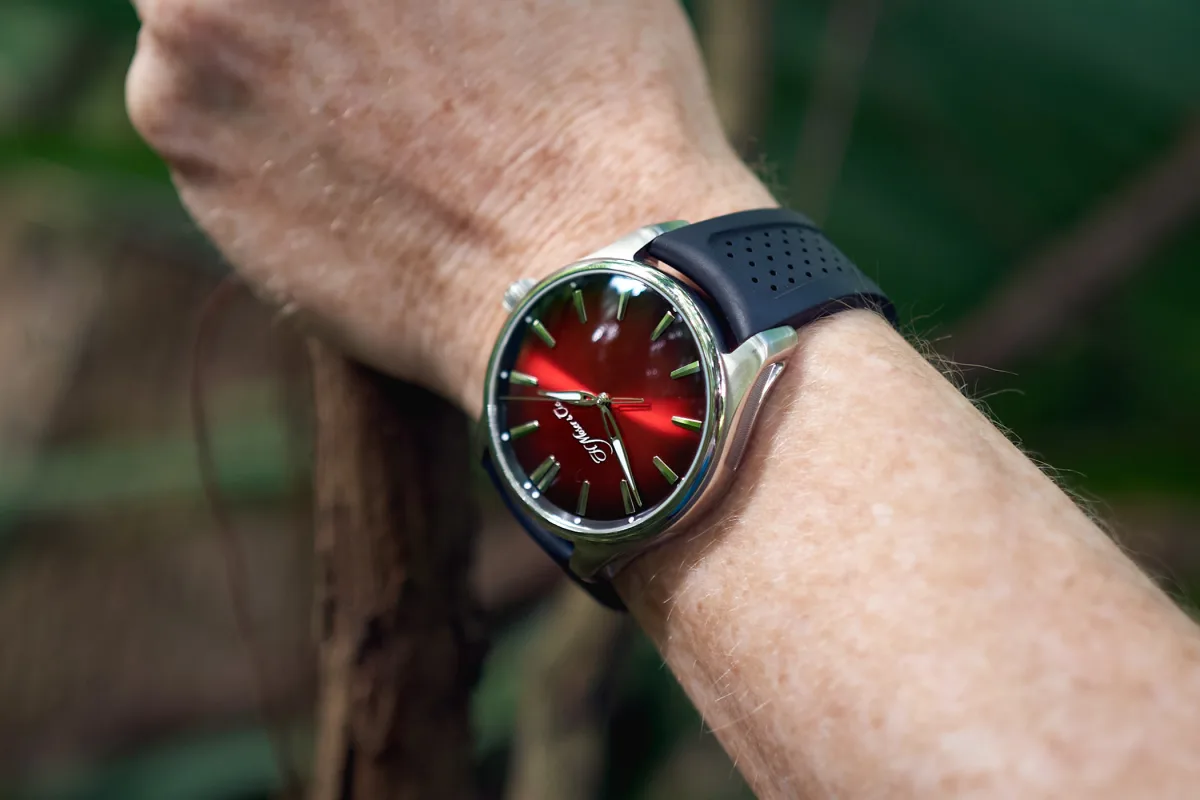
The Pioneer is positioned as an everyday watch, a "one watch." From the boardroom to the beach and everything in between. While I currently don't have access to boardrooms, there's no doubt that the elegance and color scheme of these Pioneer watches would make a stylish addition to a suit and tie. But we're here to test the watch in a different mode - as a simple, purely adventurous watch. So let's get to it.
In the Wild
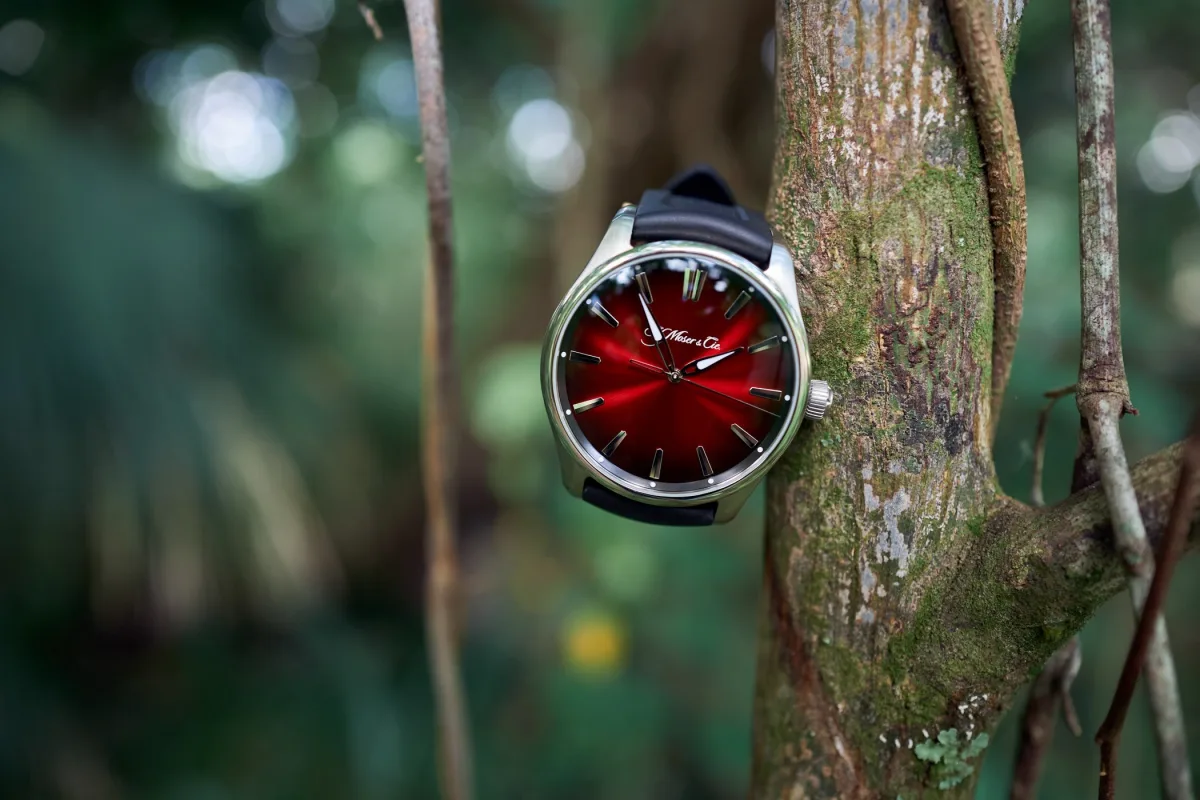
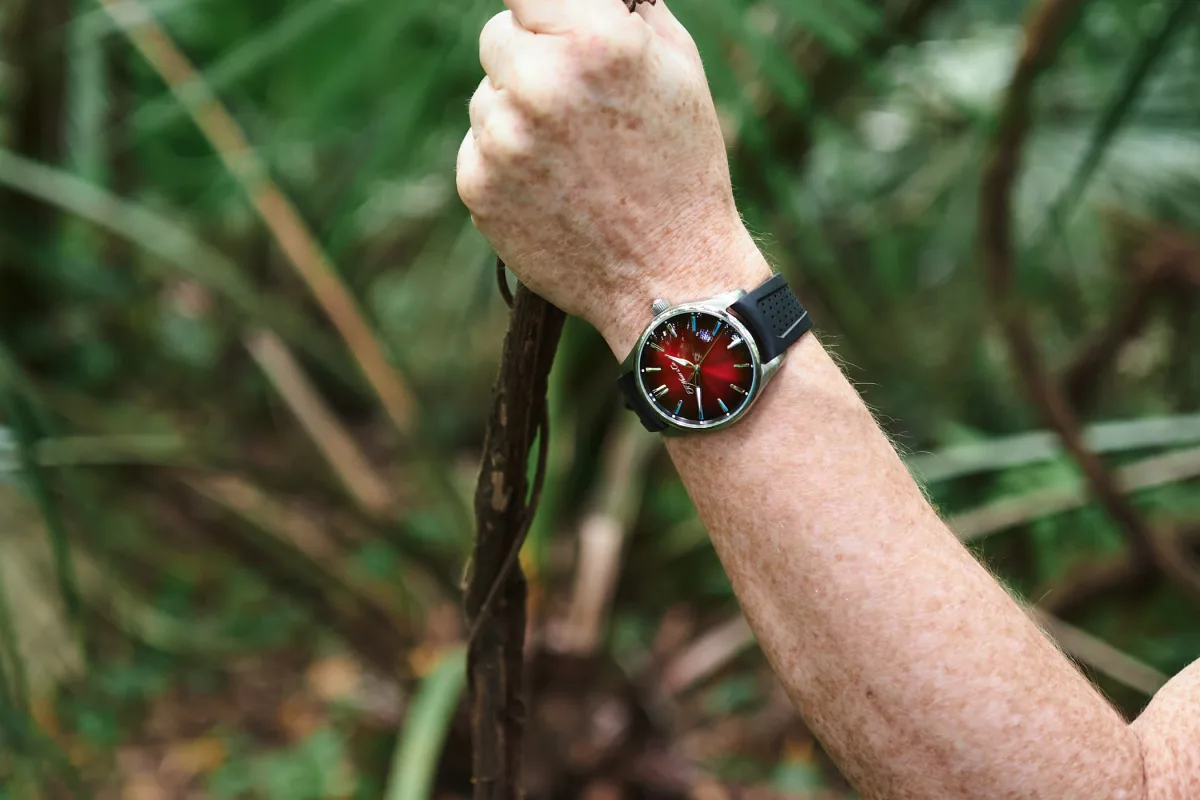
Hiking in Florida during the summer months is no joke. If mosquitoes, snakes, and alligators don't scare you off, the threat of dehydration in 35°C heat probably should. Under the right circumstances, keeping track of time can become a matter of life and death. To avoid going that far, I took the Pioneer on a forest hike, and it proved to be a worthy companion.
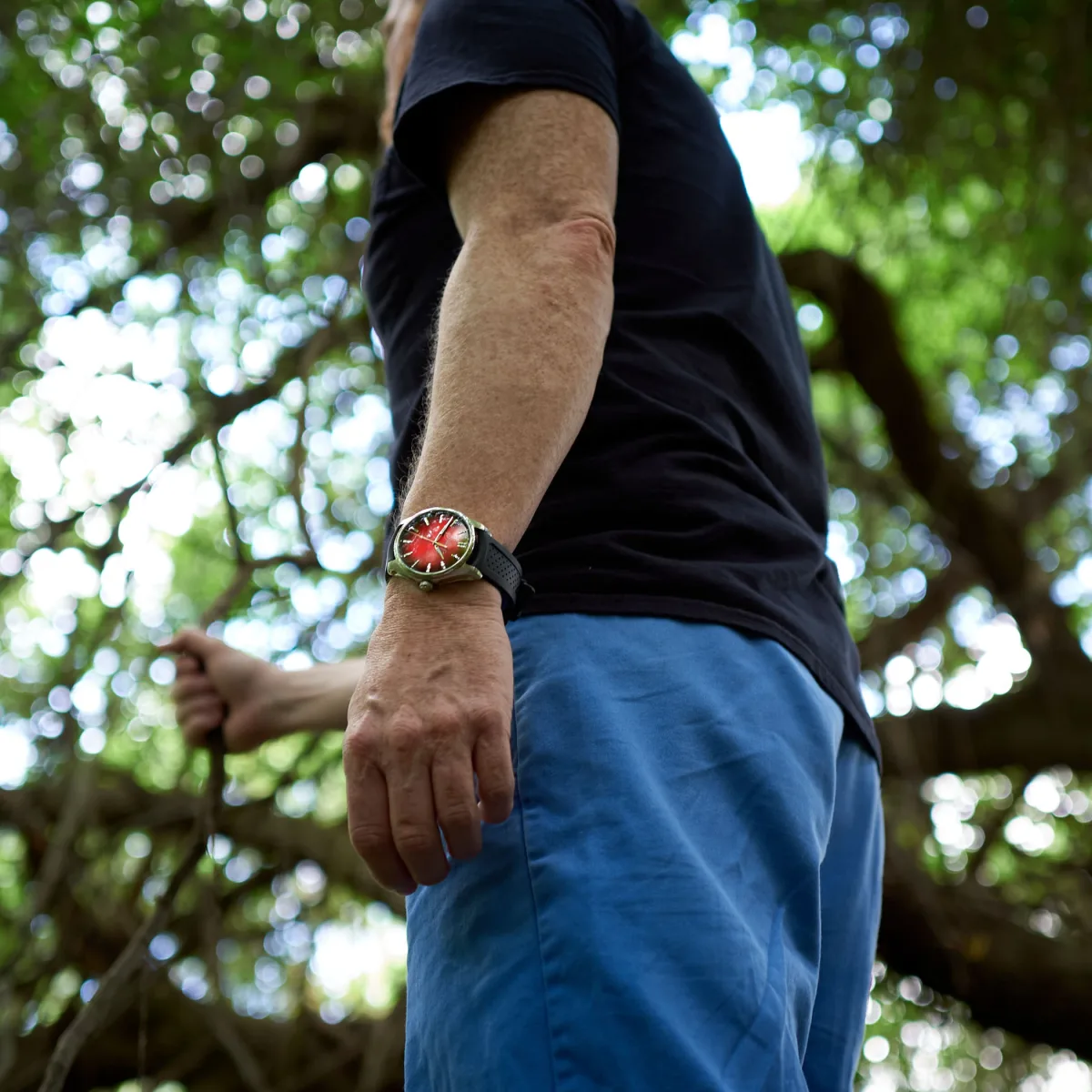
When I managed to tear my eyes away from the dial long enough to follow the barely visible path, the watch melted into my wrist as a good sports watch should. Large enough to feel the comfort of knowing it's there, but not so large as to be cumbersome or catch on anything. After several accidental knocks against trees, the Pioneer emerged unscathed. To borrow a classic Timex slogan, it takes a licking and keeps on ticking. The perfect sidekick. The rubber strap stays cool and comfortable even when exposed to an unpleasant mix of dirt, humidity, and sweat. After four hours, a quick rinse with clean water was enough to restore the watch to its pristine condition, ready to return to the old, boring boardroom. Or...
Under the Waves
...Instead, we might go snorkeling. The Pioneer watch is water-resistant to 12 ATM or 120 meters, which is more than sufficient for any underwater activity. While the lack of a timing bezel makes it impractical for diving (aside from its value as an adventure totem, of course), it is the perfect watch for shallow water swimming, where you really only need to keep track of the hours left until sunset.
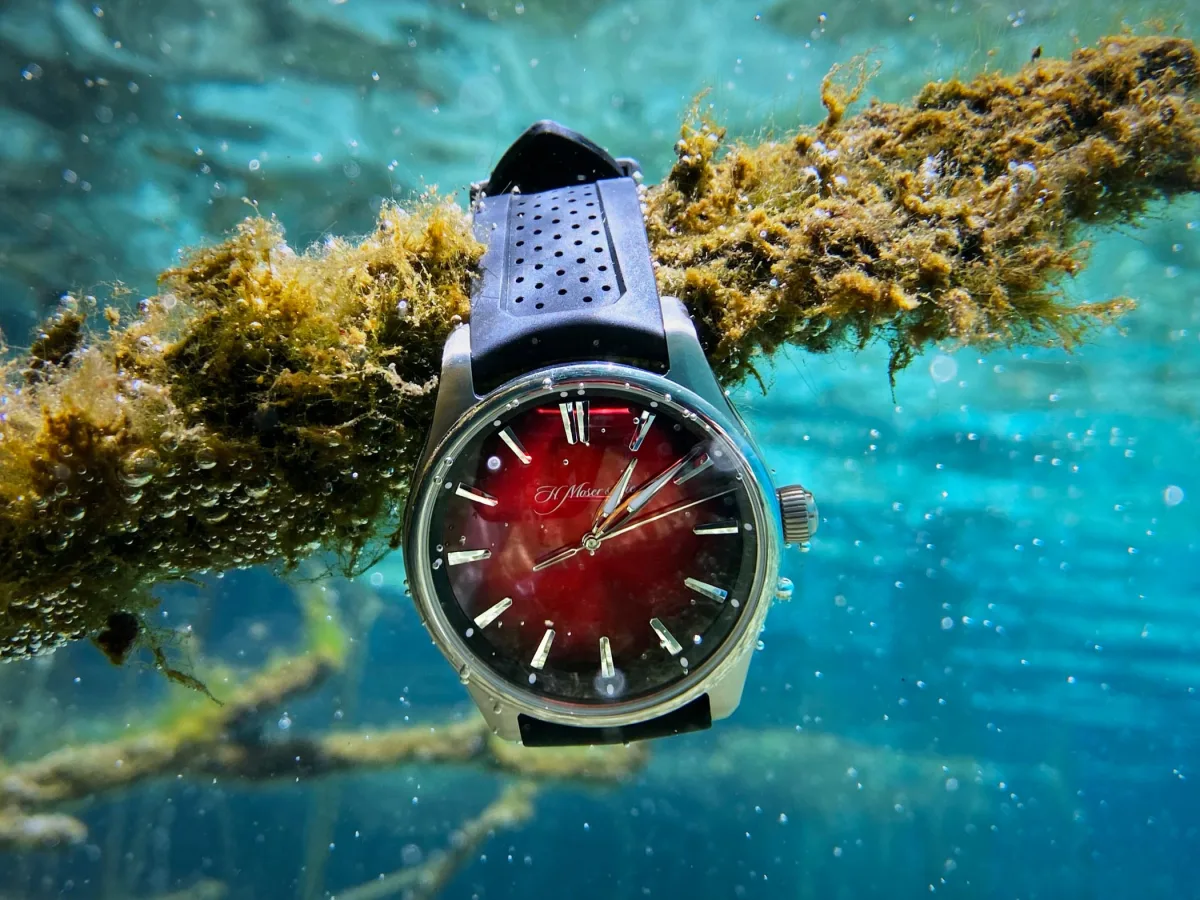
The first stop was Rainbow Springs, a natural spring with stunningly clear water and diverse wildlife, including numerous species of fish and turtles, and yes, occasionally alligators. Fortunately, there are boat patrols here that warn of alligators approaching the swimming area, and this day was calm for them.
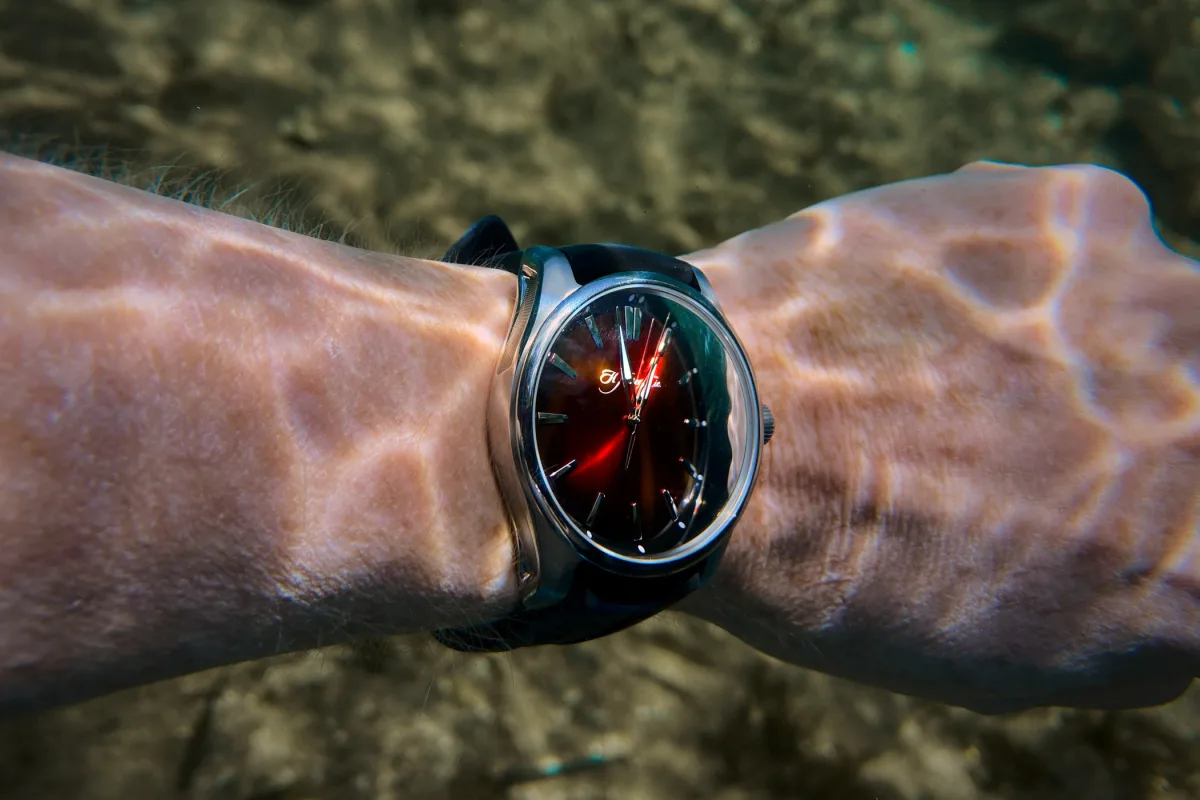
Underwater, the Pioneer performs just as well as it does in the forest, if not better. The large dial with bright colors is highly readable, and the perfect size disappears on the wrist and underwater. It felt slightly awkward to wear such stylish, elite watches while jumping off the pier into the cold water, but a double-check of the sturdy screw-down crown before doing so was reassuring. The rubber strap also dispels any concerns, comfortably and securely keeping the watch in place.

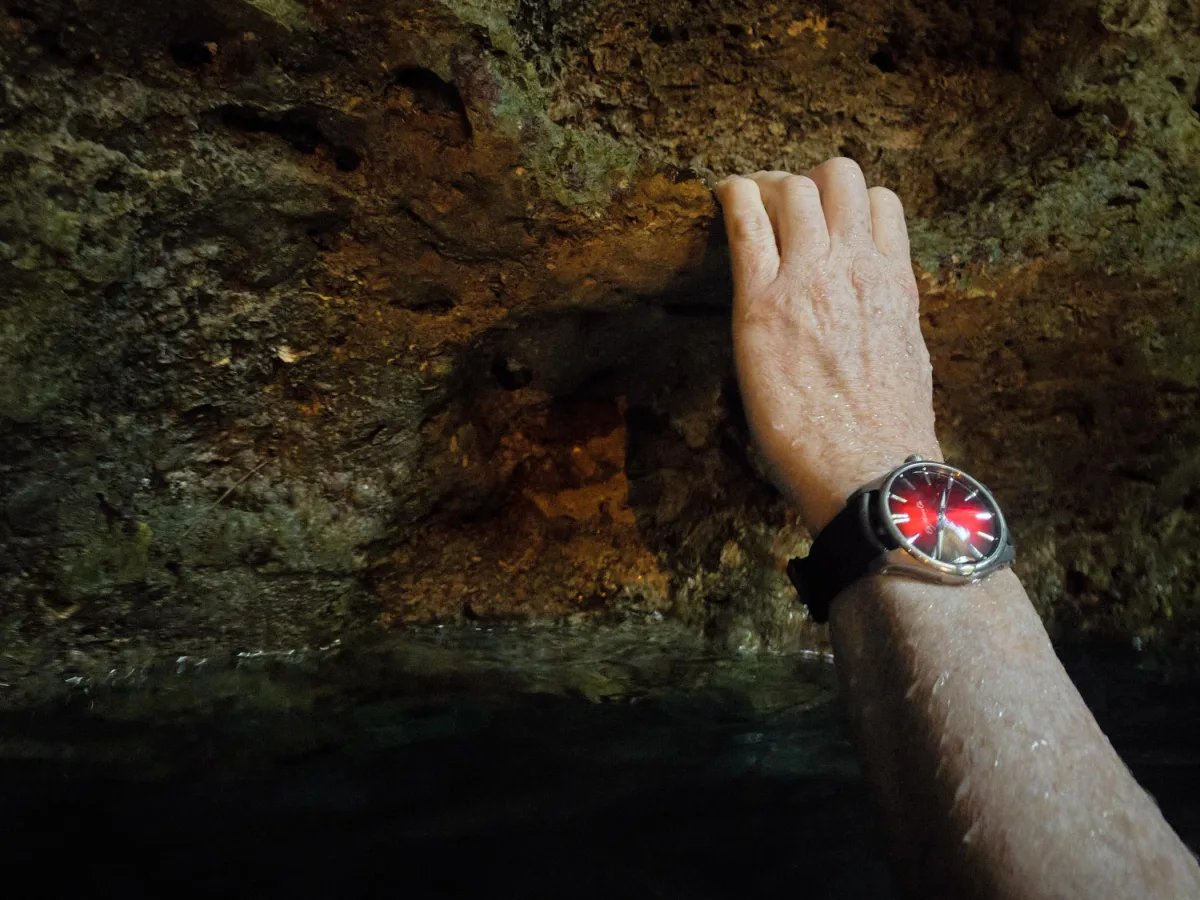
To conclude the day, we headed to Devil's Den; another spring, but this one is underground in a dry cave, similar to the famous cenotes in Mexico. Moser excelled here too. In the darker and colder waters, where a wetsuit was required, the watch remained a highly visible and perfect companion. Again, a few clumsy knocks against rocks were taken in stride, with the watch combining the look of a million dollars and the soul of a G-Shock. Finally, back on shore, the watch looked equally cool on a tanned arm in a t-shirt, perched on a stool at a taco stand to refuel after an exhausting day in the water.
The Bottom Line
So, are the Moser Pioneer Center Seconds Swiss Mad Red truly versatile, gentleman's adventure watches? After crunching the numbers from my thorough and calculated testing, I rendered the verdict: a resounding "yes." The Pioneer fits perfectly into the fine line between a beautiful handmade piece of art and a tool watch, managing to be both without missing a beat. It is certainly a strong contender for a one-watch collection, and I hope to have the chance to wear/test them again someday. Perhaps next time, we'll head to a colder place with fewer alligators.
Availability and Price
The H. Moser & Cie. Pioneer Centre Seconds Swiss Mad Red is offered at 12,900 Swiss Francs or 14,200 USD. The watch is now available at retail or directly from the brand's website. For more information and to order, please visit www.h-moser.com.
Brief History of H. Moser & Cie.
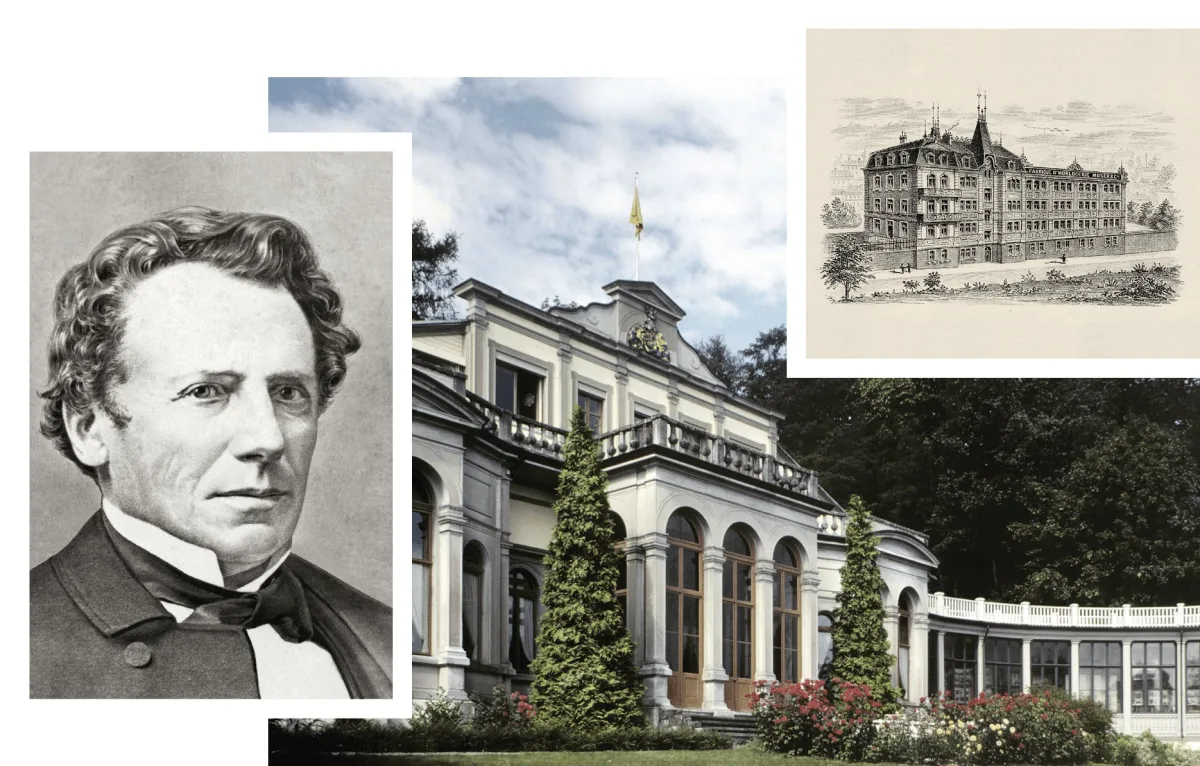
Heinrich Moser was born into a family of watchmakers in 1805 in the northern Swiss town of Schaffhausen. He continued their craft, learning the basics at home, and then continued his training in Le Locle. In 1828, at the age of 23, Heinrich went to St. Petersburg, Russia, and founded the first iteration of H. Moser & Cie. Quickly gaining a reputation for high-quality watches, he acquired clients such as Russian princes and members of the Russian imperial court. It is said that even Vladimir Lenin owned a Moser watch.
In 1848, Moser returned to his hometown of Schaffhausen to open a watch factory to support his expanding business. He also began using his considerable wealth to transform Schaffhausen from a sleepy little village into a thriving industrial town. One of his most ambitious enterprises was building the eponymous Moser dam, Switzerland's largest hydromechanical dam at the time, to harness the Rhine's power to provide electricity to local industrial enterprises. Moser was also involved in carriage manufacturing, railways, and local real estate. A little-known fun fact: Moser rented part of his building to a fledgling, promising watch brand you may have heard of - a small house called IWC.
After Heinrich Moser's death in 1874, the entire company passed to his second wife, Baroness Fanny Moser von Sulzer-Wart. With little knowledge and interest in the watch business, she subsequently sold the company in parts; the Swiss manufacturing company went to her manager Paul Girard, while the Russian company went to joint managers Cornelius Winterhalter and Octave Meylan (Octave Meylan is likely the grandfather of Georges-Henri Meylan, today's chairman of Moser Watch Holding). The Russian division of the company was nationalized in 1918 due to the Russian Revolution but continued to produce watches until at least the 1960s, albeit under communist government control. The Swiss division continued to operate in the premium market segment until the 1970s, then was halted by the Quartz Crisis and sold to Dixi Mechanique (DIXI S.A.) in 1979.
Fast forward to the new millennium, in 2000. Jürgen Lange, former head of production at IWC (everything really does come full circle, doesn't it?), was looking for an old, valuable watch brand to revive. He approached Heinrich Moser's great-grandson Roger Nicholas Balsiger to ask if he would like to join the brand's revival as a representative of the Moser family. Balsiger agreed, and five years later, H. Moser & Cie officially returned to business, and returned to Schaffhausen, where it all began. In 2012, the family group MELB Holding (the Meylan family) acquired the company, starting a new chapter in its history.
TECHNICAL SPECIFICATIONS – H. MOSER & CIE. PIONEER CENTRE SECONDS SWISS MAD RED
Case: 42.8 mm diameter x 10.6 mm thickness (without glass) – stainless steel, polished and matte – screw-down crown – transparent case back – domed sapphire crystal over dial – water resistance 120 m
Dial: Swiss Mad Red fumé with "sunburst" pattern – applied indices with Super-LumiNova dots – partially skeletonized leaf-shaped hands with Super-LumiNova
Movement: Calibre HMC 200, in-house developed – automatic – bi-directional pawl wind system – 3-day power reserve – 21,600 vph – Straumann hairspring – 18-carat gold rotor – hours, minutes, central seconds
Strap: Black perforated rubber strap on steel pin buckle
Reference: 3200-1207
Availability: Not limited, available at retail or directly from the brand
Price: 12,900 SWISS FRANCS, USD 14,200